.avif)

📌 Key Takeaways
Shared spaces become revenue streams when you combine clear pricing, automated booking, and consistent policies that residents perceive as premium access.
- Start With One Space: Launch clubhouse bookings first to prove the model before expanding to other amenities.
- Price for Exclusivity: Flat fees per booking work best when positioned as guaranteed private access, not penalized usage.
- Automate to Scale: Unified booking and payment systems eliminate administrative burden while reducing app fatigue for residents.
- Fair Housing Requires Consistency: Apply pricing and access policies uniformly to all residents to maintain legal compliance and trust.
- Hidden Costs Erode Margins: Account for cleaning, repairs, and staff time when pricing amenities to ensure true profitability.
One space, clear rules, automated flow—that's the formula.
Property managers at Class A communities seeking NOI improvement without operational chaos will find a practical launch framework here, preparing them for the implementation details that follow.
Ancillary revenue transforms shared spaces from cost centers into income streams. It's non-rent income generated through bookable amenities, premium services, and value-added conveniences—and when executed properly, it improves NOI without adding operational burden or undermining resident satisfaction.
The quarterly NOI report lands on your desk. Same number, different quarter. The fitness center gleams under its LED lights. The clubhouse furniture still looks showroom-fresh. Neither space generates a single dollar beyond what residents already pay in rent.
This is the reality for many Property Management Teams at Class A communities. Beautiful amenities. Significant operating costs. Zero incremental revenue.
But here's the shift worth considering: Think of it like a hotel that earns far more than room nights. The spa, the restaurant, the rooftop event space, the parking upgrades—each touchpoint creates revenue while enhancing the guest experience.
Now picture your community through that lens. A manager notices the clubhouse sits empty Monday through Thursday, yet residents constantly ask about booking it for birthday parties and baby showers on weekends. That gap between unused capacity and unmet demand represents money left on the table. The solution? A simple launch plan: publish a pricing menu, establish clear rules, turn on booking and payment collection, and announce it as a convenience upgrade. One space. One week. Real results.
"Your amenities should be an income stream, not just a cost center."
What Is Ancillary Revenue in Multifamily?
Ancillary revenue is income your community generates beyond base rent. It comes from monetizing amenities, services, and spaces that residents value enough to pay for.
Common examples include private clubhouse bookings for events, reserved parking spots, guest suite rentals, and fitness programming through vendor partnerships. When a resident pays $250 to host a graduation party in your lounge, that's ancillary revenue. When they book a guest suite for visiting family at $150 per night, that's ancillary revenue too.
Why does this matter for Class A communities? Two reasons. First, it directly improves NOI without requiring rent increases or new construction. Second, when done well, it actually strengthens resident satisfaction. Residents appreciate access to premium experiences within their own building. The key is framing monetization as convenience and exclusivity rather than nickel-and-diming.
Top Monetizable Shared Spaces
Not every amenity is worth monetizing. Start with spaces that have natural demand and clear booking boundaries.
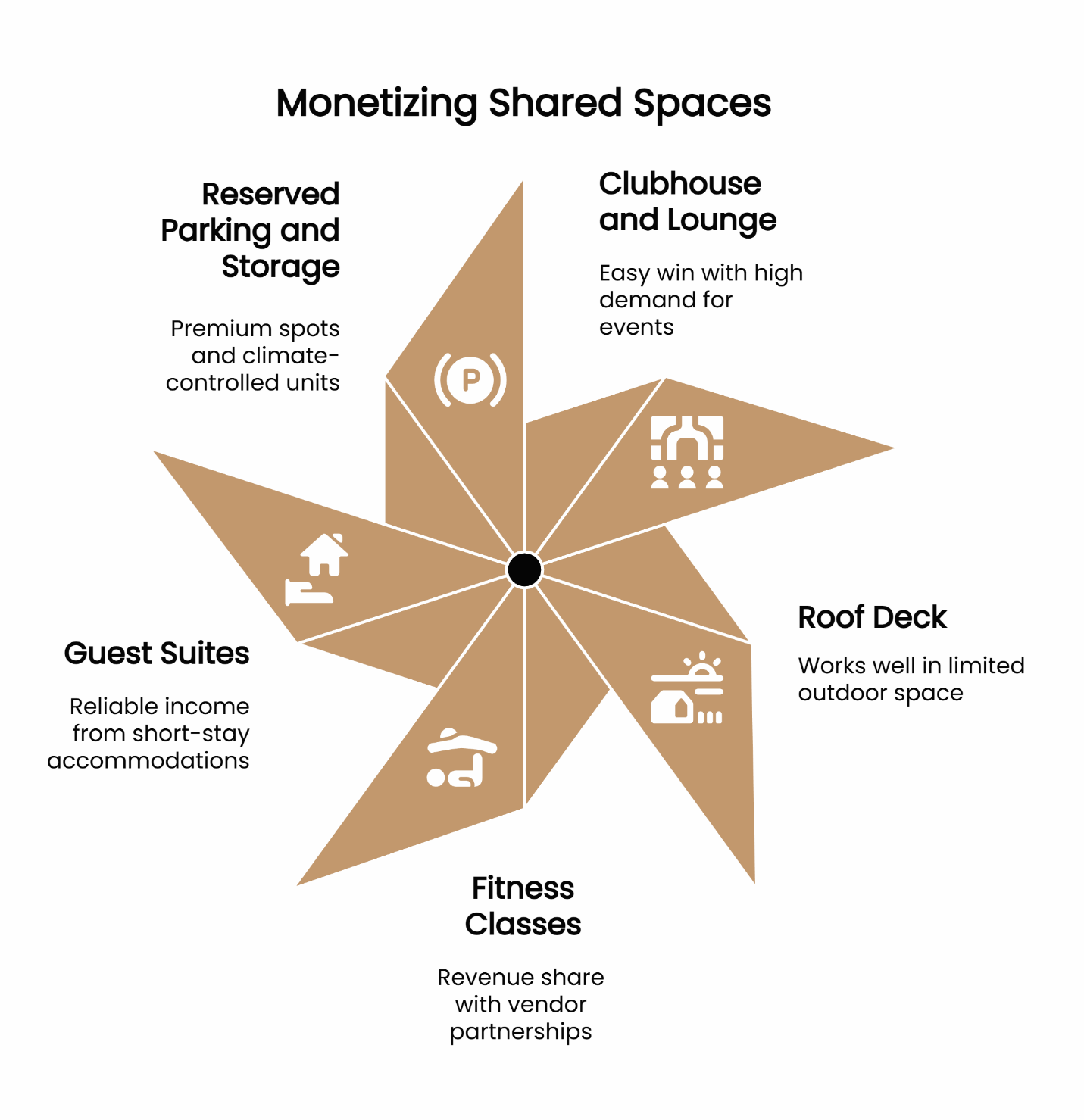
Clubhouse and lounge private bookings represent the easiest win for most communities. Residents already want to host events. You're simply formalizing access and capturing value. Birthday parties, holiday gatherings, and game-day watch parties drive consistent demand.
Roof deck reservations work well in communities where outdoor space is limited or particularly desirable. Sunset cocktail hours and small celebrations create memorable experiences residents will pay for.
Fitness classes through vendor partnerships offer a revenue share model with minimal operational lift. A yoga instructor or personal trainer handles the programming while your community earns a percentage. This approach aligns with comprehensive amenity management strategies that activate underused spaces.
Guest suites generate reliable income in communities that offer short-stay accommodations for resident visitors. Nightly rates between $75 and $200 are common depending on market and amenities included.
Reserved parking and storage may apply depending on your community's configuration. Premium spots or climate-controlled storage units command monthly premiums from residents who value convenience.
Pricing Models Residents Accept
Pricing transparency determines whether residents view amenity fees as fair value or hidden charges. The framing matters as much as the number.
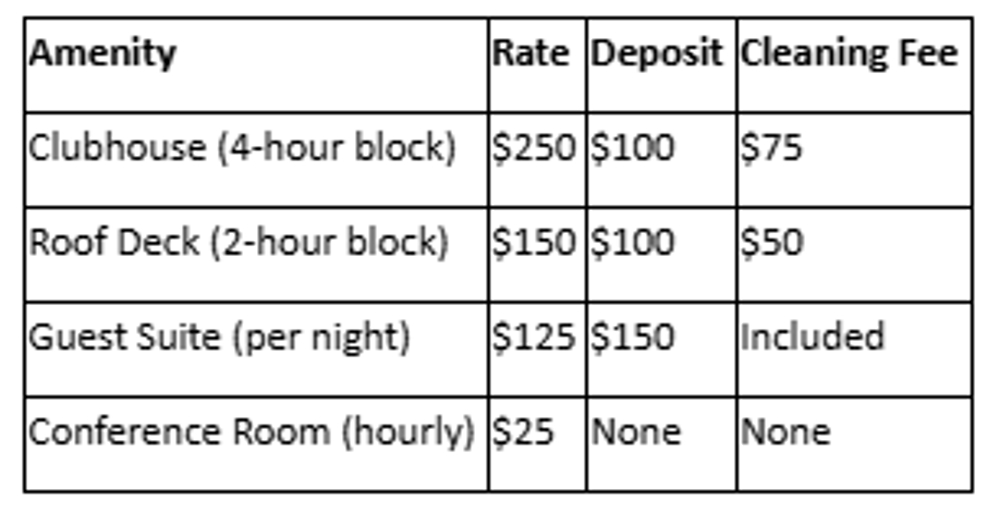
Flat fee per booking works best for event spaces like clubhouses and lounges. Residents understand exactly what they'll pay before committing. A $200 flat rate for a four-hour clubhouse reservation is simple and predictable.
Hourly rates suit spaces with variable usage patterns, such as conference rooms or coworking areas. This model feels fair to residents who only need brief access.
Tiered packages combine flexibility with upsell opportunities. A basic tier might include space access only, while a premium tier adds setup assistance, extended hours, or catering coordination. This approach mirrors the events and experiences programming that enhances resident engagement.
Deposits and cleaning fees protect your community from damage and ensure spaces remain pristine for the next user. Position these as standard practice rather than punitive charges. A $100 refundable security deposit and $75 cleaning fee are reasonable for most event bookings.
Fair Housing Consistency
Pricing and access policies must remain consistent and equally available to all residents. The Fair Housing Act requires that amenity access cannot vary based on protected characteristics. Document your policies clearly and apply them uniformly. Publish pricing menus where all residents can access them, and enforce rules the same way every time regardless of who requests an exception.
Inconsistent application creates both legal risk and resident resentment. When one household receives preferential treatment, word spreads quickly and trust erodes.
Operations Playbook: Rules That Prevent Chaos
Clear policies prevent disputes before they start. Ambiguity creates conflict. Consistency builds trust.

Booking windows and limits establish boundaries that feel fair. Allow reservations up to 30 days in advance to give residents planning time while preventing indefinite holds. Limit each household to one or two bookings per month during peak seasons to ensure equitable access.
Cancellation policies protect your revenue while remaining resident-friendly. A 48-hour cancellation window with full refund balances flexibility with operational needs. Cancellations within 24 hours might forfeit the cleaning fee but return the booking fee.
Capacity and noise rules set expectations upfront. State the maximum occupancy clearly. Specify quiet hours that align with your community's standards. Include these details in the booking confirmation so residents cannot claim ignorance.
Damage and cleanup expectations should be documented in writing before every reservation. Residents must acknowledge responsibility for their guests' behavior and any damage beyond normal wear. The security deposit covers minor issues while your policy addresses more significant problems.
Exception handling requires a consistent framework. When a resident requests something outside standard policy, document the decision and apply the same standard to future similar requests. Inconsistent enforcement creates resentment and potential fair housing concerns.
The goal is making the process feel simple and premium. Residents should experience booking an amenity the way they'd book a restaurant reservation: straightforward, professional, and confidence-inspiring.
Revenue Potential Calculator
Estimating your revenue opportunity requires only basic math. Here's a simple methodology your team can apply this week.
Formula Option 1: Per-Booking Model
Monthly Revenue = (Bookings per Month × Price per Booking) + (Cleaning Fee × Bookings)
Formula Option 2: Utilization Model
Monthly Revenue = (Bookable Hours per Month × Utilization Rate × Hourly Price)
Illustrative Example (Clubhouse)
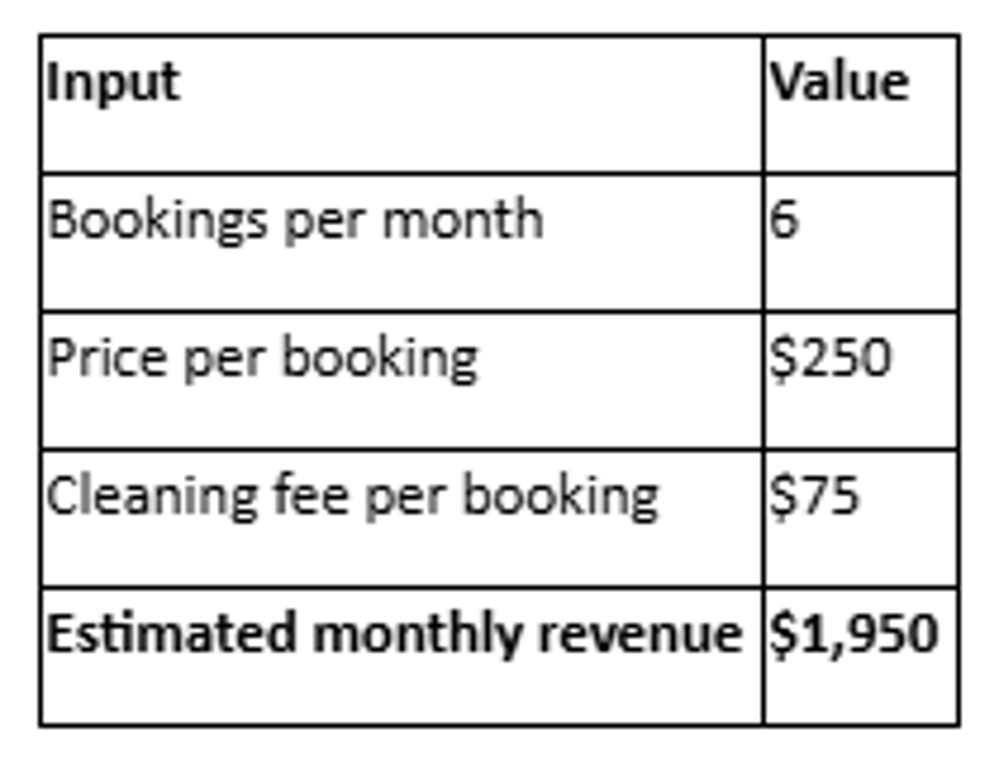
This example is illustrative, not a benchmark. Your actual results depend on demand, pricing, and community size. But even modest utilization of a single amenity can generate meaningful income over a year.
Run this calculation for each monetizable space in your community. The cumulative opportunity often surprises Property Management Teams who haven't previously quantified the potential.
Want more operational playbooks on amenity activation and resident experience? Subscribe to our newsletter for practical strategies delivered to your inbox.
Sample Pricing Menu (Adapt for Your Community)
How to Monetize Without Hiring More Staff
The operational concern is legitimate: won't managing bookings and payments create more work than the revenue justifies?
Not if you automate the right pieces.
A unified booking and payment system handles reservations, collects fees and deposits, sends confirmation emails, and issues reminders automatically. Residents self-serve through a resident app rather than calling or emailing your team. The management portal gives staff visibility into upcoming reservations without manual calendar management.
Automated confirmations and reminders reduce no-shows and ensure residents arrive prepared. Payment collection at booking eliminates awkward follow-up conversations about outstanding fees. When processing payments, ensure your systems follow recognized security standards for protecting cardholder data.[^1]
Reporting capabilities let you track utilization rates, revenue by amenity, and friction points that might need policy adjustment. This data informs future decisions about pricing, hours, and which spaces deserve investment.
The result: monetization becomes operationally feasible without adding headcount. Your team focuses on resident relationships while the system handles administrative workflows.
When booking, payment, and communication happen through one platform, you also reduce the app fatigue that frustrates residents forced to juggle multiple tools for different building functions.
Common Pitfalls and How to Avoid Them
Monetization fails when execution undermines the resident experience. These mistakes are preventable.
Resident backlash from poor messaging happens when fees appear without context or explanation. Announce monetization as an upgrade that expands access, not a new cost. Emphasize the convenience of guaranteed reservations and professional management of shared spaces.
Inconsistent enforcement destroys credibility. If one resident gets a fee waived while another doesn't, word spreads quickly. Document every exception and ensure your team understands that fairness requires consistency.
Fragmented tools creating app fatigue frustrate residents and staff alike. When booking happens in one system, payments in another, and communication through email, the experience feels disjointed. Consolidating these functions improves adoption and reduces administrative burden.
Hidden operational costs can erode margins if you don't account for them. Cleaning, repairs, utilities, and staff time all factor into true profitability. Price your amenities to cover these costs while still delivering value to residents. For guidance on expense tracking and recordkeeping, standard small business accounting practices apply.[^2]
Surprise fees generate the strongest negative reactions. Every charge should be visible and acknowledged before a resident commits to a booking. Transparency builds trust even when residents pay more than they expected.
A Practical First Step This Week
Theory matters less than action. Here's a launch plan you can execute in the next seven days.
Day 1-2: Choose one space with clear demand and booking boundaries. The clubhouse or party room is often the easiest starting point.
Day 3-4: Publish a pricing menu with rates, deposits, and fees. Document rules covering capacity, hours, cancellation, and cleanup expectations.
Day 5-6: Configure booking and payment collection. If your community uses property management software that supports amenity reservations, activate that feature. If not, even a simple online form with payment link provides a starting point.
Day 7: Announce the new amenity booking program to residents. Frame it as enhanced access and professional management of shared spaces. Emphasize the convenience of guaranteed reservations.
Track your results for the first month. Note booking volume, revenue collected, resident feedback, and operational questions that arise. Use this data to refine your approach before expanding to additional amenities.
For teams seeking support with personal services and lifestyle programming that complements amenity monetization, vendor partnerships can extend your revenue opportunities without expanding your operational footprint.
Ready to see how a unified resident experience system streamlines booking, payments, and reporting? Schedule a demo with ElevatedOS.
Frequently Asked Questions
Should we charge residents to book the clubhouse?
Yes, when positioned correctly. Charging for private, exclusive use of shared spaces is standard practice in Class A communities. The key is framing fees as access to a premium experience rather than a penalty for usage. Residents who book pay for guaranteed availability and professional management of the space.
What's a reasonable cleaning fee for amenity bookings?
Cleaning fees typically range from $50 to $100 depending on space size and local labor costs. The fee should cover actual cleaning expenses while remaining palatable to residents. Consider whether to charge separately or bundle cleaning into the booking rate based on your community's preferences.
How do we avoid resident pushback when adding fees?
Communicate proactively and emphasize benefits. Explain that monetization enables better maintenance, professional management, and guaranteed availability. Launch with competitive pricing and gather feedback before adjusting rates. Residents accept fees when they understand the value exchange.
What tools do we need to manage amenity bookings and payments?
At minimum, you need a booking calendar, payment collection mechanism, and communication system. Integrated platforms that combine these functions reduce administrative burden and improve the resident experience. Look for solutions that connect with your existing property management system to avoid data silos and duplicate entry.
For Property Management Teams ready to explore comprehensive amenity monetization, calculating your specific revenue potential provides a concrete starting point. The opportunity exists in spaces you already maintain. The question is whether you'll capture it.
[^1]: PCI Security Standards Council (PCI DSS): https://www.pcisecuritystandards.org/
[^2]: IRS small business resources: https://www.irs.gov/businesses/small-businesses-self-employed
Our Editorial Process
Our expert team uses AI tools to help organize and structure our initial drafts. Every piece is then extensively rewritten, fact-checked, and enriched with first-hand insights and experiences by expert humans on our Insights Team to ensure accuracy and clarity.
About the ElevatedOS Insights Team
The ElevatedOS Insights Team is our dedicated engine for synthesizing complex topics into clear, helpful guides. While our content is thoroughly reviewed for clarity and accuracy, it is for informational purposes and should not replace professional advice.
Learn more about ElevatedOS on our Better Business Bureau profile or connect with us on LinkedIn.