.avif)
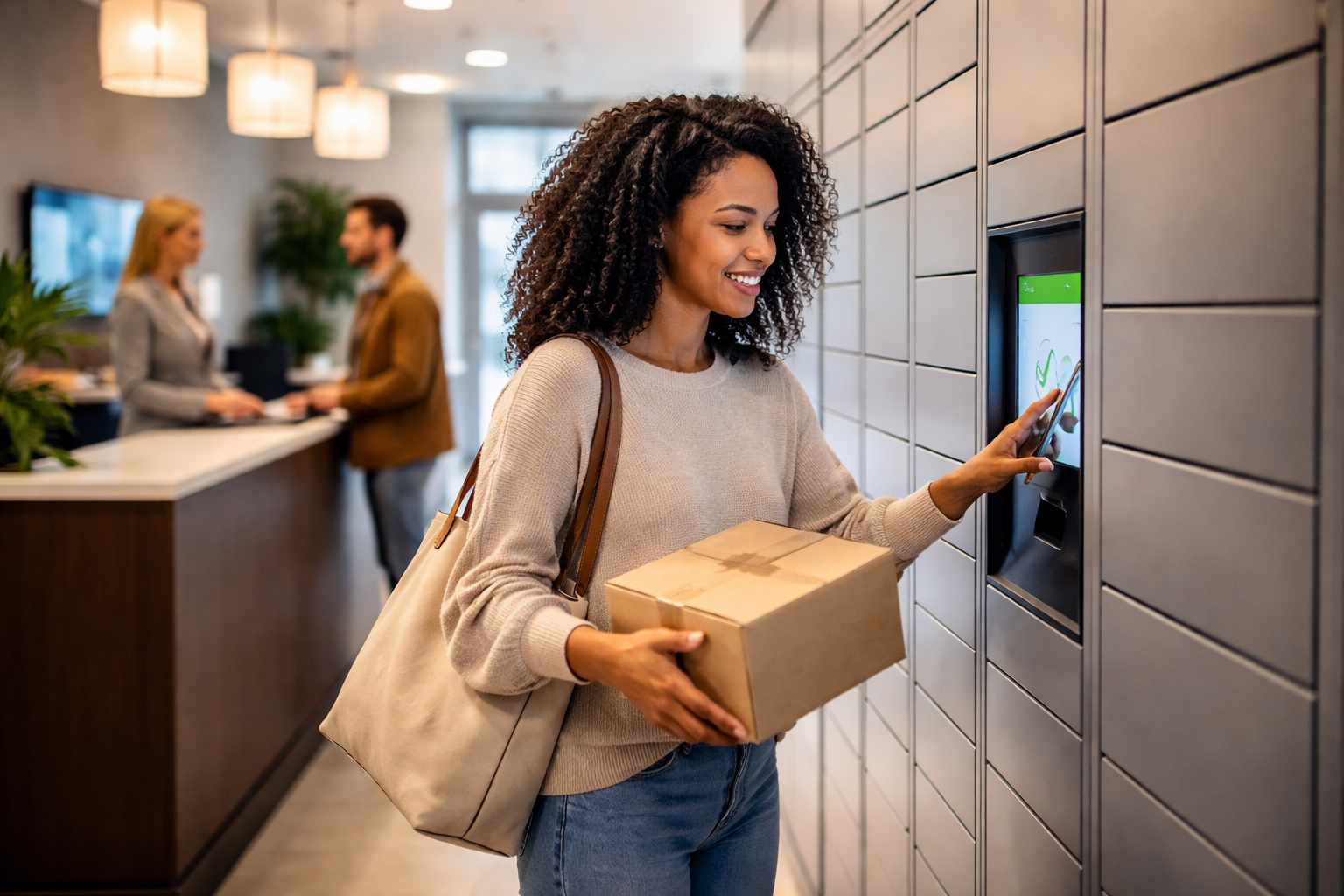
Package volume has changed apartment operations.
What used to be a small front desk task is now a daily operational pressure point for multifamily communities. Residents order groceries, household goods, work equipment, subscription boxes, pharmacy items, and same-day deliveries at all hours. For property teams, that means more intake, more notifications, more resident questions, more storage concerns, and more opportunities for frustration.
When package management breaks down, the problem does not stay isolated to the mailroom. It spills into the resident experience, staff productivity, lobby appearance, and even online reviews.
That is why multifamily package management is no longer just a convenience issue. It is an operational system issue.
For property managers, regional leaders, and ownership groups, the goal is not simply to “handle packages better.” The goal is to create a process that is easier for residents, lighter on staff, and more scalable across a growing community or portfolio.
In this guide, we will cover:
- What apartment package management means in multifamily operations
- Why package volume creates hidden operational costs
- The most common package management challenges for on-site teams
- How better package workflows improve resident satisfaction
- What to look for in apartment package management software
- How modern multifamily platforms help streamline package operations
What is apartment package management in multifamily housing?
Apartment package management is the process of receiving, organizing, tracking, storing, and releasing resident deliveries within a multifamily property.
That sounds simple on paper. In practice, it involves many moving parts:
- Carrier drop-off coordination
- Staff intake or automated logging
- Resident notifications
- Secure storage
- Retrieval rules
- Overflow handling
- Exception management for oversized, perishable, or misplaced packages
- Audit trails when disputes happen
In smaller communities, this may be handled manually by the leasing office or concierge team. In larger Class A communities, mixed-use developments, and high-delivery buildings, manual processes often become unsustainable.
That is when package management starts to affect more than convenience. It begins to affect labor costs, response times, and resident trust.
Why package management matters more than many teams realize
Package delivery is one of the most frequent resident touchpoints in modern apartment living.
Residents may submit a maintenance request once in a while. They may reserve an amenity occasionally. But they may receive multiple packages every week.
That means package operations shape the day-to-day perception of the property in a very real way.
When the process works, residents feel that the building is organized, responsive, and modern.
When the process fails, residents notice immediately.
Common resident frustrations include:
- “I got the notification too late.”
- “My package says delivered, but no one can find it.”
- “The office closed before I could pick it up.”
- “The package room is disorganized.”
- “I have to ask staff every time I need help.”
- “Large deliveries are always a mess.”
- “The system is different depending on who is working.”
None of these complaints sound dramatic on their own. But together, they create friction that chips away at resident satisfaction.
In a competitive multifamily market, small operational annoyances often become bigger retention problems over time.
The hidden operational cost of poor package management
Many property teams underestimate how much time package coordination consumes.
A package issue can trigger multiple layers of work:
- A carrier delivers the package.
- Staff or concierge receives it.
- Someone logs or sorts it.
- A resident asks where it is.
- A team member investigates.
- Another notification goes out.
- A retrieval issue happens after office hours.
- Staff follows up the next day.
- The resident may still be dissatisfied even after the package is found.
Multiply that by dozens or hundreds of deliveries per week, and package handling becomes a major operational drain.
Poor package workflows commonly lead to:
- Front desk interruptions
- Leasing team distraction
- Slower response times for other resident needs
- Cluttered common areas
- Inconsistent accountability
- More resident complaints
- More manual communication
- More exposure to lost-package disputes
In other words, package management is not just a mailroom problem. It is a productivity problem.
Common apartment package management challenges in multifamily communities
Every property is different, but the most common problems tend to repeat across communities.
1. Manual logging takes too much time
If staff members are manually entering package details, sending notifications, or managing spreadsheets, the process will eventually slow down.
Manual workflows create delays and increase the likelihood of errors.
2. Residents do not know where to go
When retrieval instructions are unclear, residents end up calling, emailing, or visiting the office for help. That increases workload for teams and adds frustration for residents.
3. Storage space becomes chaotic
A package room without structure quickly turns into a visibility problem. Packages get stacked, misplaced, or left in unsecured areas. Oversized items create even more pressure.
4. Notification timing is inconsistent
Residents want fast and reliable delivery notifications. If communication depends on staff availability, residents may not learn about deliveries until much later.
5. After-hours access is limited
Many residents are not home during normal office hours. If the process depends entirely on staff, retrieval becomes inconvenient and sometimes impossible until the next day.
6. No audit trail exists when issues happen
When a resident says a package is missing, teams need a reliable record of what happened. Without a digital trail, disputes become hard to resolve.
7. Package volume scales faster than staffing
As occupancy rises and e-commerce grows, delivery volume increases. But staffing usually does not increase at the same pace.
That creates an imbalance that manual processes cannot solve for long.
How package management affects resident experience
Resident experience is shaped by convenience, clarity, and consistency.
Package delivery touches all three.
A better package management system improves resident experience by making delivery handling:
- Easier to understand
- Faster to access
- More transparent
- More secure
- Less dependent on office hours
- Less reliant on back-and-forth communication
That matters because residents increasingly expect apartment living to function like a modern service environment.
They expect digital notifications. They expect easy pickup. They expect visibility. They expect fewer hassles.
If they can track a rideshare, a grocery order, and a same-day purchase from their phone, they expect a similar level of convenience from their building.
Communities that deliver that convenience feel more modern and more resident-friendly. Communities that do not often feel harder to live in, even if the units and amenities are strong.
Why front desk and leasing teams feel the pain first
When package operations are inefficient, the burden usually lands on the people closest to residents.
That often means:
- Leasing teams
- Front desk staff
- Concierge teams
- Resident services staff
- Community managers
These teams are already juggling tours, calls, emails, renewals, maintenance coordination, and resident communication.
Package confusion adds another layer of interruption.
A leasing specialist who should be following up with hot prospects ends up searching for a misplaced delivery.
A front desk associate who should be handling resident service requests ends up answering repeated package pickup questions.
A community manager who should be focused on operations ends up resolving delivery disputes.
This is one reason package management has a larger business impact than many operators assume. It quietly pulls attention away from revenue-driving and retention-driving work.
What good multifamily package management looks like
A strong package process is not just organized. It is repeatable.
The best multifamily package management systems typically include:
Clear intake workflows
Packages are received consistently, whether by staff, lockers, or designated delivery zones.
Fast resident notification
Residents know when a package arrives and what they need to do next.
Secure storage
Packages are stored in a way that reduces loss, confusion, and unauthorized access.
Simple retrieval
Residents can collect deliveries without unnecessary friction.
Visibility for staff
Teams can see package status without searching manually.
Exception handling
Oversized items, perishables, duplicate deliveries, and delivery disputes have defined workflows.
Operational reporting
Leadership can track volume, issues, bottlenecks, and performance across properties.
When these elements are in place, package delivery becomes a managed workflow instead of a recurring disruption.
What to look for in apartment package management software
Not all package solutions are equally useful for multifamily operations.
Some tools focus only on logging deliveries. Others create disconnected experiences that add yet another system for staff and residents to manage.
The best apartment package management software should support both operational efficiency and resident convenience.
Here are the key features to look for.
1. Resident-facing notifications
Residents should receive timely delivery alerts with clear pickup instructions.
2. Mobile-friendly access
Residents increasingly expect to manage building interactions from their phone, not from printed notices or manual office communication.
3. Staff visibility dashboard
On-site teams need a simple way to view package status, reduce guesswork, and handle issues quickly.
4. Secure tracking and history
A searchable record of intake, notifications, and pickup helps resolve disputes and improve accountability.
5. Workflow consistency
The system should support repeatable processes across shifts, team members, and properties.
6. Integration with the broader resident experience
Package management works best when it is not isolated.
If residents are already using one system for communication, amenities, maintenance, and services, package tracking should fit naturally into that same experience.
That reduces app fatigue, improves adoption, and makes daily living simpler.
Why disconnected tools often create more friction
Many communities try to solve operational problems by adding one more point solution.
On the surface, that can seem efficient. But in practice, it can create a fragmented experience.
Residents may end up using:
- One system for payments
- Another for maintenance
- Another for amenities
- Another for communication
- Another for packages
Staff then have to support each of those systems separately.
This often leads to:
- More training burden
- More login fatigue
- More support questions
- More disconnected data
- More inconsistent experiences
A better long-term model is to reduce fragmentation, not add to it.
Package management becomes much more effective when it is part of a unified resident operations approach.
How package management supports NOI indirectly
Package management is not usually discussed first in NOI conversations.
But it absolutely influences NOI through several operational channels.
Better staff efficiency
When teams spend less time handling delivery issues, they can focus on leasing, service, communication, and retention work.
Improved resident satisfaction
A smoother day-to-day experience contributes to stronger resident perception and loyalty.
Reduced complaints and friction
Fewer package issues mean fewer escalations, fewer negative interactions, and fewer service breakdowns.
Stronger building presentation
Cluttered lobbies, overflow packages, and chaotic retrieval processes hurt the overall feel of the property.
More scalable operations
As delivery volume grows, better systems help communities handle more activity without adding the same amount of labor.
The connection may not always show up as a line item called “package NOI,” but the operational impact is real.
Best practices for improving package management at your property
You do not always need a full operational overhaul on day one.
Many communities can improve quickly by tightening the basics.
Standardize the process
Define exactly how deliveries are received, logged, stored, notified, and retrieved.
Eliminate manual communication where possible
Automated notifications reduce delays and resident confusion.
Create clear pickup instructions
Residents should know where to go, when they can retrieve items, and what to do if something is missing.
Plan for oversized and special-case deliveries
Furniture, grocery orders, and perishable items should not be handled like standard parcels.
Review storage flow
Physical organization matters. Even a good digital process breaks down if the storage area is chaotic.
Measure issue frequency
Track how often packages are misplaced, delayed, disputed, or left unclaimed.
Reduce system sprawl
If package management feels disconnected from the rest of the resident experience, adoption and efficiency will suffer.
How ElevateOS fits into modern multifamily operations
ElevateOS already positions its platform around modern multifamily operations, resident portals, operational efficiency, maintenance workflows, onboarding, and unified resident experience. A package-management-focused article fits naturally within that broader operational story.
In practical terms, property teams benefit most when package handling is treated as part of one connected operating environment rather than a separate task living off to the side.
That means the ideal experience is one where residents can interact with deliveries the same way they interact with the rest of the building experience: simply, digitally, and without unnecessary friction.
For operators, that means fewer interruptions, better visibility, and cleaner workflows.
For residents, that means a building that feels easier to live in.
That is the real value of modern package management.
It is not just about boxes.
It is about removing friction from one of the most common resident interactions in multifamily housing.
Final takeaway
Apartment package management has become a major operational issue for multifamily communities.
As package volume increases, manual workflows become harder to sustain. What looks like a small administrative task can quickly become a source of staff overload, resident frustration, and service inconsistency.
The communities that handle this best do not just “work harder” at the front desk.
They build a better system.
That system includes:
- Clear workflows
- Faster notifications
- Better visibility
- Secure storage
- Easier retrieval
- Less staff interruption
- A more connected resident experience
For multifamily operators focused on efficiency, resident satisfaction, and scalable growth, package management deserves more attention than it usually gets.
Because when daily operations feel easier for residents and lighter for staff, the whole property performs better.
FAQs
What is apartment package management?
Apartment package management is the process of receiving, tracking, storing, notifying, and releasing resident deliveries within a multifamily property.
Why is package management important in multifamily housing?
It affects resident convenience, staff workload, operational efficiency, building organization, and overall resident experience.
How do package issues affect property teams?
They create interruptions, increase manual work, slow down staff, and often pull leasing or resident services teams away from more important work.
What should property managers look for in package management software?
Look for resident notifications, staff visibility, tracking history, secure workflows, mobile-friendly access, and integration with the broader resident experience.
Can better package management improve resident satisfaction?
Yes. Faster notifications, easier pickup, clearer communication, and fewer lost-package issues all contribute to a better resident experience.
Is package management only a concern for large communities?
No. Smaller communities feel the impact too, especially when package volume grows faster than staffing capacity.