.avif)
Multifamily Operations
Multifamily Vendor Access Management Software: How to Control Contractor Entry Without Slowing Down Operations
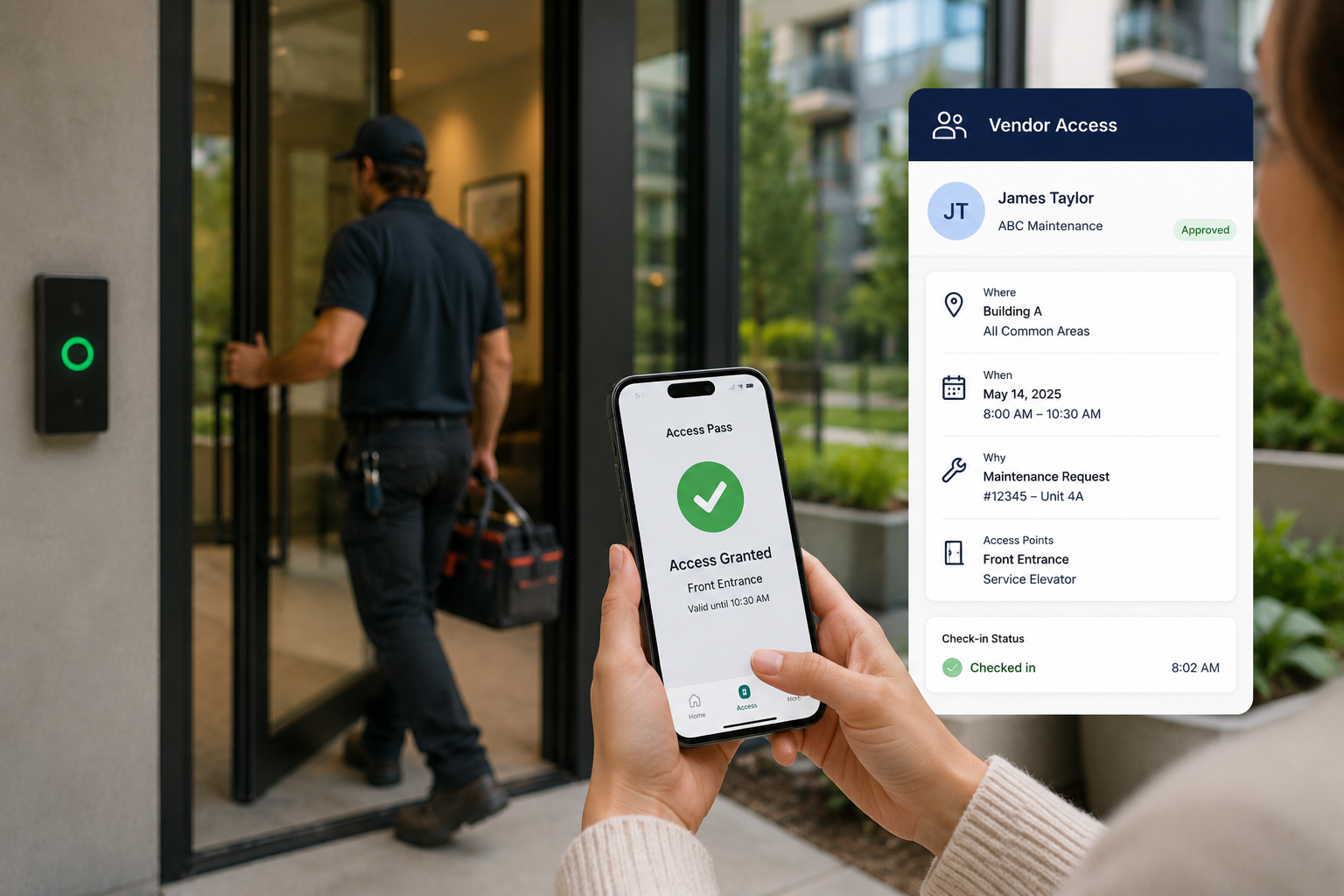
Multifamily vendor access management software helps apartment communities organize contractor entry, service provider access, staff approvals, visitor permissions, and operational follow-up in one connected workflow. For modern property teams, the goal is not just opening doors. The goal is knowing who needs access, when they need it, why they are onsite, and how that access connects to the resident experience.
Primary keyword
multifamily vendor access management software
Search intent
Informational and commercial evaluation for property teams comparing access workflows.
Best fit
Class A multifamily, mixed-use communities, centralized operators, and onsite teams.
What Is Multifamily Vendor Access Management Software?
Multifamily vendor access management software is a digital system that helps apartment communities manage access for contractors, service providers, delivery partners, maintenance vendors, inspectors, cleaning teams, amenity operators, and other non-resident visitors who need controlled access to the property.
Instead of relying on front desk calls, key lockboxes, shared fobs, manual notes, hallway instructions, or one-off text messages, vendor access software creates a more structured process. Property teams can approve access, assign time windows, connect entry to a work order or service request, track who arrived, and reduce the number of interruptions that slow down onsite teams.
For residents, better vendor access means fewer missed appointments, fewer confusing handoffs, and a more professional service experience. For staff, it means fewer repetitive access questions and more visibility into what is happening across the property.
Why Vendor Access Is Becoming a Bigger Multifamily Operations Problem
Apartment communities depend on more third-party service providers than ever before. A single property may coordinate vendors for maintenance, cleaning, package rooms, amenities, events, smart home devices, access control, inspections, pet services, fitness classes, housekeeping, move-ins, repairs, and resident-requested services.
When those access workflows are disconnected, small issues become daily friction. A vendor arrives without the right instructions. A resident expects a service but the front desk has no context. A contractor needs access to an amenity space but the team does not know whether the room is booked. A maintenance vendor shows up during a resident’s unavailable window. These moments create extra work for staff and reduce trust in the resident experience.
Too many manual handoffs
Vendor instructions often move through emails, phone calls, notes, texts, and front desk conversations.
Limited visibility
Staff may know a vendor is expected, but not why they are onsite, who approved access, or whether the visit was completed.
Resident experience gaps
Residents feel the impact when vendors miss windows, lack instructions, or require staff to chase down updates.
What Vendor Access Management Should Include
The best multifamily vendor access workflows do more than issue a temporary entry credential. They connect access to the full operational context around the visit.
1. Time-based access permissions
Vendors should only have access during the approved window. This helps property teams avoid open-ended access, reduce confusion, and keep entry aligned with scheduled service times.
2. Role-specific access
A housekeeping vendor, package room vendor, maintenance contractor, personal service provider, and event partner may each need different levels of access. Vendor access software should support access rules based on role, location, and service need.
3. Connection to service requests and work orders
Vendor entry becomes more useful when it connects to the reason for the visit. If a contractor is arriving for a maintenance request, the team should be able to see the related request, resident notes, access instructions, and follow-up status.
4. Resident communication
Residents should not have to call the office to ask whether a vendor has arrived or whether service is complete. A connected platform can help teams send updates, reduce uncertainty, and make service feel more organized.
5. Staff visibility across the property
Onsite teams need a simple way to understand which vendors are expected, where they are going, what they are doing, and whether the visit requires follow-up.
Bring Vendor Access Into One Connected Resident Experience
ElevateOS helps multifamily teams connect access control, resident communication, service requests, amenities, package workflows, and building operations inside one branded platform.
Schedule a DemoHow Vendor Access Impacts the Resident Experience
Residents do not usually think about vendor access management as software. They think about whether the property feels organized.
When vendor access works well, residents experience faster service, clearer updates, fewer missed appointments, and less back-and-forth with the office. When it does not work well, residents may blame the property team even if the issue started with a third-party provider.
Example: Maintenance vendor access
A resident submits a request for an appliance issue. A third-party technician is scheduled for Tuesday between 10 AM and noon. Instead of the office manually coordinating entry, the access window, resident notes, service request, and communication can be connected. The technician gets the right access at the right time, the resident receives clearer updates, and staff can see whether the visit was completed.
That type of coordination is where vendor access becomes more than a security function. It becomes part of the resident experience.
Common Vendor Access Workflows Multifamily Teams Should Centralize
Vendor access can touch nearly every part of a multifamily property. Centralizing these workflows helps teams reduce one-off processes and create a more consistent operating model.
Maintenance contractors
Coordinate access for repairs, inspections, turns, appliances, HVAC, plumbing, and other service needs.
Amenity service providers
Manage vendor access for fitness classes, event partners, cleaning teams, and amenity operations.
Package and delivery partners
Support controlled access to package rooms, delivery areas, loading zones, and building entry points.
Resident-booked services
Connect service providers such as housekeeping, pet care, personal training, massage, or lifestyle services to resident expectations.
Move-in and move-out vendors
Help movers, installers, cleaners, and inspection teams access the right areas during high-friction transition days.
Portfolio-level operators
Standardize access workflows across multiple communities without forcing each property to build its own manual process.
Vendor Access Management vs. Visitor Management
Visitor management and vendor access management are related, but they are not the same.
| Category | Visitor management | Vendor access management |
|---|---|---|
| Primary use | Guests, friends, family, and resident visitors | Contractors, service providers, delivery partners, and operational vendors |
| Access need | Usually resident-approved guest entry | Often staff-approved entry tied to a task, service request, amenity, or property workflow |
| Operational context | Who is visiting whom | Who is entering, why they are onsite, what they need access to, and what happens next |
A strong multifamily operating system should support both. Residents need simple guest access. Staff need structured vendor workflows that connect access to daily operations.
See how ElevateOS connects access, operations, and resident experience.
Explore how a branded resident app and management portal can help your team reduce app fatigue, improve visibility, and simplify daily building operations.
How ElevateOS Supports Better Vendor Access Workflows
ElevateOS is designed to help multifamily communities bring fragmented resident and staff experiences into one connected platform. Vendor access is most effective when it is not isolated from the rest of the building experience.
With ElevateOS, communities can connect access control, resident communication, service requests, package workflows, amenity operations, onboarding, inspections, and management visibility. That matters because vendor activity often touches more than one department, one resident, or one workflow.
Engage
Keep residents informed with a more consistent app-based experience.
Operate
Give staff clearer workflows for access, requests, amenities, packages, and daily tasks.
Connect
Bring access control and property systems closer to the resident and staff experience.
Concierge
Support premium services and vendor-backed experiences without creating unnecessary operational complexity.
What to Look for in Multifamily Vendor Access Management Software
- Simple access windows: Staff should be able to control when vendors can enter and where they can go.
- Resident app connection: Access should support the resident experience, not sit in a disconnected tool.
- Management visibility: Teams should be able to see vendor activity, request context, and operational status.
- Integration readiness: The platform should connect with the broader property technology ecosystem.
- Portfolio consistency: Operators should be able to standardize vendor workflows across communities.
- Reduced staff interruptions: A strong system should reduce calls, manual coordination, and repeated questions.
Frequently Asked Questions
What is multifamily vendor access management software?
Multifamily vendor access management software helps apartment communities control, schedule, and track access for contractors, service providers, delivery partners, and other non-resident visitors who need access to the property.
How does vendor access software help property teams?
It helps reduce manual coordination, clarify access windows, connect vendor visits to operational workflows, and give staff better visibility into who is onsite and why.
Is vendor access the same as visitor management?
No. Visitor management usually focuses on resident guests, while vendor access management focuses on contractors, vendors, service providers, and operational visitors who need controlled entry tied to a task or workflow.
Why should vendor access connect to the resident app?
Vendor activity often affects residents directly. Connecting access to the resident app can help improve communication, reduce uncertainty, and create a more organized service experience.
What types of vendors need access management in multifamily?
Common examples include maintenance contractors, cleaners, package partners, amenity operators, event vendors, inspection teams, move-in vendors, resident-booked service providers, and smart home or access control technicians.
Everything. One app.
Simplify Vendor Access, Resident Communication, and Building Operations With ElevateOS
ElevateOS helps modern multifamily teams consolidate fragmented resident and staff experiences into one connected community operating system.