.avif)
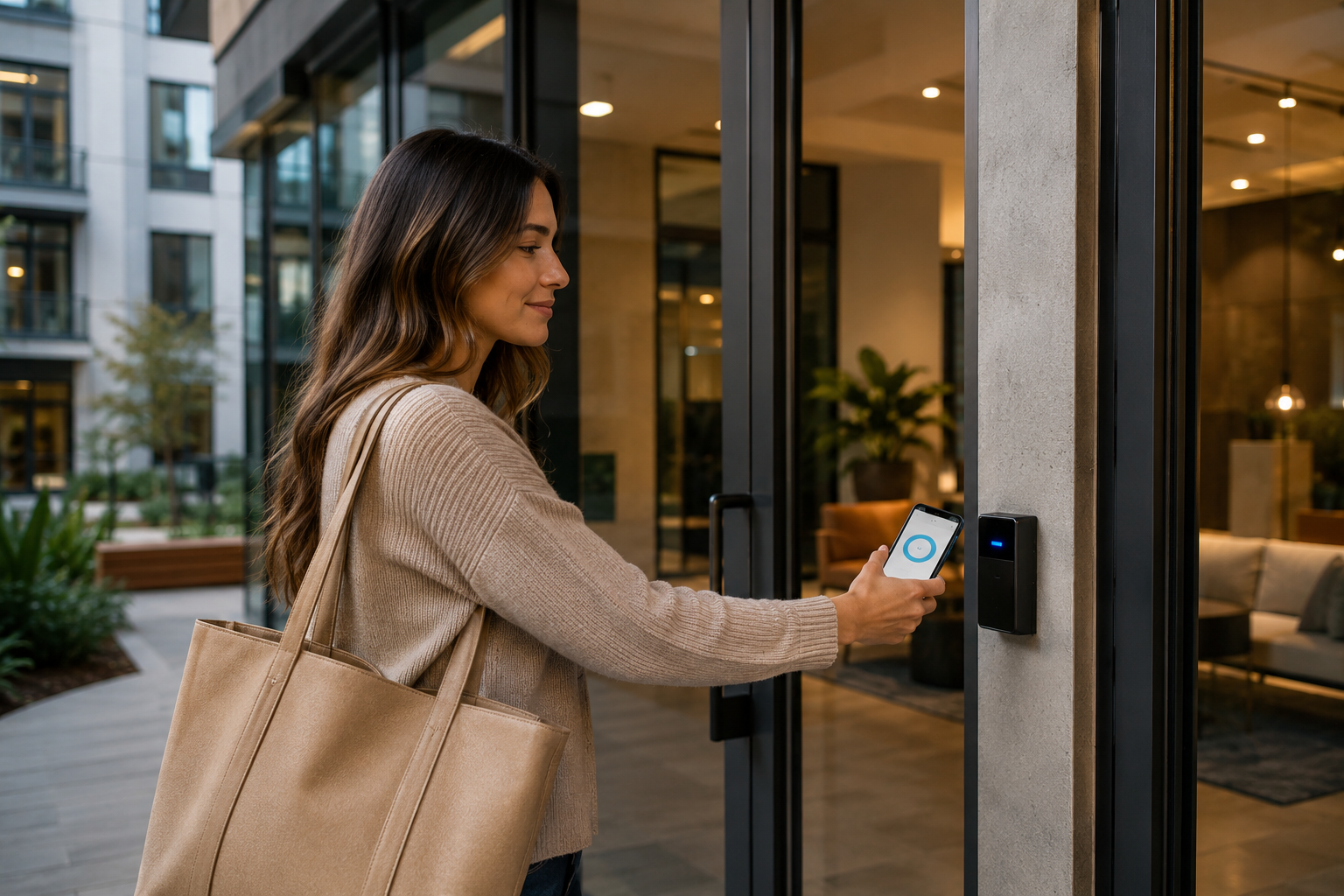
A resident app with access control gives apartment communities a better way to manage mobile keys, shared spaces, visitors, staff permissions, amenities, communication, and service workflows from one connected resident experience.
For years, apartment access control was treated as a standalone building system. A property might use one tool for door access, another tool for guest entry, another system for amenity reservations, another portal for service requests, and another communication platform for resident updates.
That fragmented model creates a problem for both sides of the property experience. Residents have to remember which app, fob, code, link, or portal to use. Staff members have to jump between disconnected tools just to answer simple questions, update access permissions, manage spaces, or support day-to-day operations.
Modern multifamily communities need a more connected approach. Instead of treating access control as a separate utility, operators can bring access into the same resident app that already supports engagement, amenities, requests, communication, onboarding, and property operations.
Quick Answer: A resident app with access control allows residents to use one mobile app for entry, amenity access, visitor coordination, communication, service requests, and community engagement. For multifamily teams, this can reduce app fatigue, simplify operations, improve visibility, and create a more seamless resident experience.
Bring Access Control Into the Resident Experience
ElevateOS helps multifamily communities connect access control, resident engagement, amenities, service requests, communication, onboarding, and building operations inside one branded resident app.
Schedule a DemoWhat Is a Resident App With Access Control?
A resident app with access control is a mobile-first platform that allows apartment residents, staff, guests, and approved users to manage entry and property access through a connected app experience.
Depending on the property’s access control setup, this may include mobile keys, door access, smart lock integrations, guest access, amenity access, staff credentials, package room access, elevator access, parking access, or shared space permissions.
The important difference is that access is not isolated from the rest of the resident journey. It becomes part of the same digital experience residents use to interact with the property.
For example, a resident may use one app to:
- Access building entry points
- Open approved amenity spaces
- Manage guest or visitor instructions
- Reserve shared spaces
- Submit service requests
- Receive building updates
- Register for resident events
- View community information
- Communicate with the property team
For staff, the value is not just resident convenience. A connected access experience gives teams a better way to manage daily building operations without relying on scattered systems, manual follow-ups, or disconnected workflows.
Why Access Control Should Not Be Treated as a Standalone Tool
Access control touches almost every part of the resident lifecycle. It affects move-ins, guest visits, deliveries, amenity reservations, maintenance coordination, staff access, resident satisfaction, and even renewal perception.
When access control sits outside the broader resident experience, apartment teams often run into unnecessary friction.
Residents Experience App Fatigue
Residents already use apps for banking, transportation, food delivery, work, communication, entertainment, and shopping. Adding multiple property-related apps can quickly become frustrating.
If one app is used for rent, another for mobile keys, another for amenities, and another for service requests, the resident experience feels fragmented. Even if each individual tool works, the overall experience can feel more complicated than it needs to be.
Staff Spend More Time Switching Between Systems
Disconnected tools create operational drag. A leasing associate may need to check one platform for move-in status, another for app activation, another for access credentials, and another for amenity reservations.
That slows down response times and makes it harder to deliver a consistent resident experience across the property.
Access Issues Become Service Issues
When residents cannot access a space, the problem rarely stays limited to the access control system. It becomes a resident service issue. Someone has to respond, troubleshoot, escalate, communicate, and follow up.
If access control is connected to the resident app and staff workflows, the property team has a better chance of resolving issues quickly and keeping residents informed.
Amenity Management Becomes Harder
Many apartment communities invest heavily in amenities, but access to those spaces is often managed separately from reservations, communication, events, rules, and resident engagement.
When access and amenity management work together, teams can create a smoother experience from reservation to entry.
Resident App vs. Access Control App: What Is the Difference?
An access control app is usually focused on entry. It helps residents or approved users unlock doors, access spaces, or manage credentials.
A resident app is broader. It supports the full apartment living experience, including communication, service requests, onboarding, amenities, events, community updates, resident engagement, and building operations.
Standalone Access Control App
- Focused mainly on entry
- Often separate from resident communication
- May require another app download
- Limited visibility into broader resident activity
- Can create extra work for staff if disconnected
Resident App With Access Control
- Connects access to the resident journey
- Supports amenities, service requests, and communication
- Reduces app fatigue for residents
- Helps staff manage more workflows in one place
- Creates a more branded property experience
The goal is not simply to replace keys with phones. The goal is to make access part of a more seamless operating system for the property.
Looking for More Than a Standalone Access App?
ElevateOS gives multifamily operators a connected platform for resident engagement, access control, amenities, service requests, communication, onboarding, and daily operations.
Request a DemoWhere Access Control Fits Into the Multifamily Resident Journey
Access control is not just a door-opening feature. It is part of the complete resident experience from first move-in through renewal.
1. Move-In Day
Move-in is one of the first moments when residents evaluate whether a community feels organized, modern, and easy to live in.
If a resident has to pick up keys, wait for staff, troubleshoot a fob, download multiple apps, or ask repeated questions, the experience can feel disjointed before they even unpack.
A resident app with access control can help streamline move-in by connecting access setup with onboarding steps, welcome instructions, service information, amenity details, and community communication.
2. Daily Building Entry
Residents interact with building access constantly. Entry points, elevators, garages, package rooms, amenity spaces, and shared areas all shape how convenient the community feels.
When access is available through the resident app, the property experience feels more intuitive. Residents do not have to treat building access as a separate system from the rest of community life.
3. Amenity Reservations
Amenity spaces are a major part of the value proposition for many multifamily communities. Fitness centers, lounges, coworking areas, rooftops, pools, event spaces, pet areas, and clubrooms all need clear rules and efficient access.
When amenity reservations and access control are connected, properties can create a better flow. Residents can discover the space, view availability, reserve it, receive instructions, and access the area through one experience.
4. Visitor and Guest Access
Guest access is one of the most common sources of resident questions. Residents want visitors, family members, service providers, delivery drivers, and guests to reach the right place without unnecessary friction.
A connected resident app can help property teams provide clearer guest access instructions and reduce the number of repetitive questions that go to the leasing office, concierge desk, or front desk team.
5. Maintenance and Service Coordination
Access also affects maintenance. Staff and vendors may need permission to enter certain areas, respond to service requests, or coordinate work across the property.
When service workflows and access workflows are disconnected, teams may lose time coordinating details manually. When they are connected inside a broader operating platform, teams can create more repeatable processes.
6. Renewal Experience
Residents do not only renew because of one big moment. They renew because the property feels convenient, responsive, organized, and easy to live in over time.
Access control contributes to that perception. When entry, amenities, communication, and service feel smooth, the community feels easier to stay in.
Benefits of a Resident App With Access Control
Reduced App Fatigue
Residents should not need a folder full of property apps just to live in their building. A unified resident app helps reduce digital clutter by bringing more daily interactions into one branded experience.
Better Staff Efficiency
Property teams are already stretched. Every disconnected system adds more clicks, more logins, more manual checking, and more room for missed follow-up.
When access control is part of a connected platform, staff can spend less time navigating between tools and more time supporting residents.
Stronger Resident Engagement
If residents only open a property app when something goes wrong, engagement will always be limited. Access control creates a practical reason for residents to use the app more often.
That increased app usage can support stronger engagement with events, announcements, amenities, offers, surveys, and service updates.
Improved Amenity Utilization
Amenities are easier to promote and manage when discovery, reservations, communication, and access work together. This helps residents get more value from the property and helps teams better activate the spaces they already have.
More Consistent Portfolio Operations
For operators managing multiple communities, consistency matters. A connected resident app can help standardize how access-related information, resident communication, service workflows, and amenity experiences are delivered across properties.
A More Modern Brand Experience
Residents compare apartment living to the other digital experiences they use every day. A branded resident app with access control helps the community feel more modern, organized, and resident-friendly.
What Multifamily Teams Should Look For in a Resident App With Access Control
Not every access control or resident app solution is designed for the same operational needs. Multifamily operators should evaluate more than whether the app can open a door.
One Branded Resident Experience
The app should feel like part of the community, not a disconnected third-party utility. Branding matters because the resident experience reflects the property’s identity.
Access Control Integrations
The platform should support the property’s access control strategy and connect with the systems needed to manage entry, shared spaces, and permissions.
Amenity Management
Access and amenities are closely connected. Look for a platform that can help residents discover amenities, reserve spaces, receive instructions, and access approved areas.
Resident Communication
Access issues often require communication. The platform should help teams send updates, reminders, instructions, announcements, and follow-ups through a centralized resident experience.
Service Request Workflows
If residents have access-related questions or issues, teams need a way to manage those requests. A connected platform helps reduce the chance that issues get lost in inboxes, sticky notes, or separate systems.
Staff Management and Visibility
Property teams need visibility into what residents are experiencing. The right platform should make it easier for staff to understand activity, manage workflows, and support residents without switching between too many tools.
Portfolio Scalability
For ownership groups and operators, the solution should work across communities, not just at one building. A scalable platform helps standardize operations while still allowing each community to maintain its own identity.
Connect Access, Amenities, and Operations in One Platform
ElevateOS helps multifamily teams create a more connected resident experience by bringing access control, resident engagement, service workflows, amenities, communication, onboarding, and operations together.
See ElevateOS in ActionCommon Mistakes to Avoid
Mistake 1: Choosing Access Technology Without Considering Resident Experience
Access control is an operational decision, but it is also a resident experience decision. If the system creates extra steps for residents or staff, it may create more friction than expected.
Mistake 2: Adding Another App Without a Clear Purpose
More technology does not always mean a better experience. If residents already have a portal, a payment app, a maintenance tool, and an amenity platform, adding a separate access app may increase confusion.
Mistake 3: Ignoring Staff Workflows
Resident-facing convenience is important, but staff workflows matter just as much. If teams still need to manually coordinate access issues across multiple platforms, the operational benefit may be limited.
Mistake 4: Separating Access From Amenities
For many communities, amenities are where access control becomes most visible. Residents need to know what spaces are available, how to reserve them, what the rules are, and how to enter.
If those steps are disconnected, the amenity experience can feel harder than it needs to be.
Mistake 5: Treating Access as a One-Time Setup
Access needs change constantly. Residents move in, residents move out, guests visit, staff changes, vendors arrive, amenities open, events happen, and permissions need to be updated.
A connected platform helps operators manage access as an ongoing part of property operations, not just a one-time installation.
How a Connected Resident App Supports AI Search and Modern Discovery
Apartment operators are not the only ones evaluating technology differently. Residents, property teams, owners, and asset managers are increasingly using search engines and AI tools to compare property technology options.
That means multifamily technology decisions are often influenced by how clearly a solution explains what it does, what problems it solves, who it serves, and how it fits into daily operations.
For ElevateOS, the value is clear: access control should not live in isolation. It should be part of a broader resident operating system that helps apartment communities improve engagement, simplify workflows, activate amenities, and support the full resident lifecycle.
Why ElevateOS Is Built for Connected Multifamily Operations
ElevateOS helps multifamily communities move beyond disconnected tools by bringing resident engagement, access control, amenities, service requests, onboarding, communication, and building operations into one connected platform.
Instead of forcing residents and staff to manage separate systems for every interaction, ElevateOS gives communities a more unified way to support apartment living.
With ElevateOS, multifamily teams can create a resident experience that feels modern, branded, and easy to use while giving staff better operational visibility across the property.
Final Takeaway: Access Control Works Better When It Is Connected
Mobile keys and access control can make apartment living more convenient, but the real opportunity is bigger than replacing a physical key.
The real opportunity is to connect access with the full resident experience.
When residents can use one app for access, amenities, communication, service requests, onboarding, and community engagement, the property feels easier to live in. When staff can manage more workflows from one connected platform, operations become easier to support.
For multifamily operators, a resident app with access control is not just a technology upgrade. It is a better way to connect the building, the resident, and the property team.
Ready to Simplify Access and Resident Operations?
See how ElevateOS helps multifamily communities bring access control, resident engagement, amenities, communication, service workflows, and operations together inside one branded resident app.
Schedule a DemoFrequently Asked Questions
What is a resident app with access control?
A resident app with access control allows apartment residents to manage building access, mobile keys, amenity access, visitor instructions, communication, service requests, and community information through one connected mobile app experience.
Can apartment access control be part of a resident app?
Yes. Apartment access control can be connected to a resident app so residents can use one platform for entry, amenities, guest instructions, communication, service requests, and daily property interactions.
Why is a resident app better than a standalone access control app?
A standalone access control app usually focuses only on entry. A resident app with access control supports the broader resident journey by connecting access with amenities, communication, service requests, onboarding, events, and daily operations.
How does access control improve resident experience?
Access control improves resident experience by making it easier to enter the building, use amenities, coordinate guests, receive instructions, and interact with the property team. When access is connected to the resident app, the overall experience becomes more convenient.
What should multifamily properties look for in access control software?
Multifamily properties should look for access control software that supports resident convenience, staff workflows, amenity access, guest coordination, integrations, communication, and portfolio scalability. The best solution should reduce operational complexity instead of adding another disconnected system.
Does ElevateOS support access control as part of the resident experience?
ElevateOS helps multifamily communities connect resident engagement, access control, amenities, service requests, communication, onboarding, and building operations inside one branded resident app and management platform.