.avif)
📌 Key Takeaways
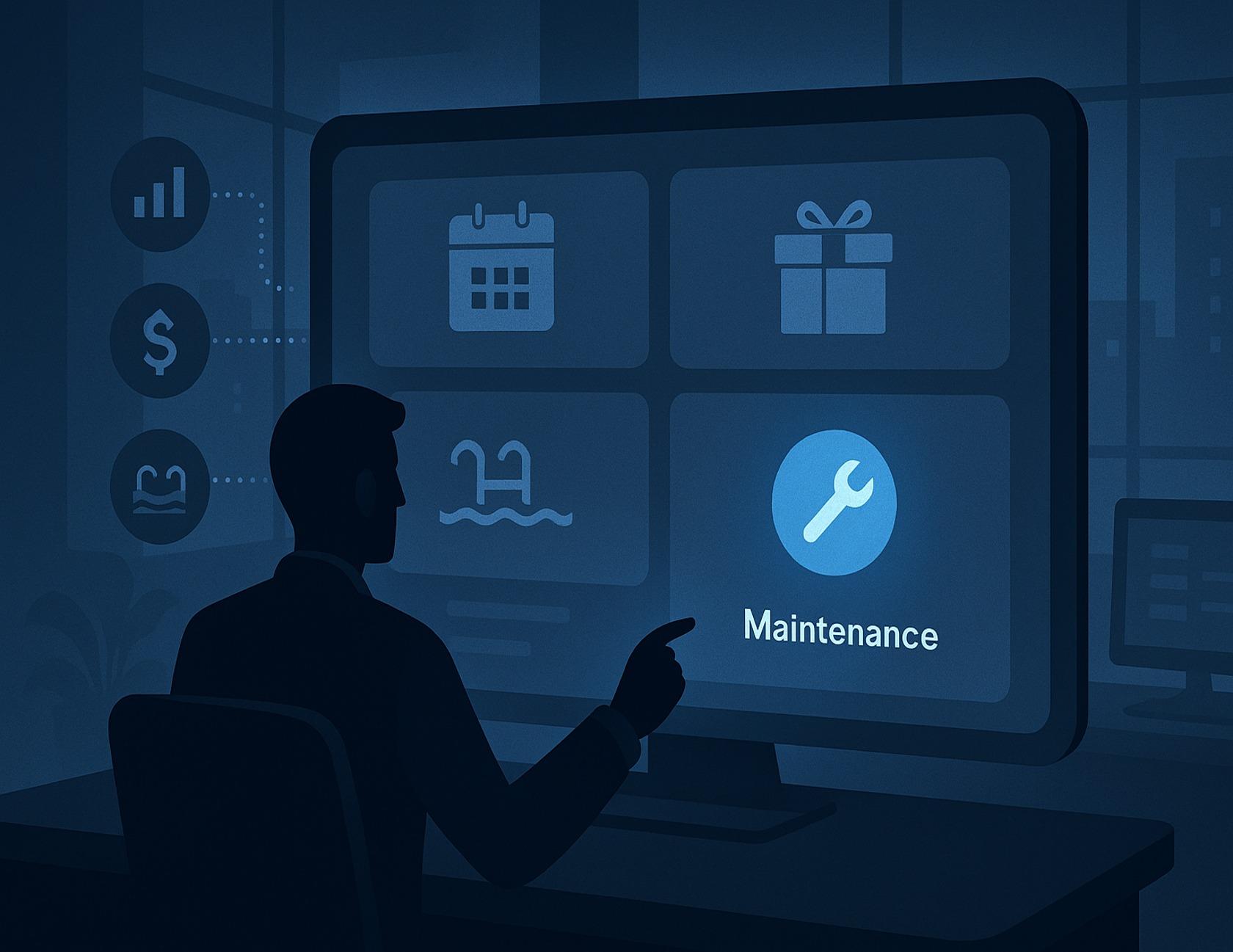
Low resident app adoption isn't a training problem—it's a signal that fragmented digital systems are undermining the hospitality-grade service Class A communities promise.
- Fragmentation Creates Service Coordination Failures: When residents must navigate multiple logins and vendor portals for basic tasks like paying rent or booking amenities, cognitive overload drives them back to phone calls and emails, shifting work from self-service to your property teams.
- Hidden Portfolio Costs Exceed Software Licenses: Beyond underutilized technology spend, fragmentation depletes team capacity through constant system-switching, manual data reconciliation, and fielding questions that automation should resolve—costs that can exceed $9,000 annually per 200-unit community in direct labor alone.
- Unified Platforms Deliver Hospitality-Grade Orchestration: Consolidating 7+ fragmented apps into one building-branded experience with hotel-style concierge services, professional event planning, and seamless amenity management eliminates friction while strengthening resident loyalty and operational predictability.
- Strategic Audits Reveal Highest-Impact Consolidation Opportunities: Mapping the five core service touchpoints—rent payment, maintenance, amenities, packages, and events—by login requirements, interaction complexity, and abandonment patterns identifies where fragmentation most severely undermines service delivery and renewal potential.
- Portfolio Strategy Requires Experience Design, Not More Tools: The question isn't which vendor provides the best point solution for each function, but how to create unified experiences where technology becomes invisible and service delivery matches the premium positioning that justifies Class A rents.
Simplified orchestration protects asset value through predictable, differentiated service.
Property management executives and portfolio directors overseeing Class A communities will find the strategic framework here, preparing them for the detailed operational analysis and implementation guidance that follows.
Your Q3 portfolio review reveals a pattern. Resident app adoption across your Class A communities sits at 23%. The amenity booking platform you implemented remains underutilized. Your on-site teams still field dozens of calls daily for tasks the technology should handle seamlessly.
This isn't a technology failure. It's a service delivery gap masquerading as low adoption.
Across premium multifamily communities, property leadership teams are discovering a strategic truth: fragmented digital experiences erode the hospitality-grade service that justifies Class A positioning. When residents navigate multiple logins, disconnected portals, and vendor-specific applications just to pay rent or reserve amenities, you're not delivering convenience. You're creating friction that undermines brand promise and depresses asset value.
This is app fatigue. And its impact extends far beyond unused software licenses—it shows up in renewal rates, operational efficiency, and the gap between your positioned service level and actual resident experience.
When Digital Tools Undermine Rather Than Elevate Service
Low adoption signals experience design issues, not resident resistance to technology.
App fatigue emerges when residents must orchestrate multiple logins, portals, and vendor applications to complete everyday tasks. One system for rent payment. Another for package tracking. A third for amenity reservations. Separate credentials, interface conventions, and notification settings for each.
What you designed as convenience becomes operational burden. Residents respond rationally: they call or email your team instead.
The impact affects both sides of the service equation. Your property teams toggle between dashboards, reconcile data across systems, and field questions about which portal handles which function. Technology that promised to streamline operations creates additional coordination work.
Here's the strategic framework: how fragmentation undermines service consistency, the portfolio-level implications of low adoption, and actionable approaches to audit and elevate your resident's digital experience. Because the path to hospitality-grade service delivery isn't adding more tools—it's orchestrating a unified experience.
How Fragmented Systems Undermine Hospitality-Grade Service Delivery
Picture a resident in one of your premier communities preparing for her morning. Three simple tasks before leaving for work: pay rent, reserve the rooftop lounge for Saturday evening, and confirm her package arrival.
In a well-orchestrated building, this takes ninety seconds through one branded application. In a fragmented environment, it requires opening three different systems, managing three sets of credentials, and navigating three distinct interfaces.
She opens email to locate the payment portal link—a system she accesses monthly but never bookmarked. Password reset required. She switches to the amenity booking platform with different login requirements. Email address or unit number? Another reset request. The package notification arrives via text from the locker vendor with yet another app download and access code.
By the third system, she abandons the digital path. She calls your front desk at 11 AM. Your team handles the request while managing a move-out inspection.
This represents service coordination failure, not resident technology resistance.
Consider your property manager's operational reality. Six browser tabs open daily: property management system, package tracking dashboard, amenity calendar, maintenance portal, resident communication platform, plus a reconciliation spreadsheet because these systems don't integrate cleanly.
A resident emails about package status. Three system checks to locate tracking details. Another calls about double-booked amenities. Manual cross-reference required because automated conflict detection failed. A third resident needs password reset assistance—again.
Two hours consumed on tasks that should require twenty minutes.
The most expensive software you own is the one your residents refuse to use.
This fragmentation undermines fundamental service delivery. You invested in these systems to elevate efficiency. Instead, you've created coordination complexity that residents can't navigate and teams can't manage effectively.
Industry analysis confirms this pattern. Requiring residents to manage multiple applications for different functions creates frustration rather than convenience, leading residents to bypass digital channels entirely.
The adoption curve is consistent: initial spike during move-in when teams demonstrate each system, then steady decline as cognitive burden becomes apparent. Within sixty days, most residents revert to phone and email communication.
Five Indicators Your Communities Need Service Orchestration
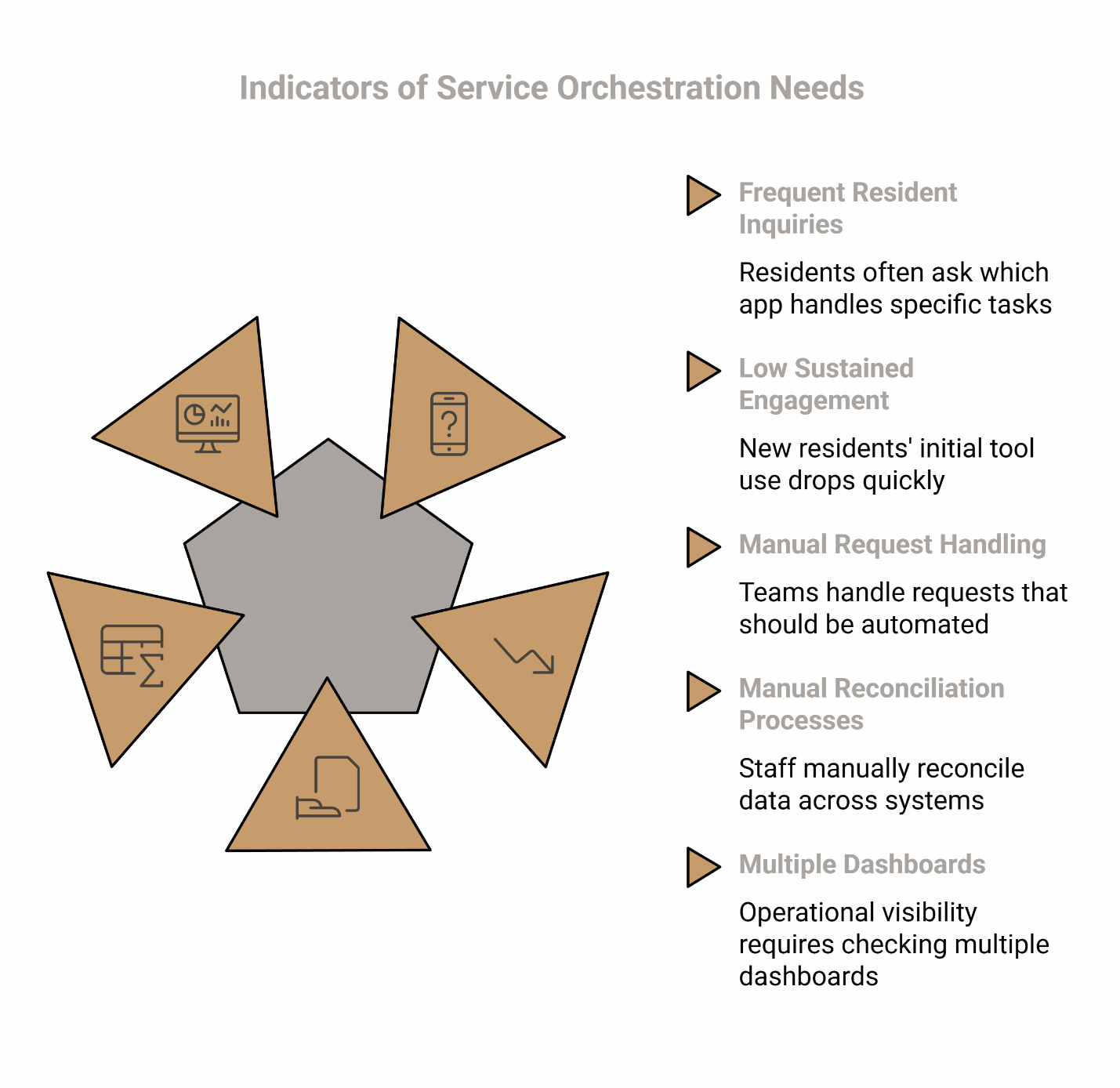
Strategic signals that fragmentation is undermining your service delivery model:
"Which app handles this?" becomes frequent resident inquiry. Residents can't recall which portal manages which function, defaulting to team contact for clarification.
Move-in adoption doesn't translate to sustained engagement. New residents use demonstrated tools during onboarding, but engagement drops within the first billing cycle.
Teams field requests your systems should orchestrate automatically. Amenity bookings, package inquiries, and account questions flow through personal channels instead of self-service.
Staff maintain manual reconciliation processes across platforms. Because systems don't integrate seamlessly, team members create workarounds to track actual activity.
Multiple dashboards required for operational visibility. No unified view of occupancy, maintenance pipeline, package volume, and amenity utilization—requiring five-system morning checks.
These aren't minor inefficiencies. They're symptoms of fragmented experience undermining your technology investment returns.
Portfolio-Level Implications of Service Coordination Gaps
Low adoption manifests on spreadsheets as underutilized licenses. That's visible cost. The portfolio-level implications—elements that don't appear as budget line items—often prove more significant.
Begin with team capacity allocation. Every resident task requiring team intermediation instead of self-service represents displaced high-value activity. Your staff becomes coordination layer between residents and tools designed to serve them directly.
Research on workplace productivity reveals the cognitive cost of fragmented systems. Studies of digital burnout show that workers can switch between applications nearly 1,200 times daily, accumulating roughly four hours weekly of lost productivity. Property teams face analogous cognitive switching costs—toggling between property management systems, communication platforms, and vendor portals—multiplied across dozens of daily resident interactions.
Calculate the portfolio impact. A 200-unit community where teams spend ten minutes per resident inquiry on self-service tasks—password resets, package status, amenity confirmation—accumulates five weekly hours. At $35 burdened hourly rate, that's $9,000 annual direct labor cost per community.
Consider opportunity cost. Those hours could drive portfolio value: touring prospects, orchestrating community experiences, conducting proactive inspections, or deepening resident relationships. Instead, they're absorbed by data rekeying, system reconciliation, and questions automated tools should resolve.
The impact extends to resident satisfaction and asset positioning. When promised conveniences prove confusing or unreliable, residents recalibrate expectations downward. The hospitality-grade community experience justifying your premium positioning begins resembling operational bureaucracy instead.
Service gaps appear in online reputation. Residents mention "too many apps" or "confusing systems" in reviews. These comments signal broader issues: your operational complexity is visible in resident experience, undermining brand perception.
Finally, assess unused capability cost. When adoption hovers at 20-30%, you're funding functionality most residents never access. License fees for idle tools. Integration investments for systems never achieving promised workflow improvements. Training time for staff maintaining manual workarounds because automated processes lack reliability.
This transcends technology issues. It represents experience design gaps affecting portfolio-level service consistency.
Imagine a resident wanting to book your private chef service for an intimate dinner, reserve the penthouse lounge for a client meeting, and schedule the fitness studio for their personal trainer—all in under two minutes through one elegant interface. That's the hospitality benchmark Class A communities should meet. Fragmentation makes it impossible.
From Fragmented Systems to Unified Resident Service Orchestration
The solution isn't enhanced resident education or persistent reminders. It's addressing root cause: fragmentation undermining service delivery.
A unified resident app consolidates essential functions into one building-branded experience. Rent payment, maintenance requests, amenity reservations, package notifications, community messaging, and access to hotel-style concierge services—all through one interface with single-credential access.
For residents, cognitive load drops dramatically. No recall required for which tool handles which function. No credential management across multiple systems. They open their building's app; everything needed appears in consistent, intuitive format.
For property teams, a unified platform serves as operational command center. Instead of toggling between six systems to understand community activity, you gain real-time visibility into operations, engagement, and service delivery through one dashboard.
This extends beyond software consolidation. It represents resident experience redesign from foundational principles: what if residents never thought about which app to open?
Superior digital experiences become invisible. Residents shouldn't notice technology. They should only notice that everything in their community simply works—like a five-star hotel where services orchestrate seamlessly in the background.
Consider how Class A communities approach physical amenities. You don't require residents to coordinate with seven vendors for gym access, pool reservations, coworking space, and event registration. You provide one seamless amenity experience, orchestrated by your team.
Your digital experience deserves identical principles. One entry point. One brand. One consistent experience across every touchpoint.
Specific capabilities that elevate service delivery:
White-label resident application consolidates 7+ fragmented vendor apps into one building-branded platform, eliminating app fatigue while strengthening brand identity and resident loyalty.
Hotel-style concierge services integrate directly into your platform—housekeeping, pet care, personal training, massage therapy—bookable in seconds, driving deeper engagement and additional revenue streams.
Professional event planning team orchestrates community experiences that build connection and retention, from intimate wine tastings to rooftop yoga sessions, all managed through your unified system.
Amenity management tools automate reservations, reduce coordination workload, and capture revenue from premium spaces like guest suites and party lounges—streamlining operations while elevating resident experience.
Each capability directly supports portfolio objectives: stronger renewals, operational efficiency, predictable service delivery, and asset value protection through differentiated resident experience.
Achieving this requires thoughtful integration. A unified resident experience platform must connect with existing property management systems, coordinate with access control and package vendors, and maintain reliable performance across all resident-dependent functions.
The alternative—continuing to layer point solutions while questioning low adoption—isn't sustainable portfolio strategy.
Conduct a Service Delivery Audit Across Your Communities

Before technology changes, establish clear understanding of where coordination gaps exist. Here's a practical framework for assessing resident digital journey:
Identify your five core service touchpoints. Focus on interactions driving most resident-team contact: rent payment, maintenance requests, amenity reservations, package receipt, event communication.
Map application and credential requirements. Document how many different applications or portals residents access per task and separate login credentials required. Single tasks requiring multiple apps or logins introduce avoidable friction.
Measure interaction complexity. Experience each task via mobile device. How many screens from intent to completion? How many taps required? Make this tangible. Rent payment in fragmented environments might involve: open browser, locate email, click portal link, authenticate, navigate to payments, select method, confirm, await email receipt—eight distinct steps when two should suffice.
Identify abandonment patterns. Determine where residents typically abandon digital paths for team assistance. Which steps trigger password resets, confusion, or complaints? These abandonment points represent highest-impact consolidation opportunities.
Assess team coordination burden. Evaluate from staff perspective. How many dashboards, portals, or inboxes require daily checks for operational visibility? Where does data re-entry occur across systems? Which tasks represent technology-created work rather than genuine resident needs?
Score and prioritize strategically. Apply simple assessment: Green indicates one app, one login, minimal complexity, rare abandonment. Yellow signals single app but clunky experience with some confusion or manual intervention. Red means multiple apps or credentials, frequent abandonment, significant staff rework.
Initial consolidation initiatives should address red-scored tasks. They represent highest coordination costs and greatest resident friction in daily community interactions.
Elevate Service Delivery Through Strategic Orchestration
Low adoption doesn't reflect resident capability or technology resistance. It signals experience design containing unnecessary complexity.
Portfolio implications extend beyond unused licenses. They manifest in displaced team capacity, reduced resident satisfaction, missed operational efficiency opportunities, and widening gaps between positioned service level and actual delivery.
The path forward isn't additional tools, reminder campaigns, or expanded training. It's simplifying experience at foundation level. One building-branded application. One destination for residents to pay, book, request, and connect. One command center for teams to monitor and orchestrate operations.
This shift requires reconsidering assumptions about digital tools in Class A communities. Instead of "Which vendor provides best point solution per function?" the strategic question becomes "How do we create unified experience making technology invisible and service effortless?"
That conversation deserves engagement with leadership teams, technology partners, and residents. Communities solving app fatigue won't be those with most applications. They'll be those where residents never think about applications—where service simply works like hospitality-grade properties residents expect.
Begin your service delivery audit this week. Map current ecosystem, identify highest-friction touchpoints, share findings with portfolio leadership. Once you understand precisely where coordination gaps exist, you can orchestrate a more elegant path forward.
Talk to our team about designing a unified resident service fabric for your Class A portfolio. For deeper exploration of how unified platforms elevate multifamily operations, explore additional frameworks and case studies in our resources library.
Frequently Asked Questions
What is app fatigue in multifamily properties?
App fatigue occurs when residents and property teams navigate multiple logins, portals, and vendor applications for everyday tasks. The resulting cognitive burden increases friction, reduces adoption, and shifts work to personal communication channels instead of self-service digital tools.
How can we strengthen resident app adoption across our portfolio?
Focus on reducing friction at source. Consolidate essential functions into one building-branded application with simplified authentication, standardized user paths for common tasks, and clear communication about one consistent service destination. Training and reminders cannot overcome fundamentally fragmented experience.
Does unified resident application truly outperform specialized point solutions?
For most Class A communities, yes. Unified platforms reduce cognitive load for residents and teams, strengthen engagement across all service functions, and eliminate manual reconciliation work from disconnected systems. Specialization benefits get overwhelmed by fragmentation costs.
How do we quantify portfolio impact of low adoption?
Estimate monthly team hours spent on requests that should route through self-service channels. Multiply by burdened labor rates. Add underutilized software license costs. Factor service delays, response time impacts, or resident satisfaction effects from overwhelmed teams managing system coordination. The portfolio total often reveals significant opportunity cost that adoption percentages alone don't capture.
Can we address app fatigue without replacing our entire technology stack?
Meaningful improvement requires addressing fragmentation directly. While simultaneous replacement isn't necessary, you need clear consolidation strategy. Begin by mapping audit results to identify systems creating greatest resident and team friction. Prioritize consolidating those first, then work systematically through remaining stack with unified platform approach guiding portfolio-level decisions.
Disclaimer: This article is for informational purposes only and does not constitute legal, financial, or operational advice. Every community is different; property owners and management teams should consult their own legal, financial, and technology advisors before making decisions about software, staffing, or resident policies. All services mentioned are available to all residents with equitable access managed according to community policy and fair housing requirements.
Our Editorial Process
Content from the ElevateOS Insights Team is developed using a combination of internal expertise, customer feedback, and reputable third-party research. Articles are reviewed for clarity and accuracy at the time of publication, but technology, regulations, and market conditions change quickly. Where data or sources are cited, readers should verify whether more recent information is available.
About the ElevateOS Insights Team — Our team turns complex topics in multifamily operations, resident experience, and proptech into clear, practical guides. While every piece is carefully reviewed, our content is intended to support—not replace—the judgment of experienced property professionals and their advisors.
References
[1] Multifamily Insiders. App Fatigue and the Consequences of Feigning Convenience. Retrieved from https://www.multifamilyinsiders.com/multifamily-blogs/app-fatigue-and-the-consequences-of-feigning-convenience
[2] PeopleOne. How Leaders Can Help Employees Unplug and Combat Digital Burnout. Retrieved from https://www.peopleone.io/resources/blogs/how-leaders-can-help-employees-unplug-and-combat-digital-burnout/