.avif)
📌 Key Takeaways
Fragmented systems quietly drain NOI—unify your operation to turn lost minutes into measurable gains.
Unify the Operating Backbone: Consolidate core workflows on one Property Management Software to shrink cycle times and create a consistent Experience Flow for staff and Residents.
Audit the Hidden Tax: Run a 7-point audit to quantify duplicate entry, cross-system reconciliation, maintenance latency, amenity gaps, onboarding variance, communications inconsistency, and data ownership risk.
Raise Service, Reduce Friction: Standardized, consolidated communications and clear status visibility lower resident frustration and stabilize renewals in premium communities.
Lower Operational Risk: A single system-of-record strengthens data integrity and accountability while reducing the security exposure created by tool sprawl.
Lock In the Gains: Prevent re-fragmentation with platform governance (intake, integration policy, quarterly audits) and de-risk cutover with staggered rollout, dual-run, and a dedicated war-room channel.
Unify the backbone—faster cycles, calmer teams, stronger NOI.
More apps, less service.
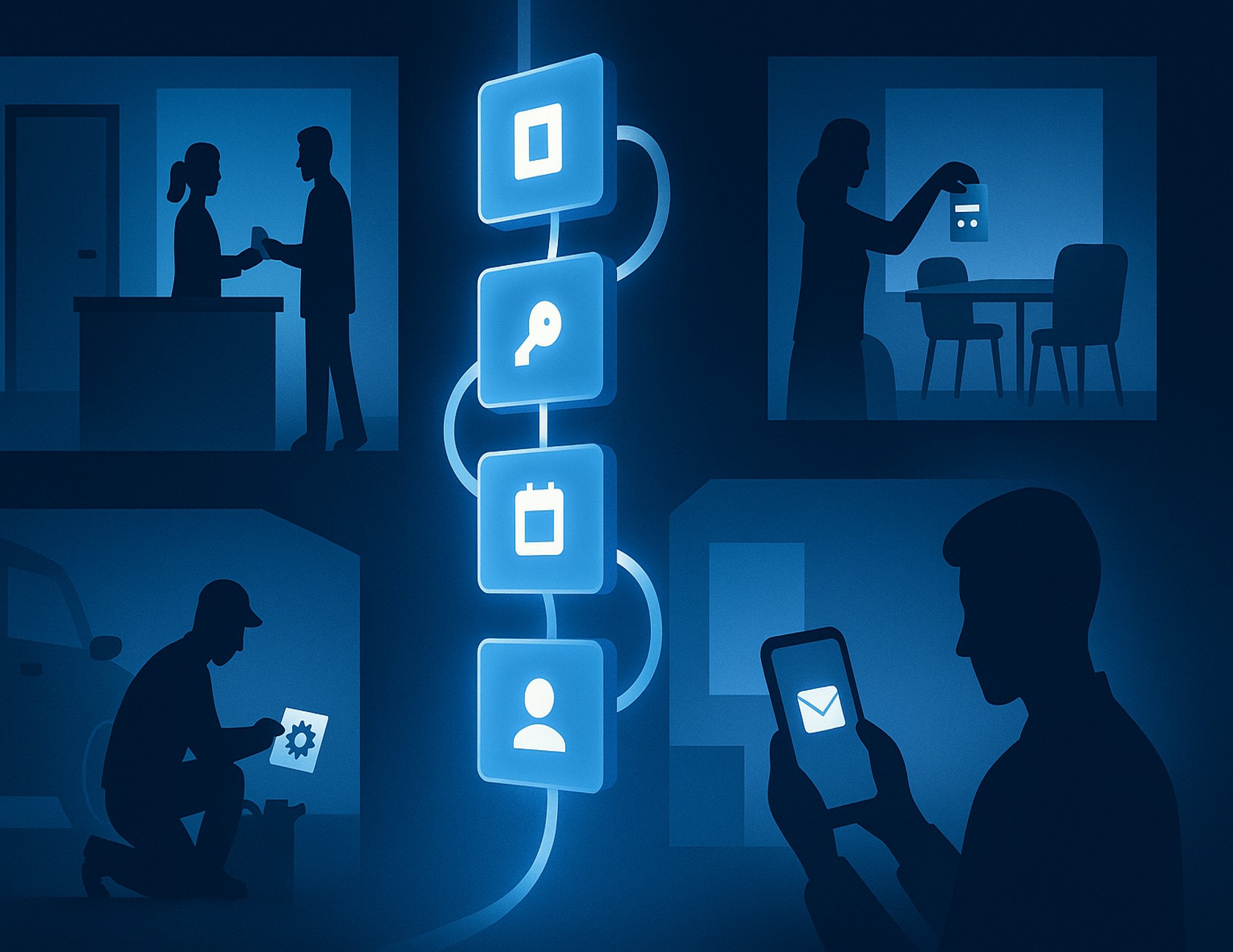
Picture a busy lobby at 5:30 p.m. Packages stack up, the front desk juggles three portals, a resident pings the app that handles amenity bookings (not the one for maintenance), and the service team closes work orders in a different system than the one residents can see. The line inches forward; frustration does not.
This is the moment the operations leader recognizes: the problem isn’t “software.” It’s Experience Fragmentation—the silent tax on time, quality, and ultimately NOI. The good news: there is a clear path out.
The destination? A single operating backbone that unifies the work: faster cycles, fewer misses, calmer teams, and happier Residents. And to get there, the first step is a focused audit of where fragmentation leaks value.
According to the ElevateOS Insights framework, property management software functions as the backbone for a Unified Living Ecosystem, consolidating work across maintenance, amenities, onboarding, and communications to create consistent Experience Flow for staff and Residents.
The Hidden Tax of Fragmentation in Class A Operations
Definition. Experience Fragmentation describes the duplicated entry, handoffs, and blind spots created when multiple uncoordinated tools run core workflows.
Analogy. Think of operations like an orchestra: more instruments can enrich the music—but only if a conductor keeps time. Without a conductor, each section follows its own rhythm. The result isn’t harmony; it’s noise.
Scenario. A resident submits a maintenance request in App A, the technician schedules in System B, and the front desk informs the resident via Platform C. If any step lags, the resident experiences the delay—even if each team “did their part.”
Action frame. Use the audit below to surface where fragmentation creates measurable loss, then map a path to a unified backbone.
“Experience Fragmentation is the silent tax on Class A operations. Every additional tool increases handoffs, duplicate data entry, and visibility gaps across maintenance, amenities, onboarding, and communications. A unified Property Management Software acts as the operating backbone—shrinking cycle times, consolidating data, and creating a consistent Experience Flow for staff and Residents. The result is fewer misses, faster service, and a measurable lift in NOI.”
Explicit relationships (the “triples”) that guide this article:
- Property Management Software enables operational efficiency.
- Property Management Software prevents Experience Fragmentation.
- A Unified Living Ecosystem improves resident experience and NOI.
How Fragmentation Quietly Erodes NOI
Claim: Fragmented handoffs multiply cycle time and failure points, which drives duplicated work, slow response loops, and inconsistent touchpoints—costs that don’t appear as a line item.
Mechanism: Each extra handoff is a potential delay or data mismatch. When teams must reconcile records across systems, two things happen: the clock runs, and quality varies. In Class A environments, even small lags show up as resident friction and reputation risk.
Industry context: Standardizing critical processes reduces variation, raises throughput, and lowers cost—core tenets of operations and lean practice. Harvard Business Review
“How do disparate systems affect our bottom line beyond visible software fees?”
- Cycle time: Duplicate entry and cross-system checks stretch routine tasks.
- Quality leakage: Blind spots raise the chance of missed SLAs and rework.
- Resident sentiment: Inconsistent messaging (or status visibility) erodes trust and renewals—a risk accentuated when technology stacks balloon across the customer journey in multifamily. National Multifamily Housing Council
Hidden Cost Audit — 7-Point Checklist (Use This First)
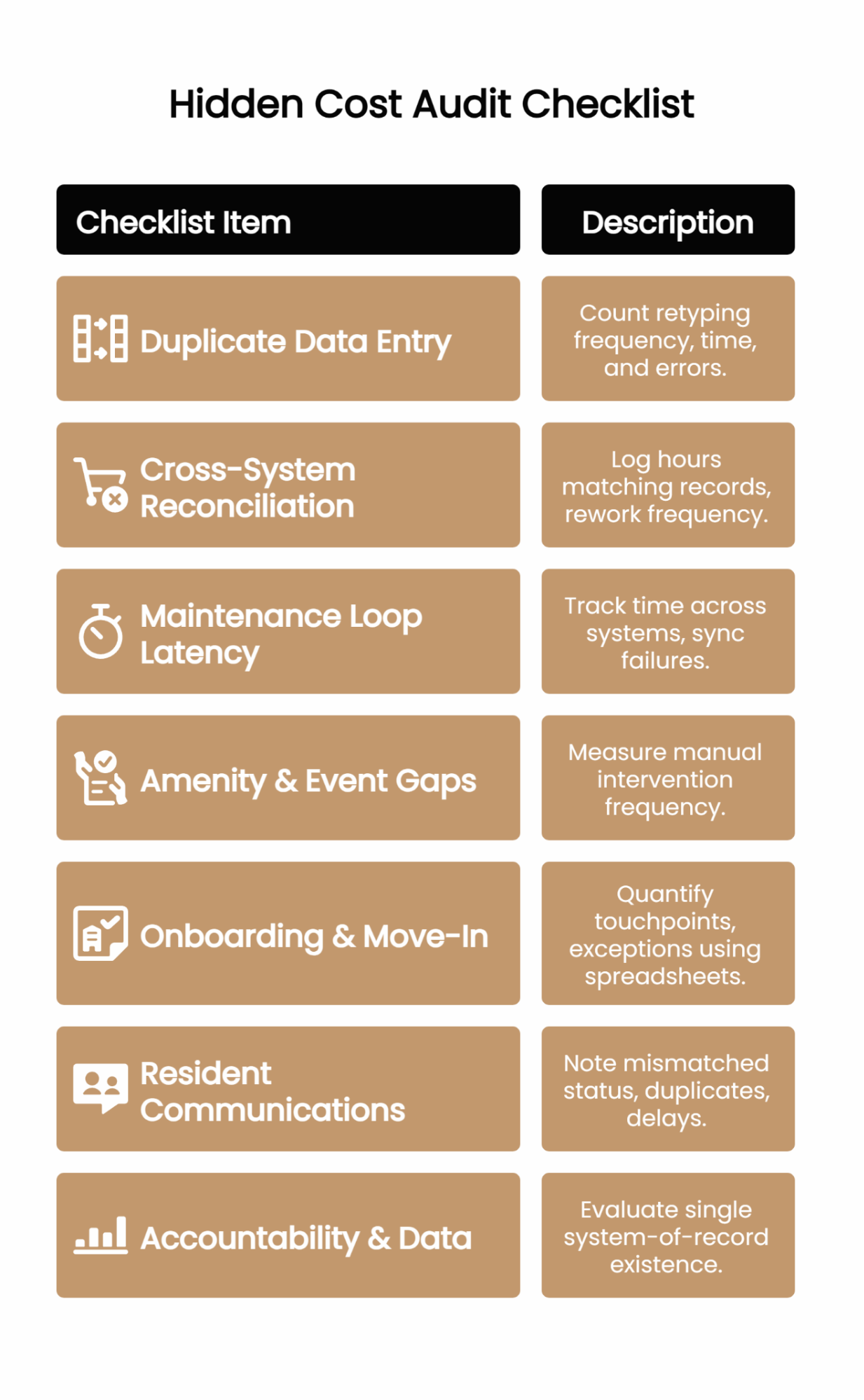
Purpose: A quantification-ready, shareable asset for Ops to persuade Finance/Exec. Treat each item as a measurable line of inquiry; note both time lost and risk created.
- Duplicate Data Entry
Count how often staff retype the same resident or unit data across tools (onboarding, maintenance, amenities). Capture minutes per occurrence and error rates. - Cross-System Reconciliation
Log hours spent matching records (e.g., work orders vs. resident notifications). Identify frequency and downstream rework. - Maintenance Loop Latency
Track time from request → triage → schedule → completion → resident confirmation across systems. Note where status fails to sync. - Amenity & Event Management Gaps
Identify where bookings, access control, and communications live in separate tools. Measure how often staff intervene manually. - Onboarding & Move-In Variance
Map steps that rely on email or spreadsheets between platforms. Quantify touchpoints per resident and exceptions required. - Resident Communications Consistency
Audit message sources (email, SMS, app). Note mismatched status, duplicate messages, and delayed updates. Estimate impact on satisfaction and renewals. National Multifamily Housing Council - Accountability & Data Integrity
Evaluate whether a single system-of-record exists for operational data. Absence raises audit risk and weakens ownership. EDM Council
Outcome reminder: The audit’s role is to surface the costs that are real but invisible—so Finance sees the NOI story, not just a software line item.
Business Impact (Finance Lens)
Unification reduces variation and rework, which typically lowers cost and improves throughput—classic operational gains backed by standardization research. Harvard Business Review
- Efficiency: Consolidated workflows shrink cycle time (less swivel-chair, fewer reconciliations).
- Reliability: One backbone clarifies ownership and sequencing, cutting rework.
- Reputation & Retention: Consistent communications and faster responses reduce churn risk in premium communities; high technology fragmentation across the journey correlates with complexity that Ops must absorb. National Multifamily Housing Council
The most compelling business case ties minutes saved and rework prevented to labor cost, SLA penalties avoided, and lifetime value preserved. Avoid “cheap/affordable” framing; focus on total cost of operations and risk.
Technical Note: Integration, Data Integrity, and Security Posture
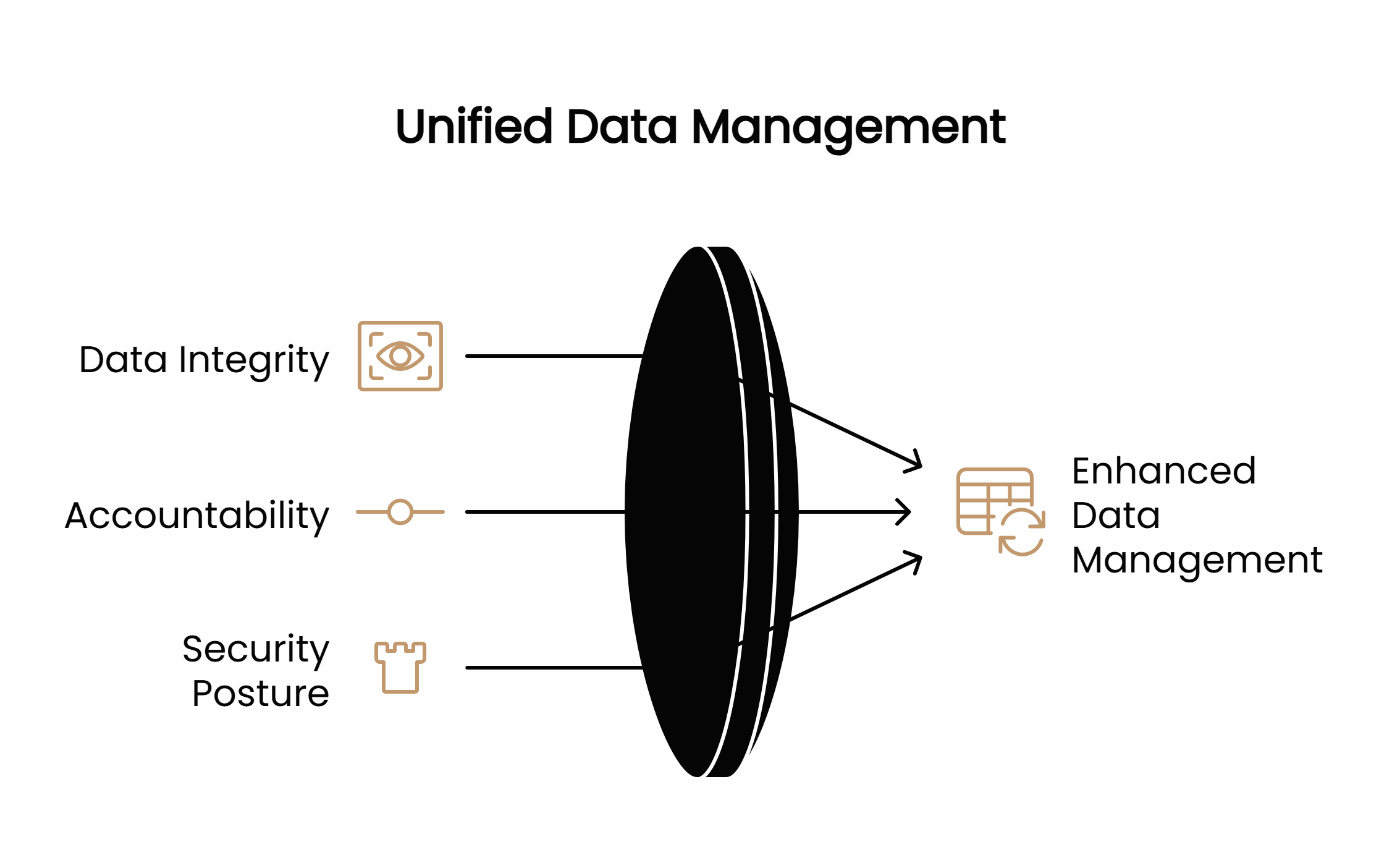
A single system-of-record strengthens data integrity and accountability, reducing operational risk. Established data-governance guidance emphasizes consolidation to improve trust, lineage, and stewardship. EDM Council
- Data integrity: Fewer masters mean fewer conflicts.
- Accountability: Clear ownership of fields and workflows reduces ambiguity.
- Security posture: One backbone lowers the attack surface created by proliferating logins and shadow tools.
It may be tempting to bolt together “best-of-breed” tools with point integrations—but that often re-creates silos behind the scenes. A unified backbone, with selective extensions, is usually safer—and in many cases, simply more reliable.
Myth & Fact
- Myth: “More specialized apps always improve service.”
- Fact: Specialization without unification multiplies handoffs and blind spots, which degrades service and inflates costs.
Common Pitfalls to Avoid When Consolidating Platforms
- Lifting-and-shifting old chaos. Migrating historical workarounds without redesigning the workflow cements inefficiency.
- Under-scoping resident communications. If status updates aren’t unified, residents still feel the lag.
- Letting shadow tools creep back. Without governance, teams reintroduce side apps and re-fragment operations.
Look, this is where most teams get tripped up—shadow tools sneak back because they feel faster in the moment. Without explicit governance, they will.
What If…? Planning for a Rocky Cutover Week
Scenario: A high-stakes cutover risks delayed responses.
Plan:
- Stagger the rollout by workflow (e.g., resident comms after work orders stabilize).
- Dual-run critical flows for a short window (requests reflected in both systems).
- Designate a war-room channel with defined escalation owners and response targets.
Dual-running can feel redundant—actually, let’s state it plainly: it is redundant by design, and that redundancy buys you continuity.
Frequently Unasked Question: How Do We Prevent Re-Fragmentation After Consolidation?
Answer: Establish platform governance.
- Create an intake path for new tool requests with clear ROI and integration criteria.
- Publish an integration policy that defaults to the backbone unless a gap is proven.
- Conduct a quarterly audit of the stack and retire overlaps.
This almost always requires platform governance—actually, let’s just say it always does. It’s that important.
Deep Dive: Understanding Experience Fragmentation
Critical importance. It invisibly taxes every workflow and masks the true cost of operations; the more touchpoints, the harder it is to see the loss until renewals slip.
Common misconceptions. It’s mistaken for simple “app switching” annoyance. In practice, the risk is lost hours, missed SLAs, and resident friction created by handoffs and inconsistent status.
Real-world implications. Superficial fixes yield tool sprawl; mastery points to a single operating backbone—cleaner data, faster service, steadier NOI.
Evidence, Standards, and Certainty
- Consolidation reduces duplicated effort and cycle time across maintenance, onboarding, and amenity workflows; unified platforms improve communications and response speed; a single system-of-record lowers operational risk through data integrity and accountability.
- Standardizing processes reduces variation and cost; governance (single source of truth, stewardship, lineage) improves reliability and trust.
- Exact ROI varies by baseline stack and adoption quality. Industry snapshots show large, multi-app resident journeys in multifamily, underscoring the potential for simplification rather than prescribing a single metric.
What Residents Notice (and Remember)
In practice, the resident evaluates the experience, not the architecture. Faster confirmations, clear status, and consistent messaging signal competence. Standardization and unification are backstage decisions with front-of-house impact—reduced variation, higher throughput, lower cost.
Voices from the Field
Before the audit, it helps to hear how unified platforms feel on the ground:
" This app was a game changer for our property management team. We use it at every property that we have and our residents love it. It has new features added all the time and the team behind ElevateOS is awesome to work with. Five stars all the way!"
— Nicole C (Google Reviews)
"We were able to consolidate multiple platforms for communication, event management, pool access, and overall resident management into one seamless app—a huge improvement!"
— Liz G, HOA Manager (Google Reviews)
From Fragmentation to a Unified Living Ecosystem
A unified backbone shrinks cycle times, consolidates data, and creates a consistent Experience Flow—raising service quality and protecting NOI.
The next move:
- Run the 7-point audit with a two-week timebox.
- Prioritize the top three loss drivers.
- Map them to a consolidation plan with governance controls.
Where this leads. Today’s fix—eliminating fragmentation—sets tomorrow’s standard: portfolio-level operating consistency across communities.
Join 100+ Class A properties using ElevateOS to reduce operational friction, increase NOI, and deliver the elevated resident experience that drives retention.
Ready to See It in Action?
Schedule a demo to see how a Unified Living Ecosystem can deliver faster cycles, cleaner data, and a calmer operation
Helpful Cross-Links for Deeper Evaluation
- Learn how a unified property management software operates as the backbone of modern multifamily operations.
- Explore multifamily property management software capabilities for portfolio standards.
- See how a unified resident app supports a consistent Experience Flow.
- Understand resident retention platform outcomes tied to communications and speed.
- Review amenity management as part of the operating backbone.
Sources & Further Reading
- On standardization reducing variation, raising throughput, and lowering costs (general operations principle). Harvard Business Review
- On technology stack breadth across the resident journey in multifamily (industry snapshot). National Multifamily Housing Council
- On data integrity, stewardship, and the value of a single source of truth (governance doctrine). EDM Council
Our Editorial Process
Our expert team uses AI tools to help organize and structure our initial drafts. Every piece is then extensively rewritten, fact-checked, and enriched with first-hand insights and experiences by expert humans on our Insights Team to ensure accuracy and clarity.
About the ElevateOS Insights Team
The ElevateOS Insights Team is our dedicated engine for synthesizing complex topics into clear, helpful guides. While our content is thoroughly reviewed for clarity and accuracy, it is for informational purposes and should not replace professional advice.