.avif)
📌 Key Takeaways
Stop juggling apps—restore Experience Flow with one operational layer built for Class A expectations.
Unify the Control Layer: Use Property Management Software as the operational control layer to coordinate amenities, onboarding/move-in/out, maintenance, packages, and resident communications through one queue and one inbox.
Eliminate Context Switching: Consolidate tools to reduce cognitive load and shorten time-to-resolution, producing faster, more consistent five-star service across the community.
Run the Experience Flow Audit: Diagnose fragmentation across Resident Journey, Staff Workflow, and Data & Communications, then map each sign to a unified-platform fix you can implement this week.
Governance Prevents Re-Fragmentation: Assign a system owner, codify data continuity and integrations, and prefer platform-native modules to avoid shadow processes and duplicate work.
Pilot, Then Scale: Time-box a 30–60 day pilot with clear metrics and an executive cadence to remove blockers before rolling out platform-wide.One app, one queue, one inbox—calm, consistent, Class A service.
Too many apps. Too little flow.
The conference room is quiet. A maintenance lead scrolls three dashboards to answer one resident’s question about a pool closure while a concierge manually re-enters a package note in a separate messaging app. Meanwhile, a move-in task is waiting in an inbox no one is staring at.
If this sounds familiar, the issue isn’t effort or talent—it’s fragmentation. You’re running a five-star building on a maze of tools.
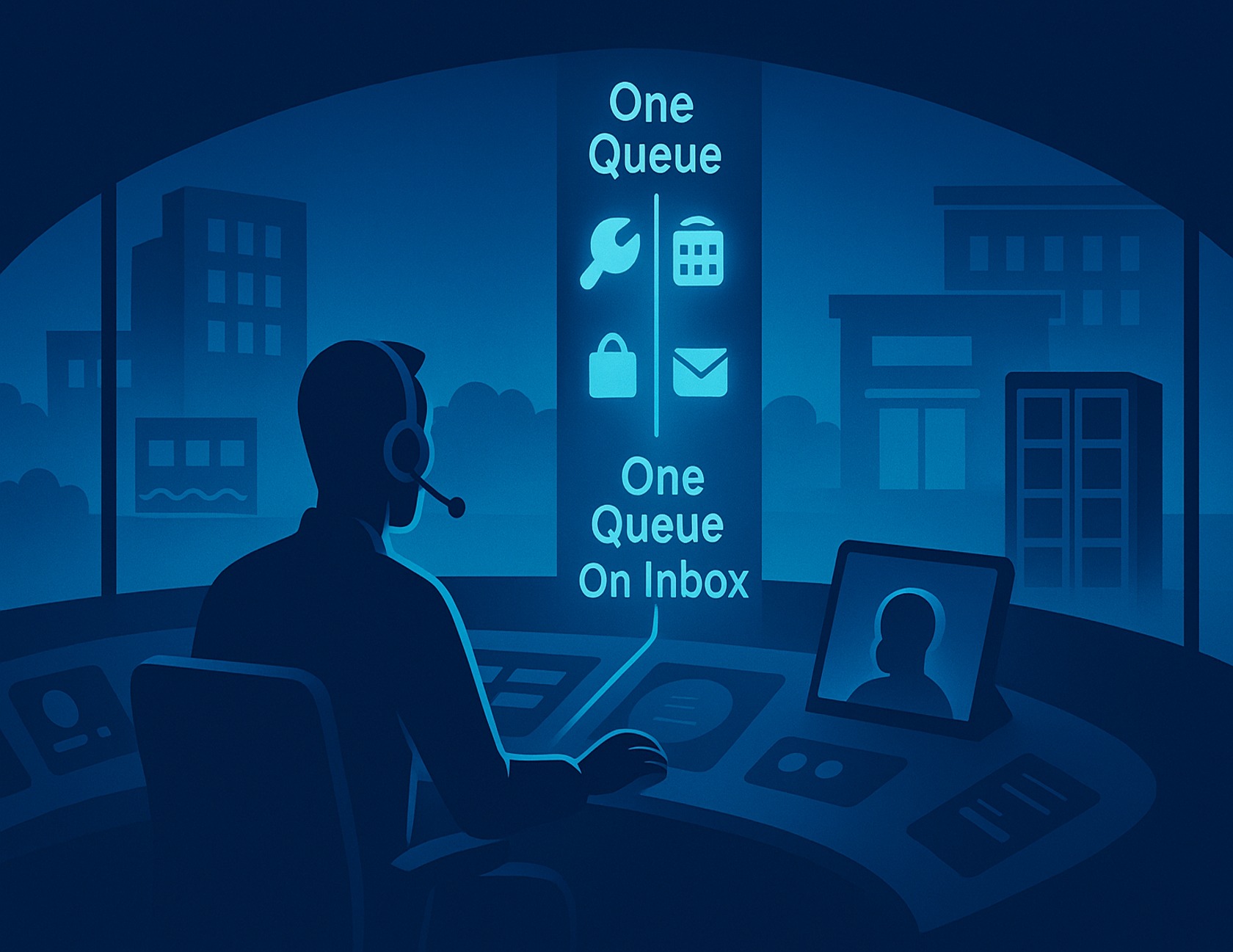
Here’s the relief picture: one app for residents, one queue for staff, one inbox for communications—everything stitched together so each journey moves without friction. That’s Experience Flow, and restoring it is the point of consolidating into property management software.
In essence: experience fragmentation happens when residents and teams traverse multiple disconnected apps and tools to complete a single journey. In Class A communities, this breaks Experience Flow, inflates manual work, and invites inconsistency that residents perceive as substandard service. A unified property management platform consolidates these touchpoints into one operational layer—coordinating amenities, onboarding, maintenance, packages, and communications—so every task moves as one continuous flow that protects brand standards and NOI.
“Adding more apps rarely adds more experience—it fractures it.”
What Fragmentation Costs
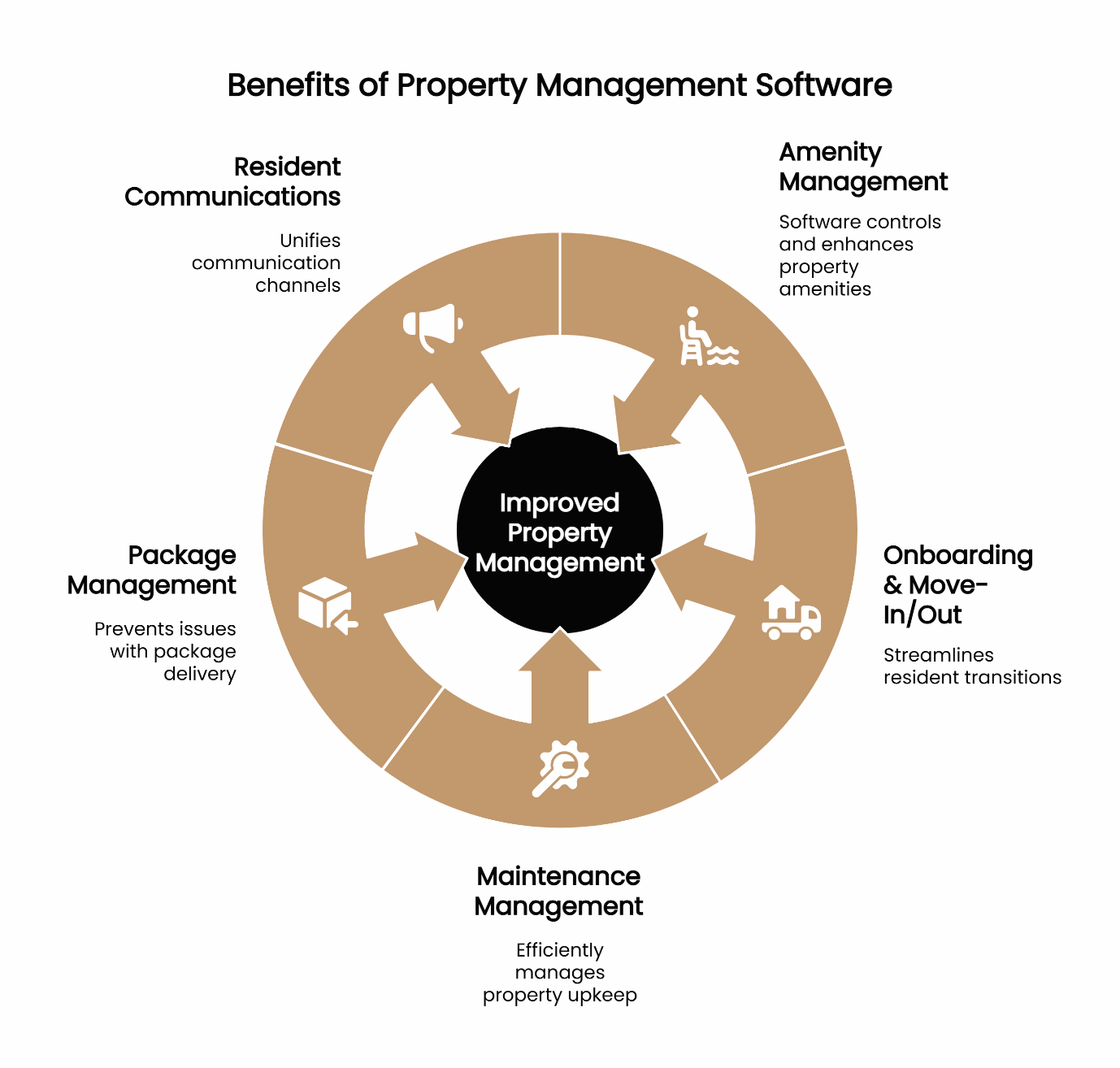
Statement of relationships:
Property Management Software is a control layer for Amenity Management, streamlines Onboarding & Move-In/Out, enables Maintenance Management, prevents Package Problems, and unifies Resident Communications—which together reduce context switching, shorten time-to-resolution, and stabilize brand standards across the building.
Why this matters: excessive app toggling is cognitively taxing and slows service; fewer systems mean fewer handoffs, fewer blind spots, and faster resolutions. Harvard Business Review has documented the drag imposed by toggling between applications and constant context switching, which erodes attention and time—exactly the pattern seen when teams juggle multiple tools for one workflow (see evidence: Harvard Business Review ).
From an operations standpoint, the implications are concrete: one platform reduces duplicate data entry, lowers “where is it?” hunting, and makes escalations predictable. The result is a calmer, more consistent five-star delivery—without heroics.
Experience Flow Audit: 12 Signs Your Resident Journey Is Fragmented (and How a Unified Platform Fixes Each One)
According to ElevateOS’s Unified Living Ecosystem POV, experience flow breaks when residents or staff must switch tools for the same task. Use this audit to spot the most common breaks, then map each sign to a unifying fix within property management software. Run it this week with your on-site team; it takes one working session.
Resident Journey
- Move-in steps live in email threads
Fix: Centralize digital pre-boarding, key pickup scheduling, and first-week tips in the resident app with automated status updates. - Amenity reservations require a different login
Fix: Fold bookings, waitlists, and access control into the same platform module so confirmations and reminders ride one channel ( Amenity Management ). - Service requests acknowledged in one app, updated in another
Fix: Use a single request → dispatch → follow-up workflow so the resident’s original ticket shows real-time status and feedback in-app. - Package notifications come from a separate system
Fix: Generate package alerts inside the resident app to avoid channel-hopping; integrate pickup logging with resident profiles.
Staff Workflow
- Front desk re-types the same info across tools
Fix: Replace copy-paste loops with one operational layer that writes to shared records; eliminate “swivel-chair” re-entry. - Maintenance techs check three places before rolling a truck
Fix: Route all work orders from one queue with SLA timers and in-app resident comms so techs leave with context, not guesses. - Amenity no-shows are high because reminders are inconsistent
Fix: Automate reminders and release rules from within the booking module; adjust utilization policies centrally. - Move-out charges disputed due to scattered evidence
Fix: Capture photos, timestamps, and checklist sign-offs in the same platform where the move-out work order was created.
Data & Communications
- Message history is split across SMS, email, and app DM
Fix: Consolidate into unified resident communications so staff see one timeline per unit and residents see one trusted channel. - No single source of truth for resident profiles
Fix: Maintain a master profile inside multifamily property management software; eliminate duplicate records across point tools. - Amenity usage data isn’t informing staffing or policy
Fix: Use one analytics layer to track utilization, wait times, and revenue so staffing and rules follow data—not anecdotes. - Executive reporting takes manual compilation
Fix: Schedule platform-native dashboards that roll up operations, communications, amenities, and maintenance—no spreadsheet stitching.
Outcome: This audit helps you restore Experience Flow and protect NOI with a single operational layer.
How One Platform Speeds Resolution and Consistency
The pattern is well known: context switching burns time and fragments attention. Evidence from Harvard Business Review shows toggling between applications extracts a measurable cognitive and operational cost, which compounds across teams and days (source). In practice, consolidation removes handoffs and makes service visible: one queue exposes workload, one SLA timer sets expectations, and one resident timeline prevents “who said what?” confusion.
Think of it like air traffic control. Planes (work orders, bookings, questions) still move fast—but a single tower sequences them, reduces conflicts, and clears paths. More screens don’t make flights safer; coordinated control does.
From Disparate Tools to Unified Modules
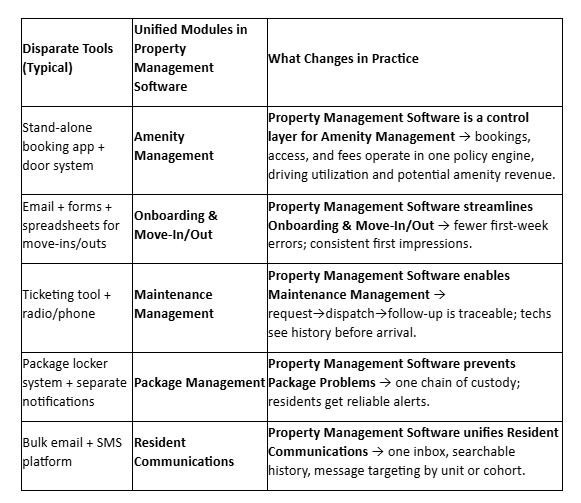
Evidence note on amenities: NMHC and Grace Hill’s Renter Preferences reporting underscores the centrality of amenities in renter decision-making and willingness to pay—context that, operationally, supports aligning amenity policy, utilization, and communications in one platform (see overview: NMHC & Grace Hill 2024 Renter Preferences). While the impact on NOI varies by market and execution, consolidating amenity management within the PMS is a current leading practice for better utilization and upsell governance.
Your 6-Step Consolidation Plan
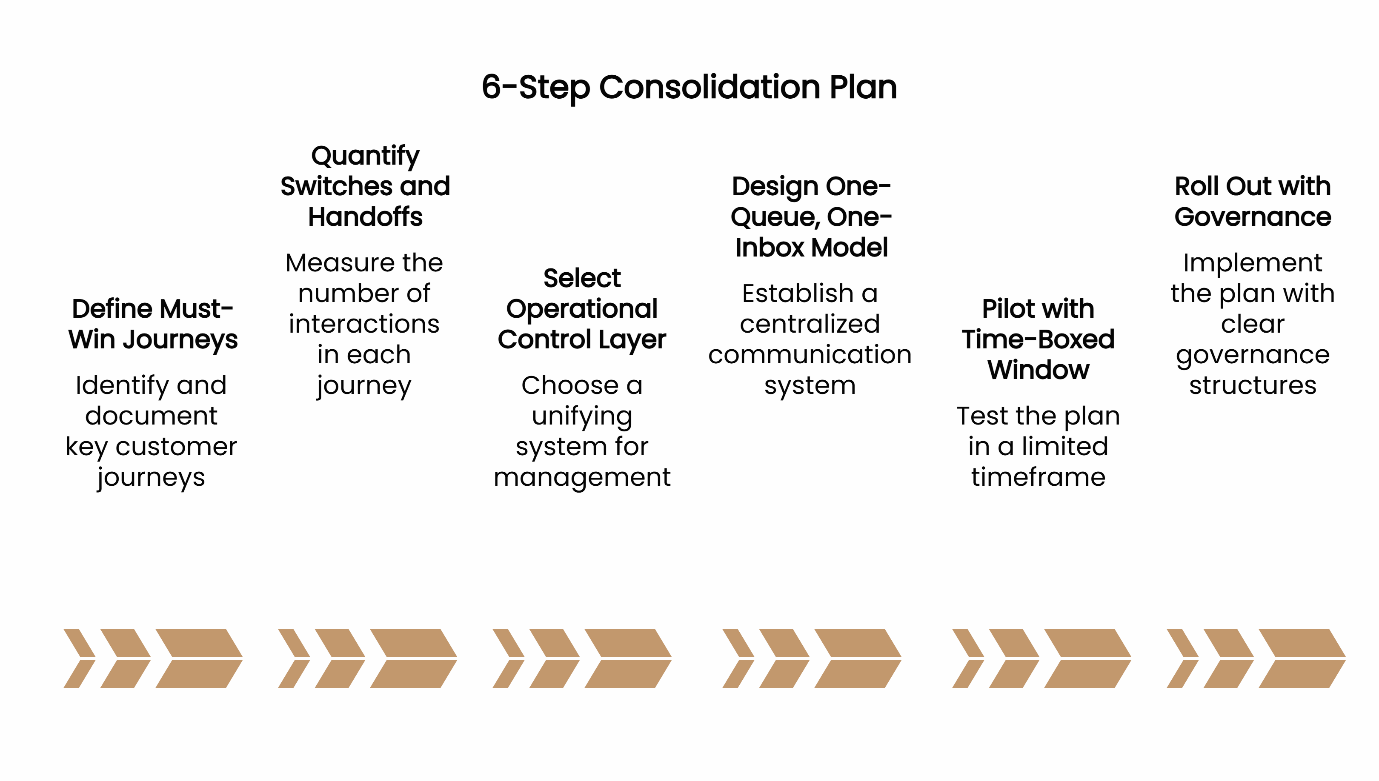
- Define must-win journeys. Start with maintenance, amenities, move-in/out, packages, and essential communications. Document the current path end-to-end.
- Quantify switches and handoffs. Count logins, copy-pastes, and average touches per journey. Be precise; perceptions hide the real load.
- Select the operational control layer. Choose property management software as the unifying system of record and action—then map which point tools will be replaced or integrated.
- Design the one-queue, one-inbox model. Establish SLAs, escalation paths, and owner roles for each journey inside the platform.
- Pilot with a time-boxed window. Pick one building or journey for 30–60 days; define success metrics upfront (first-reply time, resolution speed, amenity utilization, complaint rate).
- Roll out with governance. Name a system owner; codify change control, permissions, and data continuity. Establish an executive cadence to remove roadblocks.
Real-talk: most teams skip step 2. That’s where fragmentation hides.
Risks and Mitigations
- Risk: Staff resistance to workflow changes.
Mitigation: Involve end users in journey mapping; launch with a pilot that visibly improves first-reply time. - Risk: Integration gaps recreate shadow processes.
Mitigation: Prefer platform-native modules; where integrations are necessary, assign ownership and test failure modes before go-live. - Risk: UI consolidation without workflow consolidation.
Mitigation: Redesign journeys, not just screens; measure context switches per task before and after. - Risk: Early resident confusion about “the new app.”
Mitigation: Communicate benefits in-app; seed quick wins (e.g., faster maintenance updates, reliable package alerts) with clear “what’s changing” messages
Common Pitfalls to Avoid When Restoring Experience Flow
- Consolidating the interface but leaving duplicate back-office steps in place.
- Ignoring move-in/move-out handoffs, where first impressions are made—and often lost.
- Keeping package workflows outside the platform, guaranteeing persistent workload and complaints.
If Momentum Stalls Mid-Project
Validate reality—adoption stalls happen. Then follow a three-step reboot:
- Re-commit to must-win journeys with clear, measurable outcomes.
- Time-box a pilot (30–60 days) and publish success metrics weekly.
- Create an executive cadence focused on removing risks and unblocking decisions.
The Question Most Teams Forget
Who owns data continuity and integrations after consolidation?
Ownership gaps silently rebuild fragmentation. Assign a system owner, codify governance, and prefer platform-native integrations where feasible. When external systems are required, define failover behavior and reconciliation steps upfront.
Myth vs. Fact
Myth: More apps mean more engagement.
Fact: Fragmentation increases friction; one operational layer improves usage, satisfaction, and brand consistency.
Why Packages Belong Inside the Platform
Package issues escalate quickly because they touch security, trust, and workload. A unified package flow reduces errors in handoff and communication, while supporting a clear chain of custody. The USPS Office of Inspector General continues to publish oversight on mail-theft risks across contexts, underscoring the need for tighter controls and clearer accountability—considerations that favor an integrated, auditable workflow (USPS OIG white paper). Specific metrics vary by building and market; the general principle is stable: stronger custody and consistent alerts reduce disputes and desk time.
FAQs
Is a single resident app actually better for luxury communities?
For Class A environments targeting five-star consistency, a single resident app tied to the operational control layer reduces channel confusion and makes updates trustworthy. The result is fewer missed messages and faster resolutions because staff and residents share one source of truth.
How do we calculate the hidden costs of fragmented tools?
Start with journey math: logins per task, handoffs per resolution, minutes spent toggling, and duplicative data entry. Evidence shows application toggling drains time; in operations, that drag becomes slower response and uneven service (see: Harvard Business Review). Convert minutes saved into labor hours and compare to platform licensing.
What should be in a consolidation plan for on-site teams?
Name journeys, eliminate duplicate steps, set SLAs, publish ownership, and pilot with a short horizon. Then roll out with governance and training. For engagement, connect the plan to resident outcomes—fewer taps, faster answers, one channel.
From Chaos to Flow
The signs are visible: duplicated entries, mixed messages, slow handoffs. The after-state is tangible: one app for residents, one queue for staff, one inbox for communications. According to ElevateOS, communities that treat property management software as the operational control layer reclaim Experience Flow and reinforce brand standards while opening room for amenity-driven value. And yes, that is the goal—calm control that feels like hospitality, not triage.
Ready to Restore Experience Flow?
Unify resident journeys and on-site operations with a single platform designed for Class A expectations. Schedule a demo to see how a unified property management software approach can consolidate amenities, onboarding, maintenance, packages, and communications into one coherent system—built to protect Experience Flow and NOI.
Our Editorial Process
“Our expert team uses AI tools to help organize and structure our initial drafts. Every piece is then extensively rewritten, fact-checked, and enriched with first-hand insights and experiences by expert humans on our Insights Team to ensure accuracy and clarity.”
About the ElevateOS Insights Team
The ElevateOS Insights Team is our dedicated engine for synthesizing complex topics into clear, helpful guides. While our content is thoroughly reviewed for clarity and accuracy, it is for informational purposes and should not replace professional advice.