.avif)
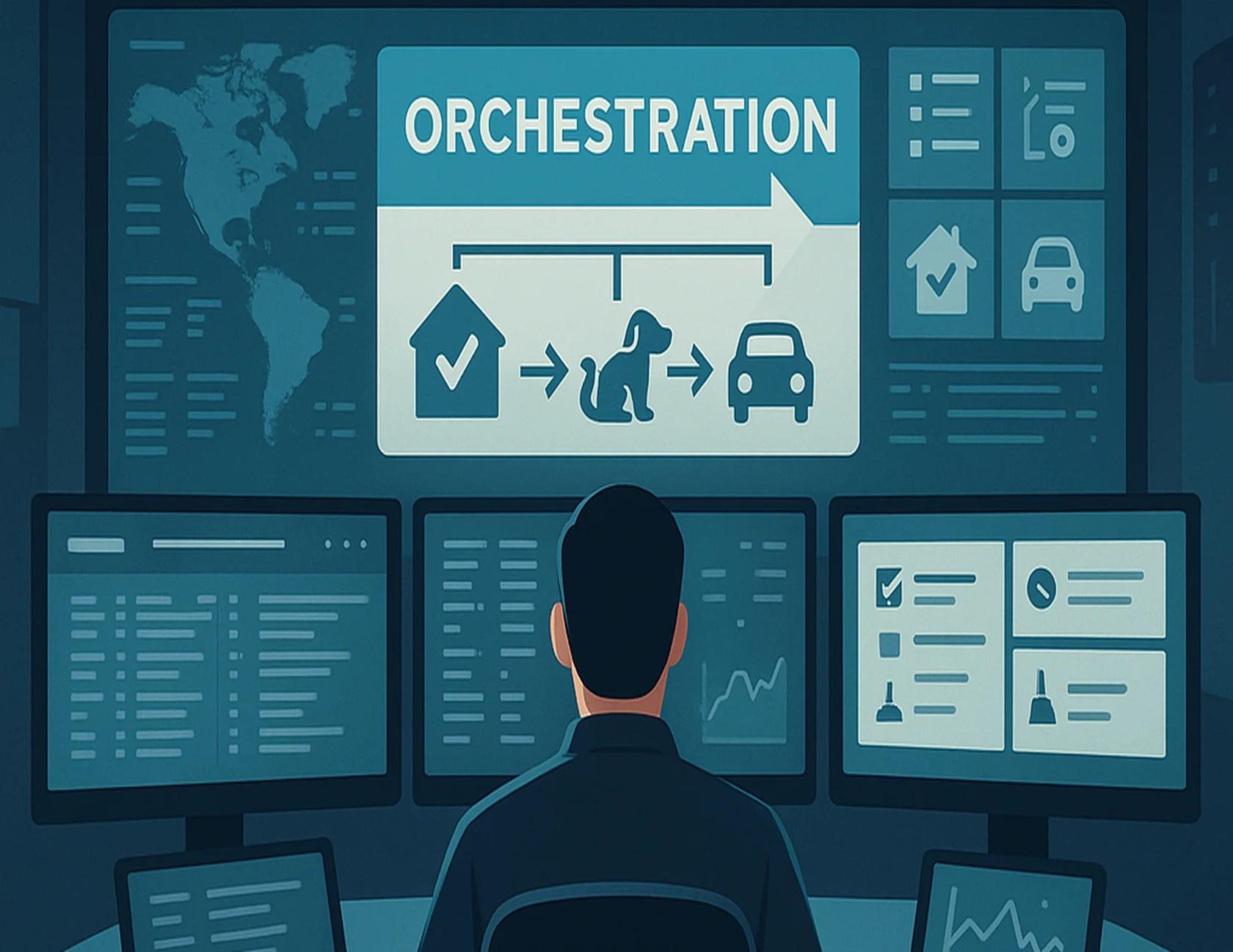
📌 Key Takeaways
A transaction portal isn't enough to justify premium pricing in Class A multifamily—residents expect the same hospitality-grade convenience they get from hotels and consumer apps.
- Portals Process, Concierges Orchestrate: A resident portal handles lease payments and maintenance logs, but a digital concierge unifies those transactions with on-demand services like housekeeping, pet care, and private transportation in one building-branded app.
- App Consolidation Protects Asset Value: Consolidating 7+ disconnected platforms into a single command center eliminates resident frustration while giving property management teams portfolio-level visibility into service delivery and engagement patterns.
- Service Layers Drive Retention and NOI: Activating housekeeping, pet care, and transportation services through your resident app captures demand residents already fulfill elsewhere, creates revenue share opportunities, and builds the switching costs that make moving feel like a downgrade.
- 30-Day Pilots Prove Value Fast: Most Class A communities can launch a credible concierge layer in 30 days by mapping current logins, activating three core services, enabling amenity monetization, integrating with existing property management systems, and running a focused adoption campaign.
- Hospitality-Grade Reliability Builds Trust: Built-in reliability with real-time status tracking, secure communication channels, and established escalation paths delivers the service predictability that residents in premium communities expect and that protects brand reputation.
Prepared property management teams secure higher renewal rates, stronger NOI, and operational consistency across portfolios. Class A property managers and multifamily operators will find strategic guidance here, preparing them for the detailed implementation framework that follows.
A practical starting point for moving from basic utilities to a premium, hospitality-grade resident experience.
Picture this: It's 7 PM on a Thursday, and a resident needs three things done before the weekend. They want to schedule a dog walker for Saturday morning, reserve the rooftop lounge for a gathering, and arrange a car service to the airport. In most Class A communities, this simple request turns into a frustrating scavenger hunt across multiple apps, phone calls, and email threads.
This is the hidden cost of treating your resident portal as the finish line rather than the foundation. You've checked the box on digital amenities—residents can make lease payments online, submit maintenance requests, and maybe book the gym. But premium pricing demands hospitality-grade experiences, and a transaction processor alone won't deliver that.
The gap between what your portal does and what your residents expect is where retention opportunities emerge. A digital concierge closes that gap by unifying operations with on-demand services in a single, building-branded app. It's the difference between offering residents a utility and delivering an experience that protects property valuation through measurably higher satisfaction and renewal rates.
What's the Real Difference Between a Portal and a Digital Concierge?
A resident portal is fundamentally transactional. It processes lease payments, logs maintenance requests, and maybe handles package notifications. Think of it as an ATM—efficient for specific tasks but limited in scope.
A digital concierge operates as a hospitality-grade service layer. Yes, it handles those same transactions. But it also connects residents to experiences and on-demand services that make daily life easier. Housekeeping, pet care, private transportation, fitness classes, and event reservations all live in the same app where residents already handle lease payments and submit work orders.
It's less like an ATM and more like a hotel front desk that can actually orchestrate outcomes.
The practical difference shows up in how residents interact with your community. With a standard portal, a resident who wants their apartment cleaned before guests arrive has to search for a service, vet providers, coordinate access, and manage payment separately. With a digital concierge integrated into your resident app, they book a vetted housekeeper in three taps. The service is billed to their account, and building access is already coordinated.
This consolidation matters more than most property management teams realize. Research from the National Multifamily Housing Council shows that community amenities and services rank among the top factors renters consider when choosing an apartment.[^1] The organization's data also reveals that roughly 39% of renter households in the United States live in apartments.[^6] That represents a massive market where even small improvements in experience can drive measurable retention gains.
Here's the three-step upgrade path: First, consolidate all resident-facing logins into one branded app. Second, activate a marketplace for the services residents actually request—start with housekeeping, pet care, and private transportation. Third, add visibility to service level agreements so residents can track everything from maintenance response times to amenity availability in a single dashboard.
Why Class A Communities Can't Stop at "Online Lease Payments"
Premium pricing creates premium expectations. Residents in Class A communities aren't comparing your building to every apartment in the area. They're comparing it to the hospitality experiences they get from hotels, the convenience they expect from consumer apps, and the service quality they receive in other parts of their lives.
A payment portal meets the baseline requirement. It proves you're not stuck in the era of paper checks and office hours. But it doesn't differentiate your property or justify your premium lease rates compared to a Class B building three blocks away that also offers online payments.
The differentiation comes from the service layer. When a resident can book a dog walker, schedule a massage therapist to come to their unit, reserve the private dining room, and arrange for their car to be detailed in the garage—all from the same app where they manage lease payments—that's when your building delivers a premium experience rather than just premium pricing.
Consider what happens during the leasing process. A prospect tours your building and sees impressive amenities: a fitness center with Peloton bikes, a rooftop lounge with city views, and a pet spa. You explain that residents can access all of this through your resident app.
The prospect is impressed—until they move in and discover they need to download three additional apps to actually use those amenities. Plus they must separately coordinate with outside vendors for services like housekeeping or pet care.
The gap between promise and delivery creates coordination challenges that undermine satisfaction before residents even finish unpacking. A unified resident experience platform ensures the tour experience matches the living experience.
The branded aspect matters as much as the functionality. When residents use "The Residences App" or "Harbor Tower Connect"—branded to your building—rather than a generic platform with your building's logo slapped on, the experience reinforces that they're part of something distinctive. Every interaction with the app becomes a brand touchpoint rather than a reminder that they're using the same commodity software as every other apartment building.
The Service Layer That Changes Everything
A portal collects payments. A concierge builds a community.
The services that transform a resident portal into a digital concierge aren't theoretical add-ons. They're the requests your property management team already fields every week, currently handled through fragmented vendor relationships and manual coordination.
Start with these three services because they consistently generate the highest resident demand: housekeeping, pet care, and private transportation. These aren't luxury requests—they're the practical needs that busy professionals face regularly.
When you activate these services through your resident app, you're not creating new demand. You're capturing demand that residents are already fulfilling through outside providers while simultaneously reducing the administrative burden on your team.
Here's how the activation works in practice. For housekeeping, you partner with vetted service providers who understand the unique requirements of multifamily properties—building access protocols, insurance requirements, and quality standards. Residents browse available time slots, select their service level (standard cleaning, deep clean, move-out service), and book directly through the app.
The service provider receives the work order with all necessary building access information already attached. Payment is processed automatically, and residents can rate the service afterwards, creating a feedback loop that maintains quality.
On the operations side, your management portal becomes a control room where you can monitor service delivery, track performance against service standards, and intervene when issues arise. This visibility transforms your role from reactive coordinator to proactive orchestrator—the same model that drives hospitality operations in premium hotels.
Four Features That Elevate Portal to Concierge
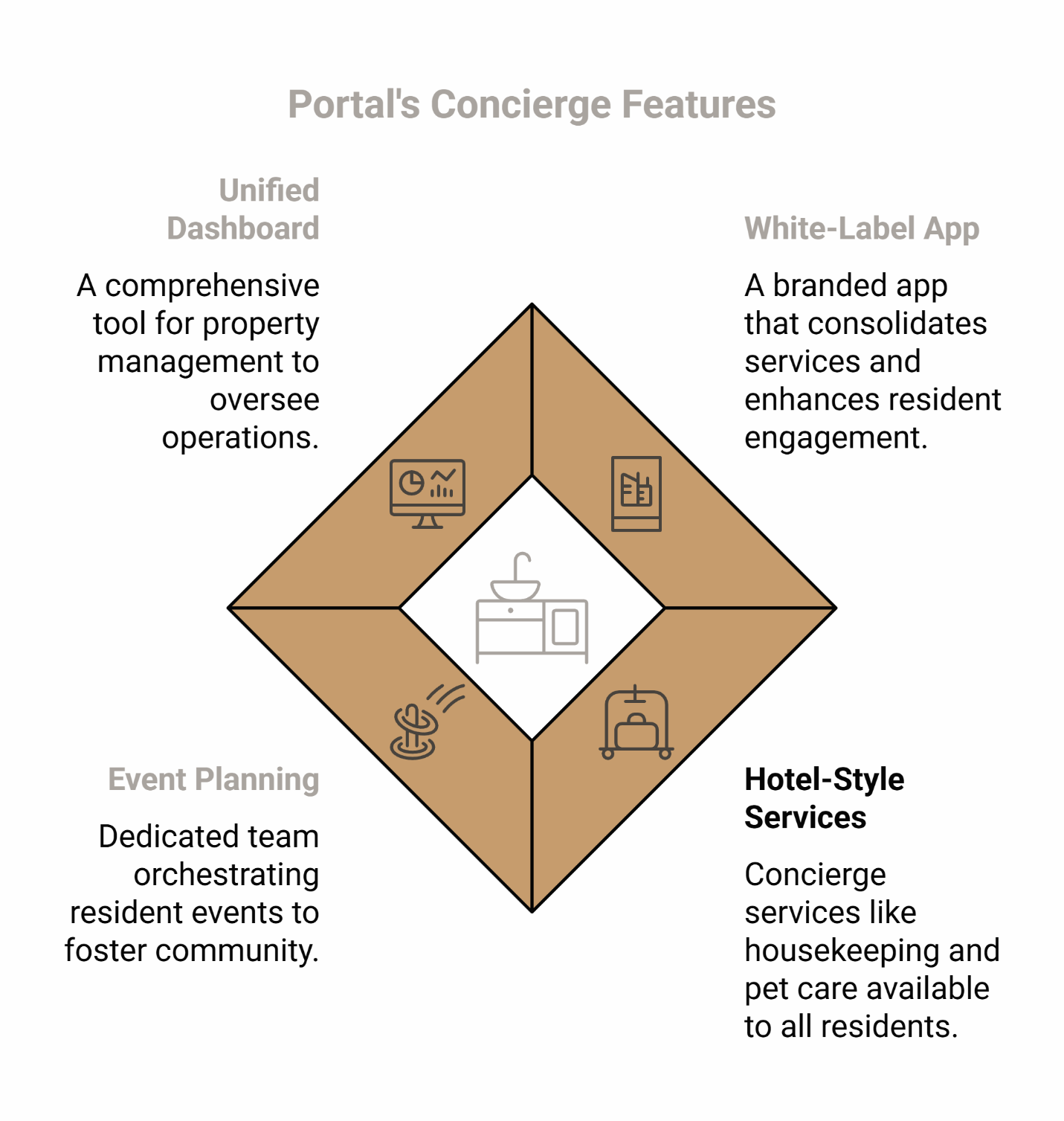
White-label resident app: Your building's brand wraps every interaction. This consolidates 7+ disconnected platforms into one interface, eliminating app fatigue while deepening resident engagement with your community.
Hotel-style concierge services: Housekeeping, pet care, transportation, and personal services are available to all residents with equitable access. Booking happens in-app with transparent pricing and service standards.
Professional event planning team: Dedicated planners orchestrate resident experiences—from rooftop wine tastings to fitness challenges—driving the organic engagement that strengthens retention.
Unified operations dashboard: Property management teams gain portfolio-level visibility into service delivery, amenity utilization, and resident engagement patterns. This predictability protects asset value across your holdings.
Pet services follow the same pattern but address an even more acute need. Dog walking, pet sitting, and grooming aren't optional for pet owners—they're necessities. When these services are built into your amenity management system, residents (including those who pay pet-related fees) experience the convenience that justifies premium pricing.
The alternative—searching for providers, coordinating building access, managing separate payments—creates exactly the kind of operational friction that makes residents question whether your community is truly premium.
Private transportation services complete the core trio. Airport runs, evening rides, and event transportation are services that residents coordinate through various apps and phone calls. When your building offers this through the resident app, particularly with the ability to charge it to their account and handle it as a single transaction, the convenience factor becomes a retention driver.
The revenue model for these services is straightforward. Residents pay for services at the point of use. Available to all residents with equitable access, these offerings operate on clear policies that ensure fair availability.
Your property can structure this as a revenue share with service providers. That means you're adding an ancillary income stream without upfront investment in inventory or staff. More importantly, you're creating what behavioral economists call "switching costs"—the accumulated small conveniences that make moving to a different building feel like a downgrade even if the new building's base amenities are comparable.
Top 5 Concierge Features Residents Crave
- Frictionless package and visitor flows with real-time notifications and secure pickup
- Easy amenity reservations with transparent availability and instant confirmation
- On-demand housekeeping with flexible scheduling and in-app payment
- Trusted pet care integrated with building access coordination
- Curated events and experiences that are simple to discover and RSVP to
From App Fatigue to Command Center Calm
Research shows that smartphone users download numerous apps but regularly engage with only a small fraction of them.[^2] For residents in multifamily communities, the app proliferation challenge is particularly acute. They need one app for lease payments, another for package notifications, a third for amenity reservations, a fourth for building access, and separate apps for each service provider they use regularly.
This fragmentation creates three specific challenges for property management teams. First, adoption rates suffer because residents resist downloading yet another app. Second, communication becomes scattered when important building announcements compete with notifications from five different platforms.
Third, your team spends time troubleshooting login issues, explaining which app handles which function, and fielding complaints about the inconvenience.
A unified platform addresses this by consolidating everything under one branded interface. Communications, reservations, maintenance requests, package notifications, and service bookings all live in the same place. When a resident opens their building's app, they have a single command center for everything related to their home.
Research from Gartner on digital customer service demonstrates that well-designed self-service channels can reduce customer effort and improve outcomes when they're integrated with human support rather than operating in silos.[^7] This finding directly applies to multifamily operations: the digital concierge doesn't replace your team—it amplifies their effectiveness by handling routine requests automatically while escalating complex issues to the right person with full context.
The "command center" framing isn't just marketing language. It describes how the resident's mental model shifts. Instead of thinking "I need to find the right app for this task," they think "I'll check the building app."
That cognitive simplification reduces operational friction for every interaction. It increases the likelihood that residents will actually engage with the features and services you're providing.
For property management teams, this consolidation delivers operational benefits that compound over time. When all resident interactions flow through one system, you gain unified visibility into engagement patterns, service utilization, and potential coordination gaps.
Your operations control room—the management side of the platform—lets you see which amenities are being used, which services are most popular, and where residents might be experiencing service delays. All from a single dashboard rather than piecing together data from multiple platforms.
This portfolio-level predictability is what protects asset value. When you can standardize service delivery across properties and track performance consistently, you're not just improving resident satisfaction—you're securing the operational consistency that institutional investors and ownership groups expect from Class A holdings.
Proving ROI: Retention, NOI, and Portfolio Predictability
The business case for upgrading from a basic portal to a comprehensive digital concierge rests on three measurable impacts: resident retention, net operating income, and operational efficiency at scale.
Retention delivers the clearest financial impact. Every percentage point improvement in retention directly reduces turnover costs—marketing expenses, make-ready costs, and lost revenue during vacancy periods.
Research from Bain & Company demonstrates that a 5% increase in customer retention can result in profit increases of 25% to 95%.[^4] While this research isn't specific to multifamily, the principle applies: keeping current residents is significantly more cost-effective than finding new ones. Even a 2-3 percentage point renewal improvement can materially impact turnover costs and protect property valuation.
Harvard Business Review research on AI and digital tools offers a crucial insight for property management teams concerned that automation might weaken the human connection: when digital tools are implemented with transparency and a human focus, they actually strengthen customer relationships rather than eroding them.[^8]
The digital concierge model proves this principle. By handling routine transactions automatically, your team has more time for the high-touch interactions that truly matter to residents—the hospitality-grade moments that justify premium pricing.
The connection between digital experience and retention operates through multiple channels. Residents who actively use building amenities and services develop stronger attachment to the community. The convenience factor matters—when daily needs are easier to fulfill because your building's app orchestrates them, that convenience becomes a reason to stay.
The social proof element reinforces this. When residents see their neighbors using building services and attending community events, they're more likely to engage themselves. This creates a network effect that strengthens community bonds.
Net operating income benefits from multiple sources. First, ancillary revenue from service bookings and amenity reservations adds directly to NOI. Second, improved retention means higher occupancy rates and fewer down months.
Third, operational efficiencies reduce the staff time required to coordinate vendors, manage amenity reservations, and respond to resident inquiries.
The "fewer point solutions" factor might be the least obvious but most impactful for smaller property management teams. Every separate software tool you pay for represents not just a subscription cost but also staff time for training, troubleshooting, and managing vendor relationships.
When amenity reservations, package management, maintenance requests, and service coordination all run through one platform, you're consolidating vendor relationships and simplifying your technology stack.
Property managers implementing unified platforms have reported significant increases in amenity income—in some cases, improving monthly revenue from amenity bookings by several multiples through better discovery and streamlined reservation systems. The difference isn't in creating new amenities. It's in making existing amenities easier to discover, book, and monetize.
Security and Trust: The Foundation of Service Predictability
Premium residents expect not just convenience but also reliability and data protection. A unified digital concierge platform establishes trust through built-in reliability—single-pass execution that ensures service requests are captured accurately and routed correctly the first time.
When residents can see real-time status updates on maintenance requests, track amenity bookings with confirmation, and receive consistent communication through secure channels, they experience the service predictability that defines hospitality-grade operations.
For property management teams, this means vendor coordination happens through established ownership and escalation paths rather than scattered email threads. Service recovery protocols align to brand standards, ensuring that when issues arise, your team can respond with the speed and professionalism that protect your reputation and asset value.
How to Upgrade from Portal to Digital Concierge (in 30 Days)
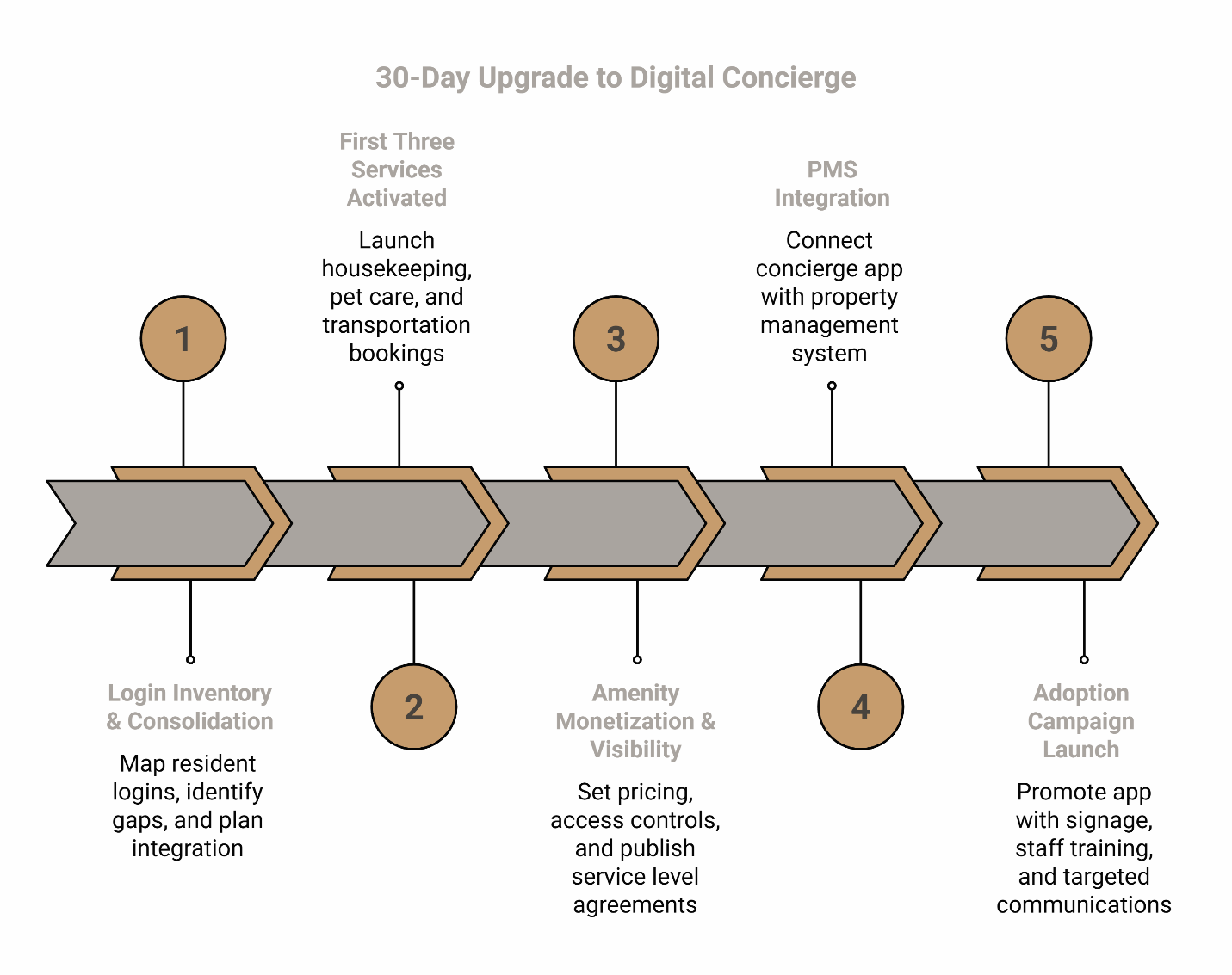
The path from transactional portal to service-focused concierge doesn't require a complete platform overhaul. For property management teams at small to mid-size companies, a phased approach lets you prove value quickly while minimizing disruption to current operations.
Most Class A communities can pilot a credible concierge layer in 30 days by leveraging existing property management system integrations and focusing on high-impact features first.
Your 30-Day Upgrade Checklist
1. Inventory and consolidate logins
Start by mapping every resident-facing login your community currently requires. This typically includes the lease payment portal, package notifications, maintenance requests, amenity reservations, building access credentials, and any vendor-specific apps for services.
Document which platforms require separate credentials and which functions residents use most frequently. Connect what can be integrated into a single all-in-one resident app. This assessment reveals where the coordination gaps are and which consolidation moves will deliver the biggest resident experience improvement.
2. Activate your first three services
Choose housekeeping, pet care, and private transportation as your starting services because they consistently generate the highest demand across Class A communities. Connect with vetted service providers who already work in multifamily properties and understand building access protocols.
Establish clear service standards and transparent pricing. Route bookings through the digital concierge rather than email threads and phone calls. The goal isn't to offer dozens of services immediately but to prove the concept with high-demand offerings that residents will actually use.
3. Enable amenity monetization and add visibility
Define policies, pricing, and access controls for fee-based reservations like guest suites, party rooms, and premium amenity time slots using your amenity reservation tool. Connect your reservation system to access control where possible so booking a space automatically grants the appropriate permissions.
Simultaneously, publish service level agreements in your management dashboard so your team has clear visibility into response times for maintenance requests, amenity availability, and service delivery standards. Make urgent versus standard response times visible, and ensure residents can see progress inside their app.
4. Integrate with your property management system
For properties using major property management systems like Yardi, Entrata, or RealPage, integration capabilities ensure that your unified resident app can pull data from existing systems rather than requiring duplicate data entry.
This interoperability means you're adding a hospitality-grade service layer on top of your current operations, not replacing your entire technology infrastructure. Keep the PMS as the system of record while using the concierge layer as the experience and orchestration layer.
5. Run a focused adoption campaign
Launch with building-branded signage. Place QR codes in elevators and lobby areas that link directly to app download pages, and develop staff scripts for welcoming new move-ins. Train leasing staff to walk new residents through the app during the welcome process.
Send targeted communications highlighting specific features—"Book your first housekeeping appointment" or "Reserve the rooftop lounge for your weekend gathering." The branded launch matters because it signals to residents that something new and valuable is available, not just another software update to ignore.
This timeline is aggressive but achievable for teams willing to prioritize the project. The key is starting small with high-impact features rather than attempting to launch everything simultaneously. Once residents experience the convenience of booking services and amenities through one app, adoption of additional features follows naturally.
Equity and Fair Housing Considerations
All residents should have equitable access to the same app features, services, events, and communication channels, consistent with fair housing requirements and HUD guidance on reasonable accommodations and equal access to programs and services.[^9]
Available to all residents, these offerings operate on clear policies that ensure fair availability and transparent access. Work with your legal and compliance teams to ensure that your digital concierge implementation supports accessibility needs and provides accommodations where required, so that every resident can benefit from the enhanced experience you're creating.
Standard Portal vs. Digital Concierge

Frequently Asked Questions
What is a digital concierge in multifamily?
A digital concierge in multifamily is a unified, building-branded resident app that combines portal functions—lease payments, maintenance requests, announcements—with on-demand services, amenity reservations, events, and guest workflows in one place.
It acts as the digital front desk for your community, supported by an operations control room on the management side that gives your team visibility and orchestration capabilities across all resident touchpoints.
Will this integrate with my current property management system and single sign-on?
Modern unified platforms are designed specifically to integrate with major property management systems including Yardi, Entrata, and RealPage. Single sign-on capabilities mean residents don't need to maintain separate credentials.
The integration pulls necessary data from your existing systems so you're adding functionality without duplicating data entry or creating disconnected information silos. The PMS remains your system of record while the digital concierge serves as the hospitality-grade experience layer.
How do I start offering housekeeping, pet care, and transportation services through one app?
Begin by selecting trusted vendors or in-house teams who understand multifamily operations, then connect them to the digital concierge marketplace. Define clear service level agreements, transparent pricing, and building rules such as elevator usage and access times.
Surface these options as bookable services in the resident app with payments and scheduling managed centrally. Available to all residents with equitable access, these services operate on established policies. Your team maintains oversight through the management portal, monitoring service quality and addressing issues as they arise.
Will this measurably improve retention and online reviews?
Research demonstrates that when digital tools are implemented thoughtfully with a focus on the human experience, they strengthen rather than weaken customer relationships.[^8]
When residents experience the building as a single, responsive system—where maintenance progresses visibly, amenities are easy to book, and services are reliable—overall satisfaction typically improves. Satisfied residents are more likely to renew and leave positive reviews, which supports both occupancy and brand positioning.
Results will vary based on your market, implementation quality, and existing service levels, but the pattern holds across customer experience research.
What does a 30-day pilot and staff training look like?
A typical 30-day pilot includes configuration workshops, property management system connections, activation of core features (lease payments, maintenance, amenities, plus a service marketplace), and targeted training for leasing and operations teams.
Short, scenario-based sessions teach practical workflows: "Log a work order and assign a vendor," "Book a resident for housekeeping and track status in the dashboard," "Process an amenity reservation and handle payment."
After the pilot, feedback from residents and your property management team informs the broader rollout and helps you refine processes before scaling to additional properties.
Disclaimer: This article provides general information about digital platforms and service delivery in multifamily properties. Implementation specifics will vary based on your property's unique needs, existing technology infrastructure, and resident demographics. Consult with your technology providers and service partners to develop an approach that aligns with your operational requirements and brand standards.
Ready to See How a Unified Resident Experience Works?
The difference between a portal and a digital concierge is clear in concept but powerful in practice. If your Class A community is ready to move beyond transaction processing and deliver the hospitality-grade experience your pricing promises, talk to our team about designing a unified resident service platform for your portfolio.
Our Editorial Process
Content from the ElevateOS Insights Team is developed using a combination of internal expertise, customer feedback, and reputable third-party research. Articles are reviewed for clarity and accuracy at the time of publication, but technology, regulations, and market conditions change quickly. Where data or sources are cited, readers should verify whether more recent information is available.
About the ElevateOS Insights Team — Our team turns complex topics in multifamily operations, resident experience, and proptech into clear, practical guides. While every piece is carefully reviewed, our content is intended to support—not replace—the judgment of experienced property professionals and their advisors.
See a demonstration of our all-in-one resident app or discuss your specific property needs with our advisory team.
[^1]: National Multifamily Housing Council. (2023). "Resident Preferences Survey Report."
[^2]: App Annie (now data.ai). (2023). "State of Mobile Report" - General findings on app usage patterns.
[^4]: Bain & Company. (2022). "Prescription for Cutting Costs: Loyal Relationships."
[^6]: National Multifamily Housing Council. "Quick Facts: Resident Demographics & Preferences." Accessed November 2025. https://www.nmhc.org/research-insight/quick-facts-figures/quick-facts-resident-demographics/
[^7]: Gartner. "Build a Successful Digital Customer Service Strategy." Accessed November 2025.
[^8]: Harvard Business Review. "Using AI to Build Stronger Connections with Customers." Accessed November 2025. https://hbr.org/2023/08/using-ai-to-build-stronger-connections-with-customers
[^9]: Prince William County, VA – Office of Housing and Community Development. Administrative Plan (Fair Housing & Equal Opportunity and reasonable accommodation policies summarizing HUD requirements). March 27, 2025. https://www.pwcva.gov/assets/2025-04/02%20Fair%20Housing%20%26%20Equal%20Opportunity%203-27-25.pdf