.avif)

Multifamily Resident Information Management Software: Create One Reliable Resident Record
Learn how multifamily resident information management software helps apartment teams centralize resident records, preferences, requests, communication history, documents, services, and operational context in one connected system.
Apartment teams collect resident information throughout the entire resident lifecycle. Leasing teams gather contact details. Move-in teams track documents and access requirements. Maintenance teams record service issues. Concierge teams manage lifestyle requests. Resident experience teams monitor event participation, feedback, and preferences.
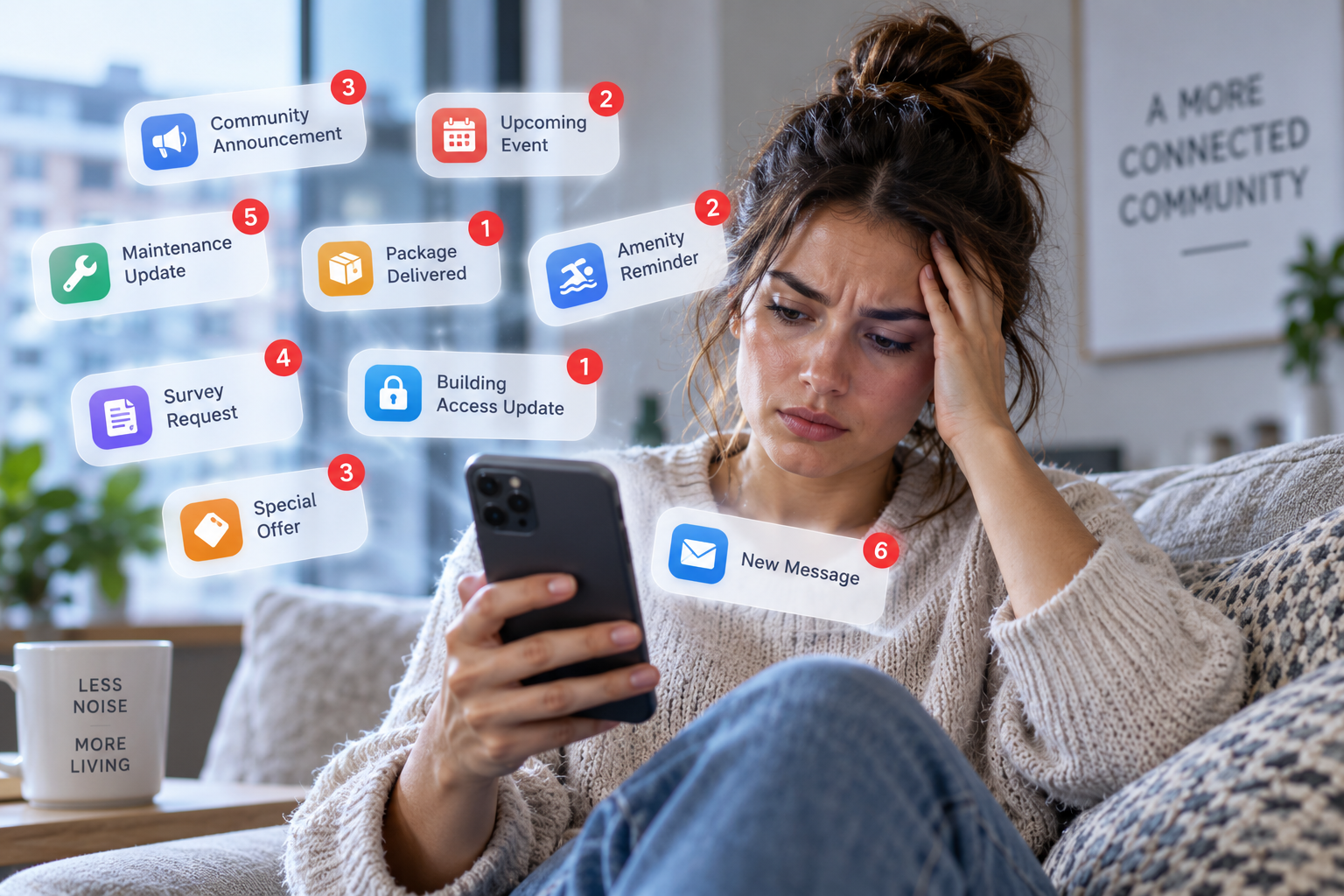
The problem is not usually a lack of information. The problem is that the information lives in too many places.
Important resident context may be scattered across a property management system, email inboxes, spreadsheets, maintenance platforms, access control systems, paper notes, package tools, amenity calendars, and conversations between team members. Staff may know that information exists without knowing where to find it.
Multifamily resident information management software helps solve this problem by giving property teams a more organized way to manage the resident information needed to operate the community and deliver a consistent experience.
Quick Answer
What is multifamily resident information management software?
Multifamily resident information management software is a digital system that organizes resident profiles, contact details, communication history, requests, documents, preferences, services, access information, engagement activity, and operational notes. It gives authorized property teams a clearer view of each resident while connecting that information to the workflows used to manage the community.
Why Resident Information Becomes Fragmented
Resident information is created every time someone interacts with the property. A resident submits a maintenance request, reserves an amenity, reports an access problem, asks a package question, updates a pet profile, RSVPs to an event, or contacts the office.
Each interaction adds context. However, that context is only useful when the people supporting the resident can access it.
Different departments use different tools
Leasing, management, maintenance, concierge, access, package, and resident experience teams may each work from separate systems.
Requests arrive through multiple channels
Residents may communicate through email, phone calls, text messages, apps, portals, front desk conversations, and informal staff interactions.
Staff knowledge is not always documented
Team members frequently carry valuable resident context in their memory, creating a knowledge gap when shifts change or employees leave.
Point solutions capture only part of the relationship
A package tool knows about packages. An amenity tool knows about reservations. A maintenance platform knows about work orders. None may show the complete resident experience.
Fragmentation forces staff to reconstruct the resident story every time an issue occurs. That means searching inboxes, asking coworkers, opening multiple platforms, or requesting information the resident has already provided.
Give Property Teams One Connected Place to Work
ElevateOS helps multifamily operators connect resident information, communication, requests, amenities, packages, services, documents, engagement, and building operations through one community operating system.
What Information Can a Resident Management System Organize?
The exact information available depends on the platform and its integrations. A connected resident information system may help authorized teams organize several categories of operational and resident-facing information.
| Information Category | Examples | Why It Matters |
|---|---|---|
| Resident profile | Contact details, household information, unit, move-in date, and residency status | Creates a reliable starting point for resident support |
| Communication history | Announcements, questions, acknowledgments, updates, and follow-up messages | Helps staff understand what has already been communicated |
| Requests and issues | Maintenance requests, service questions, complaints, access issues, and open tasks | Improves ownership, routing, and service follow-through |
| Documents | Community information, forms, move-in resources, instructions, and resident-facing documents | Reduces repeated document searches and questions |
| Amenities and events | Reservations, RSVPs, interests, attendance, and community participation | Provides context about resident engagement |
| Services and concierge activity | Housekeeping, pet services, wellness offerings, local services, and lifestyle requests | Supports a more personalized resident experience |
| Packages and deliveries | Package arrival, notification, pickup status, location, and exceptions | Reduces front desk confusion and package-related follow-up |
| Access and community activity | Mobile access setup, guest workflows, amenity access, and related support needs | Connects access questions with the broader resident record |
How Multifamily Resident Information Management Software Works
Resident information management software generally works by connecting resident profiles with the workflows that create or use resident information.
A resident profile is created or synchronized
The platform establishes a profile associated with the resident, household, unit, property, and relevant lifecycle stage.
Resident activity adds operational context
Requests, reservations, messages, service activity, package updates, documents, and engagement can become connected to the resident experience.
Information is routed to the right workflow
A maintenance issue can move to the maintenance team, an amenity request to the appropriate approval process, and a service question to the responsible staff member.
Authorized teams gain shared visibility
Staff can see the context relevant to their role instead of relying on separate inboxes, spreadsheets, or verbal handoffs.
Managers identify patterns and exceptions
Centralized visibility can help teams identify recurring questions, unresolved issues, workflow bottlenecks, and opportunities to improve resident service.
Benefits of Centralized Resident Information
Faster resident support
Staff can spend less time searching for background information and more time resolving the resident’s actual question. A clearer record can also reduce the need to ask residents to repeat their story.
Better handoffs between teams
Resident needs often cross departmental boundaries. A maintenance issue may affect a renewal conversation. A move-in problem may require leasing, access, and management coordination. Shared visibility helps each team understand its role.
More consistent communication
When communication history is accessible, staff can avoid sending contradictory information, duplicating outreach, or following up on an issue that another team member has already resolved.
Less dependence on individual employees
Important resident context should not disappear when a team member changes shifts, takes time off, transfers properties, or leaves the organization. Documented information makes the operation more resilient.
More personalized resident service
Personalization does not have to mean complicated one-to-one campaigns. It can be as practical as understanding a resident’s previous request, preferred service, event interest, or unresolved concern before responding.
Stronger portfolio standardization
Centralized operators can create a common structure for resident information while still supporting the unique workflows, amenities, services, and brand experience of each community.
Everything. One App.
Connect Resident Information to the Resident Experience
ElevateOS brings resident engagement, building operations, communication, access, packages, amenities, services, onboarding, and management tools into one connected community operating system.
Resident Information Management Software vs. a Property Management System
A resident information platform does not necessarily replace the property management system. The two systems can serve different but complementary purposes.
| Category | Property Management System | Resident Information Management Platform |
|---|---|---|
| Primary focus | Property, lease, accounting, and core management records | Resident interactions, experiences, services, communication, and workflows |
| Typical users | Accounting, leasing, management, and corporate operations | Residents, onsite teams, concierge, resident experience, maintenance, and operations |
| Resident experience | Often centered on administrative transactions | Centered on daily resident interactions and community experiences |
| Relationship | Acts as a foundational property record system | Can integrate with and extend the existing property technology stack |
A connected approach allows the property management system to remain a core operational foundation while the resident platform helps coordinate the broader resident experience.
Features to Look for in Resident Information Management Software
Centralized resident profiles
Teams should have a clear, structured way to identify residents and connect relevant interactions to the correct profile.
Role-based visibility
Staff should see the information required for their responsibilities without exposing every detail to every user.
Communication tools
The platform should help teams send relevant updates and preserve useful communication context.
Request and task management
Resident information should connect to clear owners, statuses, due dates, and follow-up workflows.
Resident self-service
Residents should be able to find information, submit requests, book amenities, access services, and update appropriate details without unnecessary staff intervention.
Workflow integrations
Look for connections with property management systems, access control, smart home technology, package tools, and other operational systems.
Portfolio scalability
Regional and corporate teams should be able to standardize core processes while maintaining property-level flexibility.
Usable reporting
Managers should be able to identify open issues, repeated requests, service bottlenecks, adoption patterns, and operational exceptions.
Common Signs Your Community Needs Better Resident Information Management
- Residents regularly repeat the same information to multiple departments.
- Staff search several systems before answering a basic resident question.
- Important requests are documented in personal inboxes or informal notes.
- Shift changes cause service requests or resident concerns to lose momentum.
- Leasing, maintenance, concierge, and management teams lack shared context.
- The property cannot easily identify unresolved resident issues.
- Employees depend on spreadsheets to track resident preferences or service history.
- Residents use different apps for communication, access, packages, amenities, and services.
- Corporate teams cannot compare resident workflows consistently across properties.
- Resident information becomes difficult to recover when an employee leaves.
These are often signs of a fragmented operating model rather than an employee performance problem. Staff cannot consistently deliver connected service when the supporting information is disconnected.
How to Implement a More Connected Resident Information System
1. Map where resident information currently lives
List every system, spreadsheet, inbox, form, and manual process used to collect or manage resident information. Include departmental tools that may not initially appear connected to the resident experience.
2. Identify the highest-friction handoffs
Look for moments when one department depends on another department’s information. Move-ins, maintenance escalations, package problems, guest access, amenity issues, service recovery, and renewals are common examples.
3. Define the resident profile structure
Determine which information teams need, who owns it, who can view it, and how it should be updated. Avoid collecting unnecessary information simply because a system makes it possible.
4. Connect information to workflows
Resident information becomes operationally useful when it helps a team take action. Connect requests to owners, messages to follow-up tasks, service issues to escalation processes, and resident activity to the appropriate operational workflow.
5. Integrate rather than duplicate
The goal should not be to manually recreate every record in another platform. Evaluate how the resident experience system can work with the property’s existing management, access, package, smart home, and operational technology.
6. Train teams around real scenarios
Staff training should demonstrate how the system supports daily situations: a resident asks for an update, a maintenance issue escalates, a package cannot be located, or a new resident needs move-in help.
7. Measure whether friction decreases
Track practical outcomes such as repeated resident questions, unresolved requests, manual handoffs, system switching, response delays, app adoption, and staff time spent reconstructing resident context.
Connect ElevateOS With Your Existing Property Technology
ElevateOS is designed to enhance the existing multifamily technology stack by connecting resident-facing experiences and property workflows with the systems communities already use.
How ElevateOS Supports Connected Resident Information
ElevateOS is an all-in-one community operating system for multifamily properties. Instead of treating resident information as a static database, ElevateOS helps connect information with the daily experiences and workflows that matter to residents and property teams.
Multifamily operators can bring together key parts of the resident experience, including:
Residents get one connected app for community life. Onsite teams get a more organized way to manage daily work. Operators gain better visibility into resident experience and property operations.
Frequently Asked Questions
What is multifamily resident information management software?
Multifamily resident information management software is a digital platform that organizes resident profiles, communication, requests, documents, preferences, services, engagement, and operational activity. It helps authorized apartment teams access the context needed to support residents and manage community workflows.
What information should be included in a resident profile?
A resident profile may include basic contact and unit information, communication history, open requests, documents, amenity activity, services, package updates, move-in status, engagement, and other operational details appropriate to the property’s workflows.
Is resident information management software the same as a CRM?
Not exactly. A CRM usually focuses on leads, prospects, sales activity, and customer relationships. Resident information management software is designed around the ongoing operational relationship between an apartment community and its current residents.
Does resident information software replace a property management system?
It does not have to replace the property management system. A resident experience platform can integrate with the existing property technology stack and extend it with communication, engagement, services, amenities, packages, access, and resident-facing workflows.
How does centralized resident information improve service?
Centralized information gives staff more context when responding to a resident. It can reduce repeated questions, improve handoffs, prevent duplicate outreach, and help teams follow an issue from submission through resolution.
Can resident information management support multiple apartment communities?
Yes. Portfolio-level platforms can help multifamily operators standardize resident workflows across multiple properties while allowing individual communities to maintain their own branding, amenities, services, content, and operating processes.
How does a resident app connect to resident information management?
The resident app is the resident-facing experience. Residents can use it to receive communication, submit requests, reserve amenities, access services, view packages, RSVP to events, and complete community tasks. Those interactions can connect with the property team’s management workflows.
What is the biggest benefit of a centralized resident record?
The biggest benefit is shared context. Property teams can spend less time reconstructing what happened and more time taking the next appropriate action for the resident.
Simplify Your Multifamily Technology Stack
Make Resident Information Easier to Use Across Your Community
See how ElevateOS connects resident information, communication, engagement, amenities, services, access, packages, onboarding, and building operations in one branded platform.
Final Takeaway
Multifamily resident information management is about more than storing contact details. It is about making the resident’s operational history useful to the people responsible for delivering the experience.
When resident information remains scattered, staff spend valuable time searching, repeating work, and rebuilding context. When it is connected to communication, services, requests, amenities, packages, access, and daily operations, teams can respond more consistently and operate more efficiently.
The strongest approach is not simply to create another resident database. It is to create a connected community operating system that turns resident information into better workflows, faster service, and an easier living experience.