.avif)
Multifamily property management has traditionally been reactive.
A resident submits a maintenance request.
A technician investigates the issue.
Repairs are made after something breaks.
But this reactive model creates several major problems for property managers:
• Emergency repair costs
• Resident dissatisfaction
• Unexpected downtime
• Higher operating expenses
• Overworked maintenance teams
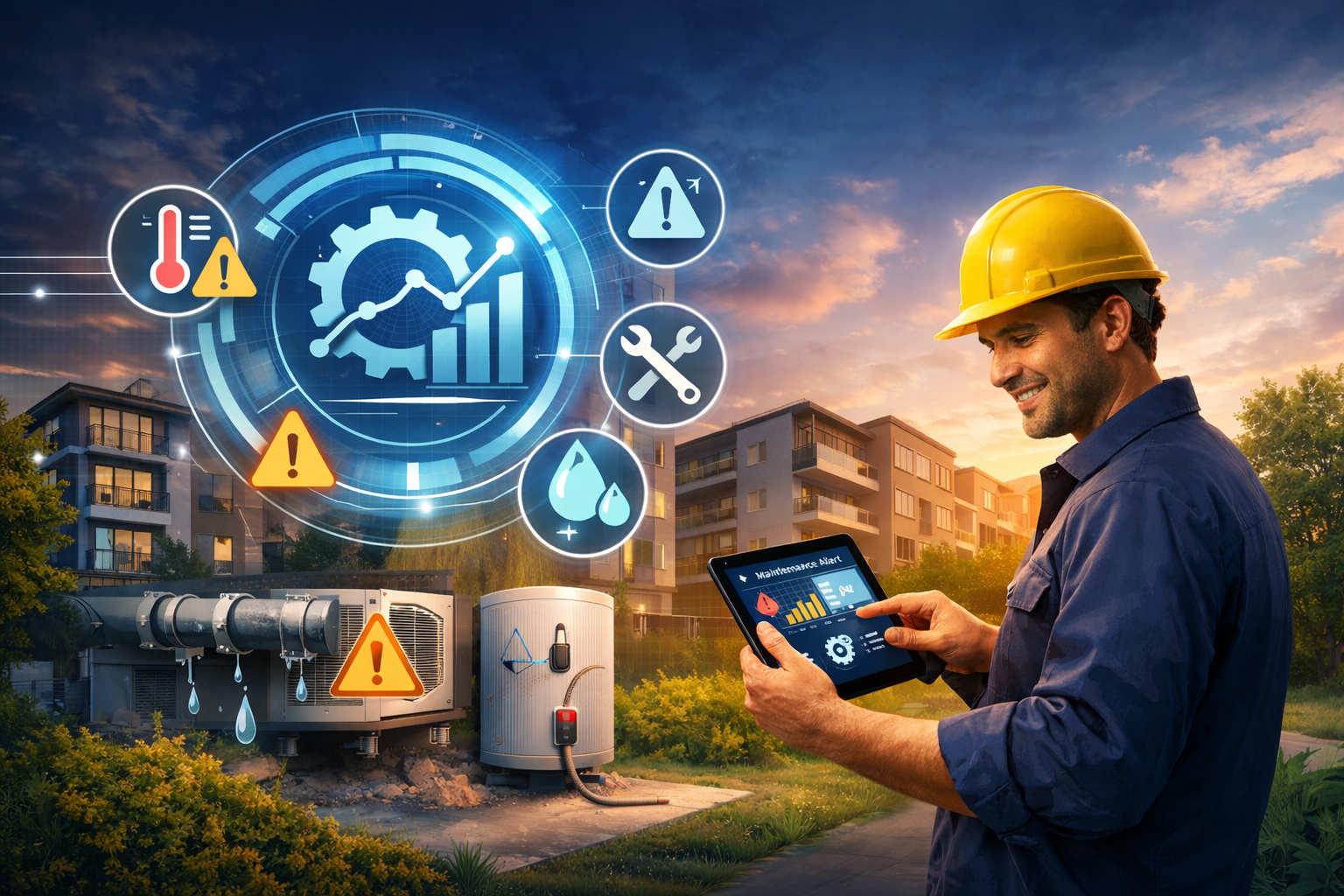
As technology evolves, a new operational model is emerging: predictive maintenance.
Predictive maintenance allows property managers to identify potential equipment failures before they happen, preventing costly emergencies and improving the resident experience.
In this guide, we’ll cover:
• What predictive maintenance means in multifamily operations
• How it works with modern property technology
• Real-world use cases in apartment communities
• The financial impact on NOI
• Tools and strategies property managers can implement today
What Is Predictive Maintenance in Multifamily?
Predictive maintenance is the use of data, sensors, and analytics to anticipate equipment failures before they occur.
Instead of waiting for something to break, predictive systems monitor patterns and identify early warning signs.
For example:
• HVAC units showing early performance decline
• Water heaters approaching failure thresholds
• Elevators displaying irregular operating patterns
• Pumps or motors experiencing abnormal vibration
• Leak sensors detecting early moisture conditions
When systems detect these signals, property managers receive alerts so maintenance teams can intervene early.
This transforms maintenance from reactive problem solving into proactive asset management.
Why Reactive Maintenance Is So Expensive
Most multifamily portfolios still operate on reactive maintenance models.
This approach seems simple but often results in significant hidden costs.
Emergency Repair Costs
Emergency repairs are typically far more expensive than planned maintenance.
After-hours technician calls, rush parts orders, and service interruptions can increase repair costs dramatically.
Property Damage
A minor issue can escalate quickly.
For example:
A small leak in a water heater can eventually lead to:
• Water damage
• Mold remediation
• Unit downtime
• Insurance claims
Resident Frustration
Maintenance delays are one of the top drivers of negative apartment reviews.
When systems fail unexpectedly, residents experience inconvenience that damages the property's reputation.
Staff Burnout
Reactive maintenance often means constant emergencies for maintenance teams.
This leads to:
• Higher staff turnover
• Slower response times
• Operational stress across the property
Predictive maintenance helps eliminate these problems.
How Predictive Maintenance Works
Predictive maintenance relies on three primary technologies.
1. Smart Sensors
Sensors are installed on key building systems such as:
• HVAC units
• boilers
• pumps
• water heaters
• elevators
• electrical panels
These sensors track performance indicators such as:
• temperature
• vibration
• pressure
• energy consumption
• run cycles
Small changes in these metrics often indicate upcoming failure.
2. Data Analytics
Collected sensor data is analyzed using algorithms that detect abnormal patterns.
Instead of simply reporting a failure, systems can identify:
• performance decline
• unusual energy spikes
• operational irregularities
This allows maintenance teams to address issues early.
3. Automated Alerts
When the system detects a risk, alerts are sent to property managers or maintenance teams.
These alerts allow teams to schedule maintenance proactively instead of reacting to emergencies.
Common Predictive Maintenance Use Cases in Multifamily
Predictive maintenance can be applied to many building systems.
HVAC System Monitoring
HVAC failures are one of the most common maintenance emergencies in apartment communities.
Predictive systems can detect:
• declining cooling performance
• compressor stress
• airflow restrictions
• energy consumption anomalies
This allows technicians to service units before they fail during peak seasons.
Water Leak Detection
Water damage is one of the most expensive property risks.
Leak sensors can identify moisture early in areas such as:
• under sinks
• behind appliances
• mechanical rooms
• water heater closets
Early alerts allow maintenance teams to stop leaks before damage spreads.
Elevator Monitoring
Elevator downtime causes major resident frustration.
Predictive monitoring can identify:
• motor issues
• cable stress
• door malfunctions
• irregular usage patterns
Repairs can then be scheduled before failures disrupt residents.
Pump and Motor Monitoring
Many multifamily properties rely on pumps for water circulation and HVAC systems.
Predictive systems monitor vibration and performance to detect mechanical issues early.
The Financial Impact on Multifamily NOI
Predictive maintenance is not just about convenience.
It directly improves net operating income (NOI).
Here are several ways it increases property profitability.
Reduced Emergency Repairs
Emergency service costs are often 2–4× higher than scheduled maintenance.
Preventing emergencies significantly reduces maintenance budgets.
Extended Equipment Life
When systems are serviced before major failures occur, equipment lasts longer.
This reduces capital expenditure for:
• HVAC replacements
• water heater replacements
• pump replacements
Lower Insurance Claims
Preventing leaks and mechanical failures reduces property damage claims.
Insurance providers increasingly reward risk-reducing technologies.
Higher Resident Satisfaction
Fewer maintenance emergencies improve the resident experience.
This leads to:
• higher lease renewals
• fewer complaints
• stronger online reviews
All of which contribute to improved revenue stability.
Predictive Maintenance vs Preventive Maintenance
Many property managers confuse predictive maintenance with preventive maintenance.
They are related but different.
Preventive Maintenance
Preventive maintenance follows a fixed schedule.
Examples include:
• quarterly HVAC inspections
• annual water heater servicing
• routine equipment cleaning
This approach reduces risk but does not account for real equipment conditions.
Predictive Maintenance
Predictive maintenance uses real-time data to determine when service is needed.
Instead of servicing equipment on a fixed schedule, maintenance is triggered when data indicates risk.
This results in:
• fewer unnecessary inspections
• more efficient technician time
• better maintenance outcomes
How AI Is Improving Predictive Maintenance
Artificial intelligence is accelerating the adoption of predictive maintenance in multifamily properties.
AI systems can analyze thousands of operational data points across an entire property portfolio.
This allows platforms to identify patterns such as:
• buildings with higher equipment failure rates
• seasonal system stress
• maintenance inefficiencies
• early warning signals across multiple assets
Over time, AI models become more accurate and allow property managers to make smarter operational decisions.
How Property Managers Can Implement Predictive Maintenance
Property managers don’t need to overhaul their entire tech stack to begin implementing predictive maintenance.
Most portfolios can start with a few strategic steps.
Identify High-Risk Systems
Focus on systems that cause the most expensive problems:
• HVAC systems
• water heaters
• plumbing systems
• elevators
• pumps
Deploy Smart Monitoring Devices
Modern IoT sensors are relatively inexpensive and easy to install.
Many require minimal wiring and integrate with property management platforms.
Centralize Maintenance Data
Property managers should ensure that maintenance data from sensors, work orders, and inspections is stored in a centralized system.
This allows better analysis and long-term insights.
Automate Alerts and Work Orders
The best predictive maintenance systems automatically generate work orders when risk thresholds are reached.
This reduces manual oversight and ensures fast response times.
The Future of Multifamily Operations
As property technology continues evolving, predictive maintenance will likely become a standard feature of modern multifamily operations.
Property managers who adopt predictive strategies early will gain several competitive advantages:
• lower operating costs
• more efficient maintenance teams
• better resident experiences
• fewer operational surprises
In an industry where margins are constantly under pressure, preventing costly problems before they happen is one of the most powerful strategies available.
FAQs
What is predictive maintenance in property management?
Predictive maintenance uses sensors and analytics to detect early signs of equipment failure so maintenance teams can fix issues before breakdowns occur.
How does predictive maintenance save money?
It reduces emergency repair costs, extends equipment life, prevents property damage, and improves maintenance efficiency.
What technologies enable predictive maintenance?
Predictive maintenance typically uses:
• IoT sensors
• performance monitoring software
• data analytics
• automated alert systems
Is predictive maintenance expensive to implement?
Many predictive maintenance technologies are relatively affordable and can be deployed gradually across high-risk systems.
What building systems benefit most from predictive monitoring?
The most common systems include:
• HVAC systems
• water heaters
• pumps
• plumbing systems
• elevators
Final Thoughts
Multifamily property management is shifting toward data-driven operations.
Instead of reacting to maintenance emergencies, predictive maintenance enables property teams to anticipate problems and resolve them early.
For property managers facing rising costs, staffing shortages, and increasing resident expectations, predictive maintenance represents a powerful opportunity to improve operational efficiency and protect property value.