

Software and strategy · April 5, 2025 · 15 min read
Smooth Resident App Implementation: A Step-by-Step Guide for Property Management Teams
Follow a clear, step-by-step guide for implementing resident apps smoothly across your property management operations.
Konrad Koczwara, Founder and CEO · ElevateOS

Key Takeaways:
Pre-Implementation Planning: Successful resident app implementation begins with assembling a cross-functional team from property management, front desk, leasing, maintenance, and IT. Establish clear responsibilities and success metrics before technical setup to ensure alignment across departments.
Technology Selection: Choose a resident app that aligns with Class A community standards, prioritizing white-labeling capabilities, intuitive interfaces, and smooth integration with existing property management systems. Balance digital convenience with maintaining high-touch service that defines luxury properties.
Staff Training: Develop role-specific training for different team members (front desk, leasing, maintenance, management) and create internal champions who can provide peer support. Prepare comprehensive reference materials to ensure consistent adoption across departments.
Resident Adoption: Implement a multi-channel communications strategy highlighting how the app enhances luxury living while offering personalized onboarding assistance. Gather resident feedback continually to demonstrate responsiveness and measure success through established KPIs.
A thoughtful implementation approach balances technological efficiency with premium service, transforming the resident app into an extension of your property's luxury brand while improving satisfaction and retention.
For Class A luxury apartment community managers, meeting evolving resident expectations has become increasingly challenging. Today's upscale residents expect digital convenience alongside the high-touch service that defines luxury multifamily properties. Implementing a resident app represents a strategic opportunity to enhance the resident experience while streamlining operations, but only when executed properly.
Many implementation attempts fail due to poor planning, inadequate staff training, and limited resident adoption. This guide provides a structured approach to successfully deploying resident app technology in Class A communities while maintaining the premium service standards your residents expect. Whether you're implementing in response to competitive pressure or as part of a broader digital experience enhancement, following these phases will help you create a smooth transition that delights residents and helps your team.
+------------------------------------------------------------------------+
💡 Quick Takeaways
Implementation Planning: Success requires cross-functional coordination across departments with clear responsibilities and integration planning.
Staff Training: Comprehensive role-specific training is essential for front desk, leasing, and maintenance teams to ensure consistent adoption.
Resident Adoption: Effective communications and onboarding strategies are critical for achieving high adoption rates that justify the investment.
+------------------------------------------------------------------------+
1. Pre-Implementation Planning: Building Your Foundation
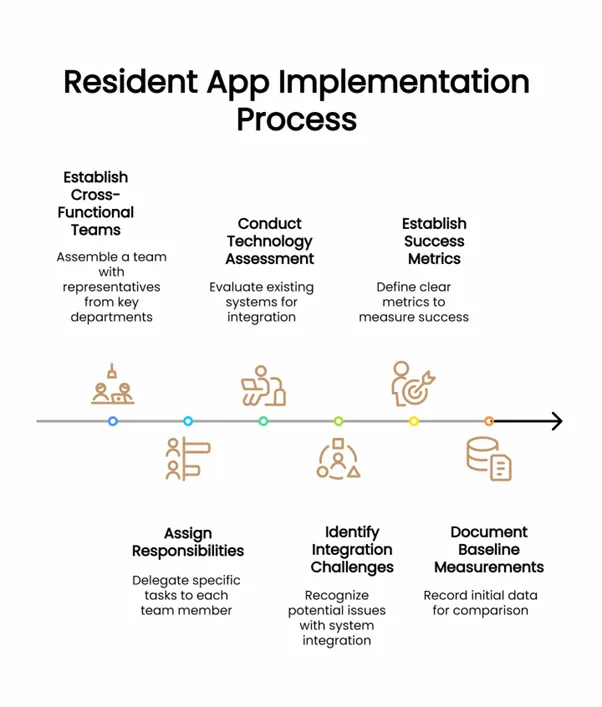
The groundwork for successful resident app implementation begins long before technical setup. This crucial planning phase often determines whether your resident app becomes an integral part of your community or sits unused.
Establishing Cross-Functional Implementation Teams
Begin by assembling a dedicated implementation team with representation from key departments. In Class A communities, this typically includes:
Property management leadership to oversee the implementation strategy
Front desk/concierge staff who will guide resident questions and support
Leasing team members who will introduce the app to prospective residents
Maintenance staff who will handle service requests through the platform
IT representatives who will manage integration with existing systems
[ILLUSTRATIVE EXAMPLE]
A luxury high-rise community established a cross-functional implementation team with clear leadership roles. The property manager served as project lead, while the leasing manager handled resident communications, the maintenance supervisor managed service request protocols, and the head concierge oversaw amenity booking setup. This distributed responsibility model ensured all resident touchpoints were addressed while preventing any single department from becoming overwhelmed.
[END EXAMPLE]
Assign specific responsibilities to each team member, including:
Project timeline management
Integration planning
Staff training coordination
Resident communication development
Feedback collection and implementation
KPI definition and ROI tracking framework
Conducting Technology Assessment
Before selecting or implementing your resident app, evaluate your existing technology infrastructure to identify:
Current property management software systems requiring integration
Amenity booking systems that need to connect to the resident app
Access control and security systems that may interface with the app
Communication tools currently used with residents
Data storage and privacy compliance requirements
This assessment helps identify potential integration challenges early and ensures your resident app will function harmoniously within your existing technology ecosystem.
Establishing Success Metrics and ROI Framework
Before implementation, establish clear metrics to measure success and justify the investment:
Operational efficiency metrics:
Staff hours saved on administrative tasks
Reduction in phone calls for routine requests
Time saved processing amenity bookings
Decreased package management workload
Resident experience metrics:
Pre/post implementation satisfaction scores
Maintenance request resolution times
Community engagement levels
Digital amenity booking utilization
Financial impact metrics:
Cost savings from reduced printing and physical notifications
Impact on renewal rates and resident retention
Potential rent premium justified by enhanced amenities
Staff reallocation to higher-value resident interactions
Document baseline measurements before implementation to accurately assess impact and calculate ROI after launch.
+------------------------------------------------------------------------+
💡 Quick Takeaways
Team Structure: Creating a cross-functional implementation team with representatives from all resident-facing departments ensures comprehensive planning.
Clear Responsibilities: Assigning specific implementation tasks with accountability prevents critical aspects from falling through the cracks.
Technology Assessment: Evaluating your existing systems before implementation helps identify potential integration challenges early.
+------------------------------------------------------------------------+
2. Technology Selection and Integration Strategy
For Class A properties, selecting the right resident app involves more than feature comparison, it requires evaluating how well the technology aligns with your property's premium positioning and integration requirements.
Evaluating Resident App Features Against Class A Community Needs
When evaluating potential resident app solutions, prioritize features that align with Class A resident expectations:
1. White-labeling capabilities to maintain your property's luxury branding, including:
Custom app name reflecting your property's identity
Consistent logo placement throughout the interface
Property-specific color schemes matching your visual identity
Customized domain for web access
Tailored content that reflects your community's voice and tone
2. Intuitive, elegant user interface reflecting your property's premium positioning
3. Comprehensive amenity booking functionality for fitness centers, rooftop areas, and other exclusive spaces
4. Smooth maintenance request submission with photo/video attachment options
5. Sophisticated communication tools for both mass notifications and personalized messaging
6. Package tracking and management capabilities
7. Event registration and community engagement features
8. Optional concierge service integration
White-labeling is particularly crucial for luxury communities as it transforms a generic technology solution into a branded digital extension of your property experience. Residents at Class A communities expect technological interfaces to reflect the premium standards of the physical environment, generic apps with standard templates can undermine your property's exclusive positioning.
Focus on solutions that enhance, rather than replace, the high-touch service that differentiates Class A communities. The technology should help your staff to deliver more personalized attention rather than creating a barrier between residents and management.
Integration Planning with Existing Systems
Successful implementation hinges on smooth integration with your property management software and other operational systems. Develop a detailed integration plan covering:
Data migration methodology for resident information and unit details
Authentication protocols and single sign-on capabilities
Synchronization between maintenance requests in the app and your work order system
Integration with amenity booking and access control systems
Financial transaction processing for rent payments and service fees
Information security and data privacy compliance
Work closely with your IT team or technology partners to map out API connections, data flows, and testing protocols before beginning technical implementation.
Balancing Digital and High-Touch Service Delivery
Determine which resident interactions are best served through the app versus personal service:
App-Appropriate Services:
Routine maintenance requests (non-emergency)
Amenity bookings and reservations
Package notifications and delivery management
Community announcements and updates
Rent payments and statement access
Event registrations and RSVPs
High-Touch Services to Preserve:
Move-in welcome experiences
Complex maintenance issues requiring consultation
Personal concierge requests and recommendations
Community relationship building events
Resident appreciation interactions
Conflict resolution and sensitive matters
This strategic allocation ensures the technology enhances service by handling routine transactions, freeing staff to focus on meaningful personal interactions that build community and justify premium rents.
+------------------------------------------------------------------------+
💡 Quick Takeaways
Feature Alignment: Select a resident app with features that complement your property's luxury positioning and enhance existing service standards.
Integration Planning: Create detailed plans for connecting the resident app with your property management software and operational systems.
Brand Consistency: Prioritize white-labeling capabilities to maintain your community's premium branding throughout the digital experience.
+-------------------------------------------------------------------------+
3. Implementation Execution Blueprint
With your foundation established, this phase focuses on the technical implementation and configuration of your resident app.
Data Migration Approaches
Transferring resident information and property details requires careful planning:
Conduct data cleaning and standardization before migration to ensure accuracy
Implement a phased migration approach, starting with basic resident contact information
Validate data after migration through sampling and verification
Establish data governance protocols for ongoing maintenance
Create clear procedures for adding new residents and updating information
For Class A properties, data accuracy is particularly critical as residents have high service expectations and limited tolerance for errors affecting their experience.
Managing Technical Setup and Configuration
Configure your resident app to align with your property's brand identity and operational workflows:
Customize the app interface with your property's colors, logos, and imagery
Configure notification preferences and communication protocols
Set up amenity spaces with accurate descriptions, photos, and booking rules
Establish service request categories and routing rules
Define user roles and permissions for your management team
Test all functionality thoroughly before resident rollout
Configure analytics and reporting to track your defined KPIs
Developing Phased Rollout Strategies
Rather than launching all features simultaneously, consider implementing a phased approach:
Begin with core functionality (resident profile, communication tools)
Add service requests and maintenance tracking
Introduce amenity booking and community features
Finally integrate advanced features like payment processing or concierge services
This approach allows your team to gain confidence with each component while providing residents with immediate value through core functions.
[ILLUSTRATIVE EXAMPLE]
A luxury property implemented their resident app in several phases. They began with basic resident profiles and communication tools, then added maintenance requests, followed by amenity booking, and finally activated payment processing. This gradual rollout allowed both staff and residents to adapt to each feature before introducing additional complexity. When technical issues arose with the payment processing integration, the phased approach contained the impact to just one feature rather than affecting the entire implementation.
[END EXAMPLE]
+------------------------------------------------------------------------+
💡 Quick Takeaways
Data Quality: Thoroughly clean and validate resident data before migration to prevent errors that could damage resident trust.
Brand Alignment: Configure the app's interface to reflect your property's premium aesthetic and service standards.
Phased Rollout: Implement features gradually to allow staff mastery and resident adaptation while minimizing operational disruption.
+--------------------------------------------------------------------------+
4. Staff Adoption and Training Framework
Your team's proficiency with the resident app directly impacts adoption rates and resident satisfaction. A comprehensive training program is essential for successful implementation.
Role-Specific Training Methodologies
Develop targeted training programs for different team members based on their responsibilities:
Front Desk/Concierge Staff:
Resident app registration and account assistance
Package management through the app
Amenity booking procedures and overrides
Handling resident questions about app functionality
Recognizing when to offer personal assistance versus app guidance
Leasing Team:
Presenting the app as an amenity during property tours
Setting up new resident accounts during onboarding
Demonstrating app features to prospective residents
Highlighting the app's convenience during the leasing process
Quantifying the app's value in enhancing the resident experience
Maintenance Team:
Receiving and responding to service requests through the app
Updating request status and communicating with residents
Documenting completed work with photos and notes
Managing preventive maintenance schedules
Tracking resolution times against KPI targets
Property Management:
Analyzing resident usage data and identifying opportunities
Managing communications and announcements
Overseeing amenity settings and community features
Addressing escalated resident concerns
Measuring ROI through established metrics
Correlating app usage with resident satisfaction and renewals
Developing Internal Champions
Identify and develop "power users" within your team who can:
Provide peer-to-peer support for other staff members
Test new features before wider rollout
Gather feedback from their departments
Demonstrate enthusiasm that motivates other team members
These champions become valuable resources during implementation and help drive consistent adoption across departments.
Creating Staff Resource Materials
Develop comprehensive reference materials to support ongoing training:
Step-by-step procedure guides for common tasks
Troubleshooting flowcharts for resident issues
Quick reference cards for frequently used features
Video tutorials for complex processes
FAQ documents addressing common questions
ROI tracking templates and KPI dashboards
Make these resources easily accessible at workstations and through digital knowledge bases for just-in-time learning.
+-------------------------------------------------------------------------------------------------------+
💡 Quick Takeaways
Role-Based Training: Create tailored training programs for each department that focus on their specific responsibilities within the app.
Internal Champions: Identify enthusiastic team members who can provide peer support and drive adoption across departments.
Accessible Resources: Develop comprehensive reference materials that staff can easily access when needed.
+-------------------------------------------------------------------------------------------------------+
5. Resident Rollout Strategy
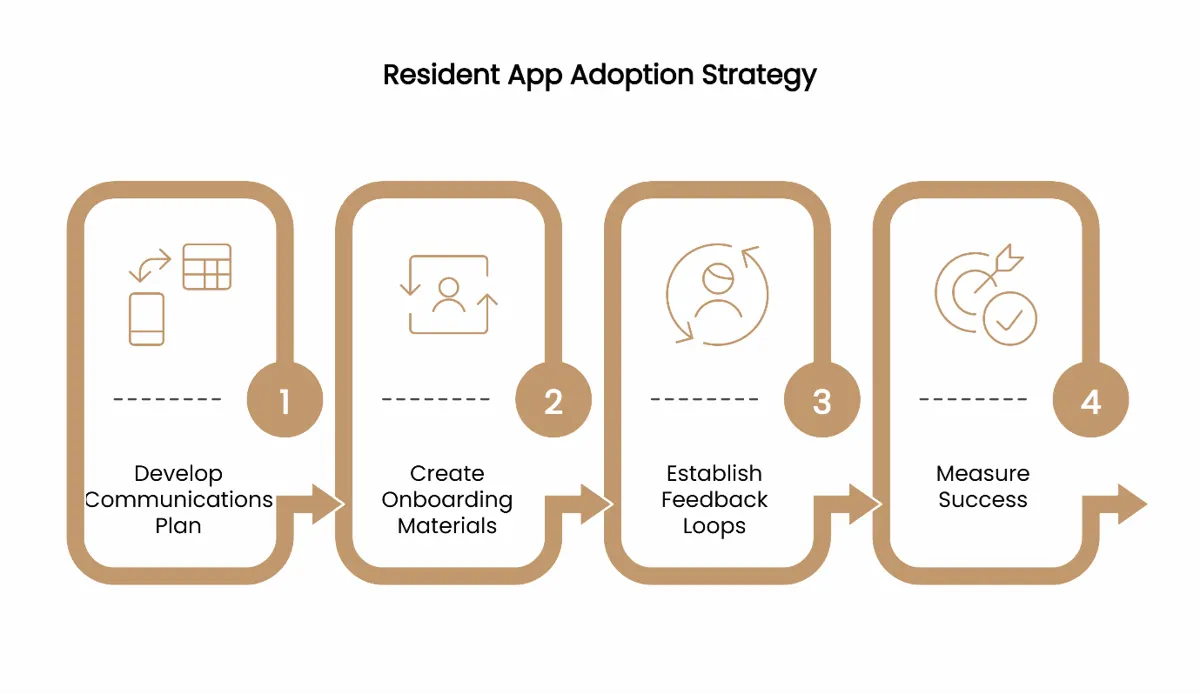
Even the most sophisticated resident app provides no value if residents don't adopt it. A thoughtful rollout strategy is essential for driving initial use and ongoing engagement.
Developing Effective Communications Plans
Create a multi-channel communications strategy that generates excitement and clearly communicates benefits:
Email announcements highlighting specific features and benefits
Elevator and common area signage with QR codes for easy download
Welcome packets for new residents featuring app information
In-person demonstration events in community spaces
Video tutorials shared through social media and property channels
Personalized outreach from property management to key residents
Focus messaging on how the app enhances the luxury living experience rather than positioning it as a replacement for personalized service. For example, highlight how digital maintenance requests can receive quicker attention and better tracking while still being fulfilled with the same high-quality, white-glove service.
Creating Compelling Onboarding Materials
Develop resident onboarding resources that streamline the adoption process:
Simple, visual setup guides with screenshots
Video walkthroughs of key features
In-app tutorials that guide first-time users
Welcome messages that highlight immediate benefits
Personalized setup assistance from front desk staff
For Class A communities, consider offering personalized setup sessions where staff members help residents download and configure the app during move-in or at convenient times. This not only increases adoption but demonstrates your commitment to personal service even as you implement digital tools.
Establishing Early Feedback Loops
Create mechanisms to gather resident feedback and quickly address concerns:
In-app feedback forms for immediate input
Brief satisfaction surveys after key interactions
Resident focus groups to gather detailed insights
Usage analytics to identify adoption patterns and potential roadblocks
Regular check-ins with high-value residents
Use this feedback to make iterative improvements and demonstrate responsiveness to resident needs, a key expectation in luxury communities.
Measuring Success Through Key Performance Indicators
Implement systematic tracking of the KPIs established during your planning phase:
1. Monitor adoption rates across resident demographics
2. Track reduction in administrative workload across departments:
Decreased phone calls for routine requests
Fewer manual amenity bookings processed by staff
Reduced time spent on package notification
3. Measure improvement in service delivery:
Average maintenance request resolution times
Resident satisfaction ratings for digital versus analog interactions
Staff time reallocated to personalized resident experiences
4. Assess financial impact:
Decreased printing and physical notification costs
Impact on renewal rates for app users versus non-adopters
Staff efficiency improvements and potential restructuring opportunities
Document these metrics consistently to demonstrate ROI and secure ongoing support for the initiative.
[ILLUSTRATIVE EXAMPLE]
A Class A property implemented a multi-week rollout campaign for their resident app. They began with a resident event where staff demonstrated the app's features and helped residents download it on-site. They followed with weekly communications highlighting different functionality: first focusing on maintenance requests, then amenity bookings, community events, and finally package management. Each communication included both the practical benefits and how the feature enhanced the luxury living experience.
Six months after implementation, they measured significant improvements: maintenance request resolution times decreased by 30% compared to phone-based requests, staff saved approximately 15 hours weekly on administrative tasks, and printing costs decreased by 65% as communications shifted to digital channels. Most notably, residents who actively used the app renewed their leases at a 12% higher rate than non-users, a powerful data point for calculating ROI and justifying the technology investment.
[END EXAMPLE]
+------------------------------------------------------------------------+
💡 Quick Takeaways
Multi-Channel Communication: Use diverse communication methods to generate excitement and clearly explain benefits to residents.
Personalized Onboarding: Offer individualized setup assistance to align with the high-touch service expectations of Class A residents.
Responsive Improvement: Gather and act on resident feedback quickly to demonstrate attentiveness to their needs and preferences.
+------------------------------------------------------------------------+
Conclusion
Successful resident app implementation in Class A communities balances technological innovation with the premium service experience residents expect. By following this structured approach, from cross-functional planning through technical implementation, staff training, and resident adoption, you'll minimize disruption while maximizing the benefits of digital resident engagement.
Remember that implementation is not a one-time event but an ongoing process of optimization. Continue gathering feedback, training staff on new features, and refining your approach based on resident usage patterns and preferences. Regularly review your KPIs to quantify success and identify opportunities for further enhancement.
The true value of a resident app emerges when it smoothly blends into your service ecosystem, handling routine transactions efficiently while freeing your team to deliver the personalized experiences that distinguish luxury communities. When executed thoughtfully, your resident app becomes more than just a technological addition, it becomes an extension of your property's luxury brand and a valuable tool for enhancing resident satisfaction and retention.
Begin your implementation journey by assembling your cross-functional team and conducting a thorough assessment of your current systems and resident needs. With proper planning and execution, your resident app will become an essential component of your community's premium positioning and operational excellence.
Frequently Asked Questions (FAQs)
Q: What is a realistic timeline for implementing a resident app in a Class A property?
A: Implementation timelines vary based on your property's complexity, existing systems, and the scope of features being implemented. Many properties find that a thorough implementation typically spans several months, with the most time-intensive phases being data migration, system integration, and staff training. Planning for adequate time ensures all aspects receive proper attention without rushing critical components.
Q: How should we handle residents who resist using the app?
A: Develop a transitional strategy that maintains alternative communication channels while creating incentives for app adoption, such as exclusive event access or amenity booking priorities. For luxury properties, a high-touch approach works best, offering one-on-one setup assistance and personalized walkthroughs for resistant residents demonstrates your commitment to service while gently encouraging digital adoption.
Q: How can we quantify the ROI of our resident app implementation?
A: Calculate ROI by comparing implementation costs (software, training, staff time) against measurable benefits including: operational cost savings (reduced printing, staff time reallocation), increased revenue (potential rent premiums, improved renewal rates), and efficiency gains (faster service delivery, reduced administrative burden). Track these metrics over 6-12 months post-implementation to demonstrate comprehensive ROI. Many Class A properties find that resident retention improvements alone can justify the investment within the first renewal cycle.
Frequently Unasked Questions (FUQs)
Q: How does resident app implementation differ in properties with multiple service tiers?
A: While many implementation guides focus on uniform rollouts, Class A properties with varied service tiers require customized implementation approaches for different resident segments, potentially requiring phased or tiered rollout strategies. Consider creating different onboarding experiences and feature sets for residents at different service levels, ensuring each feels their digital experience aligns with their specific amenities and privileges.
Q: What are the most common organizational (not technical) barriers to successful implementation?
A: Beyond technical challenges, the most significant implementation barriers include unclear ownership of the implementation process, insufficient cross-departmental coordination, and inadequate measurement of adoption metrics. In Class A properties, resistance may also stem from concerns about diminishing the personal touch that differentiates luxury communities. Address these concerns directly by emphasizing how the app enhances rather than replaces high-touch service.
Q: How should we balance app-based service with high-touch interactions for different resident segments?
A: Different resident segments have varying preferences for digital versus personal interaction. Analyze your resident demographics to identify which groups prefer digital efficiency (often younger professionals) versus those who value high-touch service (typically older residents or those paying premium rents). Tailor your approach accordingly, offering digital-first service with personal backup for tech-savvy segments while maintaining proactive personal outreach with digital options for traditional luxury segments. The key is flexibility rather than a one-size-fits-all approach.
Disclaimer: This content is for informational purposes only and not intended as business advice. No business relationship is formed through this content. The information provided does not replace professional consultation. Please consult qualified business advisors for guidance specific to your organization's situation.
Elevate the Resident Experience with Confidence
At ElevateOS, we understand the unique expectations of Class A communities, and we’ve built our Resident App to exceed them. From white-glove amenity booking to smooth service requests and community engagement tools, our platform helps your team while delivering the digital convenience your residents demand.
Discover how a branded, fully integrated app can enhance operational efficiency and reinforce your luxury positioning.
👉 Ready to see it in action? Request a personalized demo and explore how ElevateOS can streamline your operations, boost resident satisfaction, and support long-term retention.
📲 Want more expert insights on transforming the modern resident experience?
Follow us for updates, inspiration, and best practices:
LinkedIn | Facebook | Instagram
Let’s redefine luxury living, together.
Keep reading
More on Software and strategy
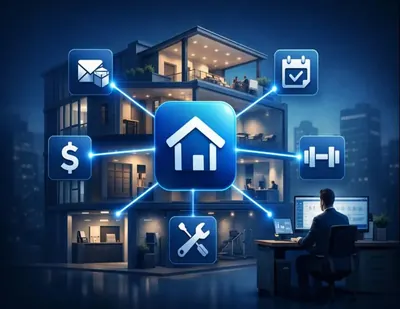
· 13 min read
Beyond the Portal: The Property Manager's Guide to Branded Resident Apps
A branded resident app brings packages, maintenance, amenities, and payments into one white-label hub, removing the “toggle tax” that splits site teams across 6+ tools.
· 7 min read
How To Integrate Modern Resident Apps With The Tools You Already Use
Simplify property management by smoothly integrating modern resident apps with existing tools for improved efficiency and streamlined operations.

· 10 min read
Integrating Resident Apps with Existing Property Management Software: A Complete Guide
Get practical tips on integrating resident apps with current property software to boost efficiency and communication.
Written by
Konrad Koczwara, Founder and CEO · ElevateOS
Related: All blog posts · Integration catalog · Revenue and revenue share · ElevateOS for owners
Book a demo
See your building run on one app.
Thirty minutes. Your PMS, your hardware, your branding on the screen. See what gets consolidated, what gets connected and what starts paying you back.