
Software and strategy · January 28, 2025 · 7 min read
Maximizing Resident App Adoption: Proven Strategies for Property Manager Success
Implement strategies to boost resident app engagement, improving communication and satisfaction for property managers and residents alike.
Konrad Koczwara, Founder and CEO · ElevateOS

Article at a Glance:
Strategic planning and organizational readiness assessment are crucial for successful resident app implementation across property portfolios
Implementation timelines vary significantly by portfolio size: 4-6 months for small communities, 6-8 months for mid-size properties, and 12-18 months for large portfolios
Successful adoption requires balancing diverse stakeholder needs, from maintenance staff concerns about job security to residents' communication preferences
Comprehensive training, ongoing support, and clear value demonstration drive sustainable adoption rates
Measuring KPIs across resident engagement, operational efficiency, and business impact helps track implementation success
Property management leaders seeking to modernize their operations through resident apps must focus on systematic implementation strategies that prioritize sustainable adoption over rapid deployment. This comprehensive guide provides practical frameworks for successful implementation across different portfolio sizes.
Property management leaders face a critical challenge: successfully implementing resident apps across their portfolios. While these digital tools promise greater efficiency and resident satisfaction, the path to adoption is more complex than most anticipate.
The reality is that successful implementation requires more than just choosing the right resident app software. It demands orchestrating change across your entire operation while balancing the needs of diverse stakeholders. Maintenance staff may worry about job security, while long-term residents often prefer traditional communication methods. Without widespread adoption, communities find themselves running parallel systems, creating more work instead of the intended efficiency gains.
Communities that delay adoption risk falling behind competitors who successfully use these tools for more efficient and profitable operations. Beyond time savings, well-implemented resident apps can improve communication quality, enhance security through digital access management, and create better record-keeping systems. The key is understanding that this isn't simply a technology project, it's a transformation that requires careful planning and execution.
Understanding Your Organization's Readiness
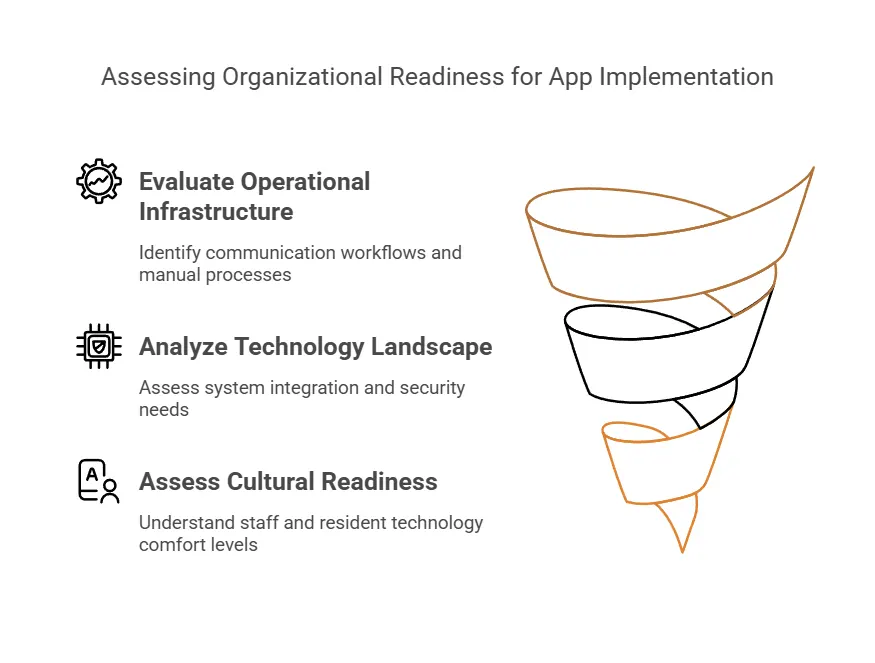
Before launching your resident app initiative, assess your property's readiness across three key areas:
Operational Infrastructure
Your current communication workflows, system integration needs, and staff capacity for managing change will determine your implementation approach. Review your existing processes and identify where the resident app will have the most immediate impact. Pay particular attention to areas with heavy manual processing, such as maintenance requests, resident communications, and payment processing.
Technology Landscape
Evaluate how the new app will integrate with your existing property management systems. Consider your technical support capabilities and data security requirements. Integration timelines can vary significantly based on your current systems' compatibility and complexity. This assessment helps prevent integration issues that could derail adoption.
Cultural Readiness
Your success depends heavily on your team's attitude toward technology and your residents' preferences. Consider your staff's comfort with digital tools and your resident demographics when planning your approach. Communities with older resident populations or less tech-savvy staff members may need to allocate additional resources for training and support during implementation.
Creating a Value-Driven Strategy
Focus your implementation on specific operational improvements rather than adoption for its own sake. Start by measuring your current performance in key areas:
Time spent on resident communication
Maintenance request resolution time
Payment processing efficiency
Staff administrative workload
Resident satisfaction levels
These baseline measurements will help you track improvements and demonstrate clear value to stakeholders. Beyond efficiency metrics, consider tracking improvements in communication clarity, digital record keeping, package management effectiveness, amenity booking convenience, and emergency notification effectiveness.
Smart Rollout Strategy
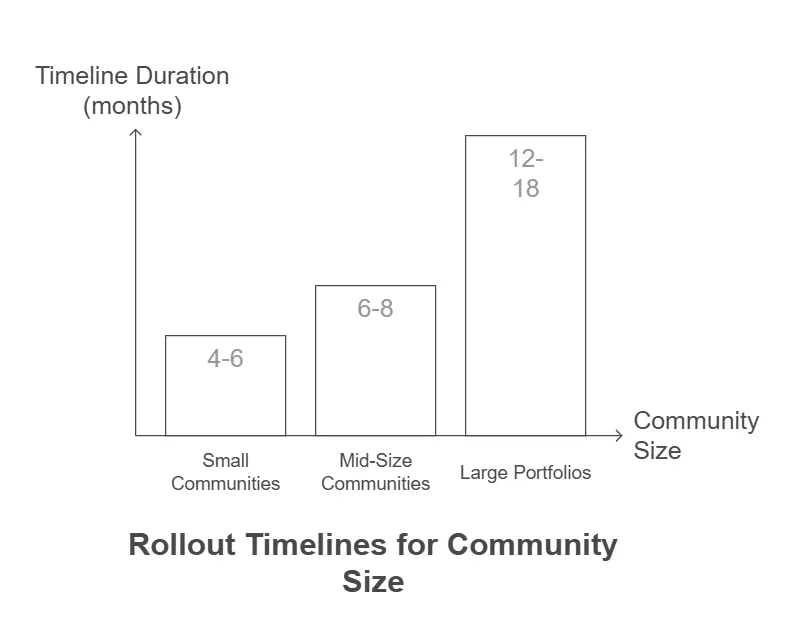
Your rollout approach should align with your community size and complexity, with the understanding that actual timelines may vary significantly based on your specific circumstances. Here's a realistic framework for implementation:
Small Communities (Under 100 Units)
Typical Timeline: 4-6 months for full implementation and stable adoption
Months 1-2: Staff training and system setup, including comprehensive staff training program, system configuration and testing, and development of resident support materials.
Months 3-4: Initial rollout with defined support structure:
Begin with a pilot group of tech-comfortable residents
Provide dedicated support hours
Offer both in-person and virtual assistance options
Document and address common issues
Months 5-6: Full rollout and stabilization:
Expand to all residents with learned best practices
Continue support and monitoring
Address any emerging challenges
Begin measuring adoption rates
Mid-Size Communities (100-500 Units)
Typical Timeline: 6-8 months
First Quarter:
Staff training and process integration
System setup and testing
Development of support infrastructure
Second Quarter:
Department-by-department rollout
Phased resident adoption by building or floor
Continuous monitoring and adjustment
Large Portfolios (500+ Units)
Typical Timeline: 12-18 months
Initial Phase (3-4 months):
Core team training and system integration
Development of standardized processes
Creation of support infrastructure
Pilot Phase (3-4 months):
Implementation at selected pilot communities
Documentation of learnings and best practices
Refinement of rollout strategy
Portfolio Rollout (6-10 months):
Systematic rollout across communities
Regular assessment and adjustment
Knowledge sharing across communities
Each timeline includes buffer periods for unexpected challenges and allows for proper training and support infrastructure development. The focus should be on sustainable adoption rather than rapid deployment.
Driving Initial Adoption
Focus first on features that provide clear value to both staff and residents. Consider the most impactful areas for your community:
Core Features to Prioritize:
Maintenance requests with photo and video capabilities
Two-way communication with message tracking
Digital payments with automatic receipt generation
Amenity booking with digital access credentials
Package tracking and notification system
Build momentum through a structured approach:
Create Resident Champions
Identify and support tech-savvy residents who can help others learn the system. These champions can provide peer support and demonstrate the practical benefits of using the resident app in real-world situations.
Provide Comprehensive Training
Offer multiple training formats:
In-person demonstrations during peak hours
Virtual training sessions for remote access
Written guides with screenshots
Short video tutorials for common tasks
Track and share success stories by documenting specific examples where the resident app has improved processes or solved problems. For instance, share how residents saved time reporting maintenance issues or how staff resolved requests more efficiently through the new system.
Overcoming Common Challenges
Staff Resistance
Address concerns proactively by focusing on how the resident app enhances rather than replaces personal interactions. Show how digital tools free up time for meaningful resident engagement. Provide clear examples of how the app can help staff organize and prioritize tasks more effectively, document interactions automatically, access resident information quickly, and handle routine requests more efficiently.
Integration Issues
Prepare for technical challenges with a strong plan:
System Testing:
Conduct thorough testing before full deployment
Include real-world scenarios in testing phases
Document and address integration points
Test backup procedures for critical functions
Support Infrastructure:
Establish clear troubleshooting protocols
Maintain direct lines to vendor technical support
Create detailed system documentation
Train key staff as system experts
Maintaining Long-Term Success
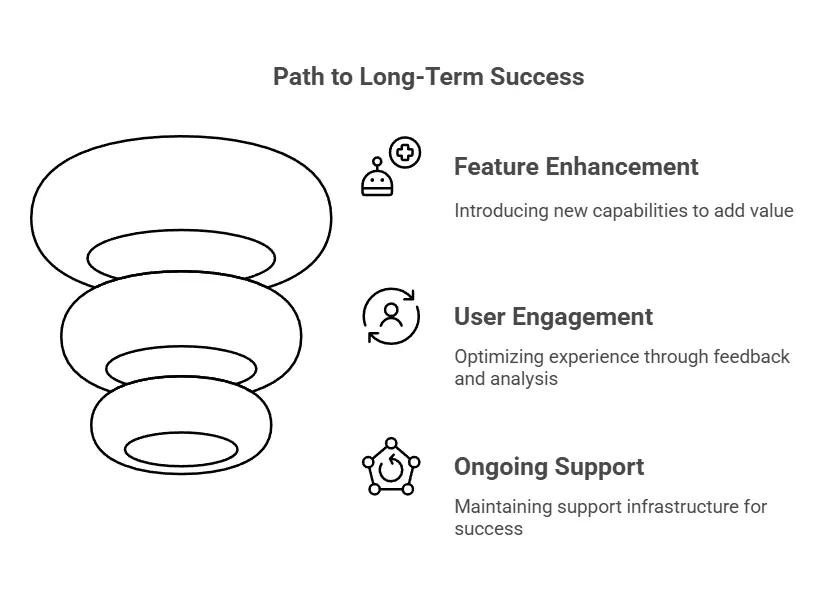
Keep engagement high through continuous improvement and support:
Feature Enhancement
Regularly introduce new capabilities based on user feedback and emerging needs. Focus on features that add clear value to daily operations and resident experience, such as enhanced maintenance tracking, advanced amenity management, improved communication tools, and digital document management.
User Engagement
Monitor and optimize user experience through regular feedback surveys, usage pattern analysis, user experience improvements, and feature utilization tracking. This ongoing assessment helps ensure the resident app continues to meet the evolving needs of both staff and residents.
Ongoing Support
Maintain strong support infrastructure through:
Continued staff training programs
Regular documentation updates
Refresher sessions
Best practices sharing across communities
Measuring Impact
Track Key Performance Indicators (KPIs) that demonstrate real business value:
Resident Engagement Metrics:
Active user rates by length of residency
Feature utilization patterns
Response rates to digital communications
Digital payment adoption rates
Operational Efficiency:
Maintenance request lifecycle duration
Communication response times
Administrative task completion rates
Digital vs. manual process ratios
Business Impact:
Operating cost trends
Staff productivity measures
Resident satisfaction levels
Lease renewal rates
When Implementation Challenges Arise
Address issues systematically by:
Analyzing adoption patterns to identify specific barriers
Gathering feedback from both staff and residents
Adjusting implementation strategies based on findings
Providing additional support where needed
Remember that technology adoption often follows a curve, with initial enthusiasm, followed by some decline, before reaching stable usage patterns. Focus on maintaining momentum through consistent support and clear communication of benefits.
Frequently Asked Questions
Q: What's a realistic timeline for seeing significant resident app adoption?
A: Expect initial adoption patterns to emerge within 4-6 months, with stable usage typically achieved within 8-12 months. Factors affecting this timeline include:
Community size and complexity
Resident demographics
Staff engagement levels
Quality of training and support
Integration complexity
Q: How much staff time should we dedicate to implementation?
A: For communities under 100 units, plan for:
Initial setup phase: 15-20 hours per week for key staff members
Training phase: 8-10 hours per week
Ongoing management: 3-5 hours per week
Larger portfolios should consider assigning a dedicated implementation manager with relevant property management experience to oversee the rollout process.
Q: What's the best way to handle resistant residents?
A: Take a multi-faceted approach:
Demonstrate practical benefits through real-world examples
Provide one-on-one support when needed
Create clear, step-by-step guides
Consider an early adopter program with recognition for participants
Maintain alternative communication channels during transition
Address specific concerns promptly
Frequently Unasked Questions
Q: How does resident app adoption impact staff retention?
A: App implementation can affect staff satisfaction in several ways:
Reduction in repetitive manual tasks
More efficient communication channels
Better documentation of resident interactions
Improved ability to track and manage workload
Enhanced professional development through new technology skills
Q: What hidden costs should we consider?
A: Beyond the obvious implementation costs, plan for:
Staff training time and resources
Temporary productivity adjustments during transition
Marketing and communication materials
Ongoing support resources
System integration costs
Additional hardware needs if required
Backup system maintenance during transition
Q: How does successful app implementation affect property operations?
A: Well-implemented resident apps can influence property operations through:
Streamlined communication processes
Enhanced maintenance tracking
Improved record-keeping capabilities
Better amenity management
More efficient payment processing
Enhanced emergency communication capabilities
Improved package management
The impact on property value depends on various factors including operational improvements, cost savings, and resident satisfaction levels.
Streamline Property Management with ElevateOS
Take your property management to the next level with ElevateOS’s Resident App, the ultimate solution for efficiency, cost reduction, and enhanced security. From amenity bookings to resident engagement, our platform simplifies operations, reduces overhead, and elevates the resident experience.
Ready to see it in action? Request a free demo today and discover how ElevateOS can transform your property management.
Stay connected for more updates and insights! Follow us on Facebook and Instagram. 🚀
Keep reading
More on Software and strategy
· 12 min read
The Hidden Cost of 'App Fatigue': Why Residents Ignore Your Tools
Low resident app adoption signals fragmented systems, not lazy users. Property teams lose 4 hours weekly to app-switching. Here's how unified platforms fix this.
· 13 min read
Beyond the Portal: The Property Manager's Guide to Branded Resident Apps
A branded resident app brings packages, maintenance, amenities, and payments into one white-label hub, removing the “toggle tax” that splits site teams across 6+ tools.

· 14 min read
Resident App Customization Strategies: Tailoring Solutions for Different Property Types and Resident Needs
Learn how to customize resident apps to fit various property types and meet specific tenant expectations effectively.
Written by
Konrad Koczwara, Founder and CEO · ElevateOS
Related: All blog posts · Integration catalog · Revenue and revenue share · ElevateOS for owners
Book a demo
See your building run on one app.
Thirty minutes. Your PMS, your hardware, your branding on the screen. See what gets consolidated, what gets connected and what starts paying you back.