.avif)
Resident Experience & Multifamily Operations
Multifamily Resident Preference Management: How Apartment Communities Create More Personalized Resident Experiences
Multifamily resident preference management is the process of collecting, organizing, and using resident preferences to make apartment communication, services, amenities, events, and everyday interactions more relevant to each resident.
Residents do not all want the same experience. One resident may want every community event notification. Another may only care about maintenance and package updates. Some residents regularly use fitness amenities. Others value concierge services, pet-focused experiences, coworking spaces, or local recommendations.
The challenge for multifamily operators is delivering personalization without creating an impossible amount of manual work for onsite teams.
That is where resident preference management becomes valuable.
Quick Answer: What Is Multifamily Resident Preference Management?
Multifamily resident preference management is the structured process of capturing and using information about how residents prefer to communicate, which services and amenities interest them, what types of community experiences they value, and how they want to interact with their apartment community.
The goal is to replace one-size-fits-all resident experiences with more relevant communication and services while giving property teams a scalable way to manage personalization.
Why Do Resident Preferences Matter in Multifamily Property Management?
Apartment communities often communicate with hundreds or thousands of residents at once.
That creates an obvious efficiency advantage, but it can also create a relevance problem.
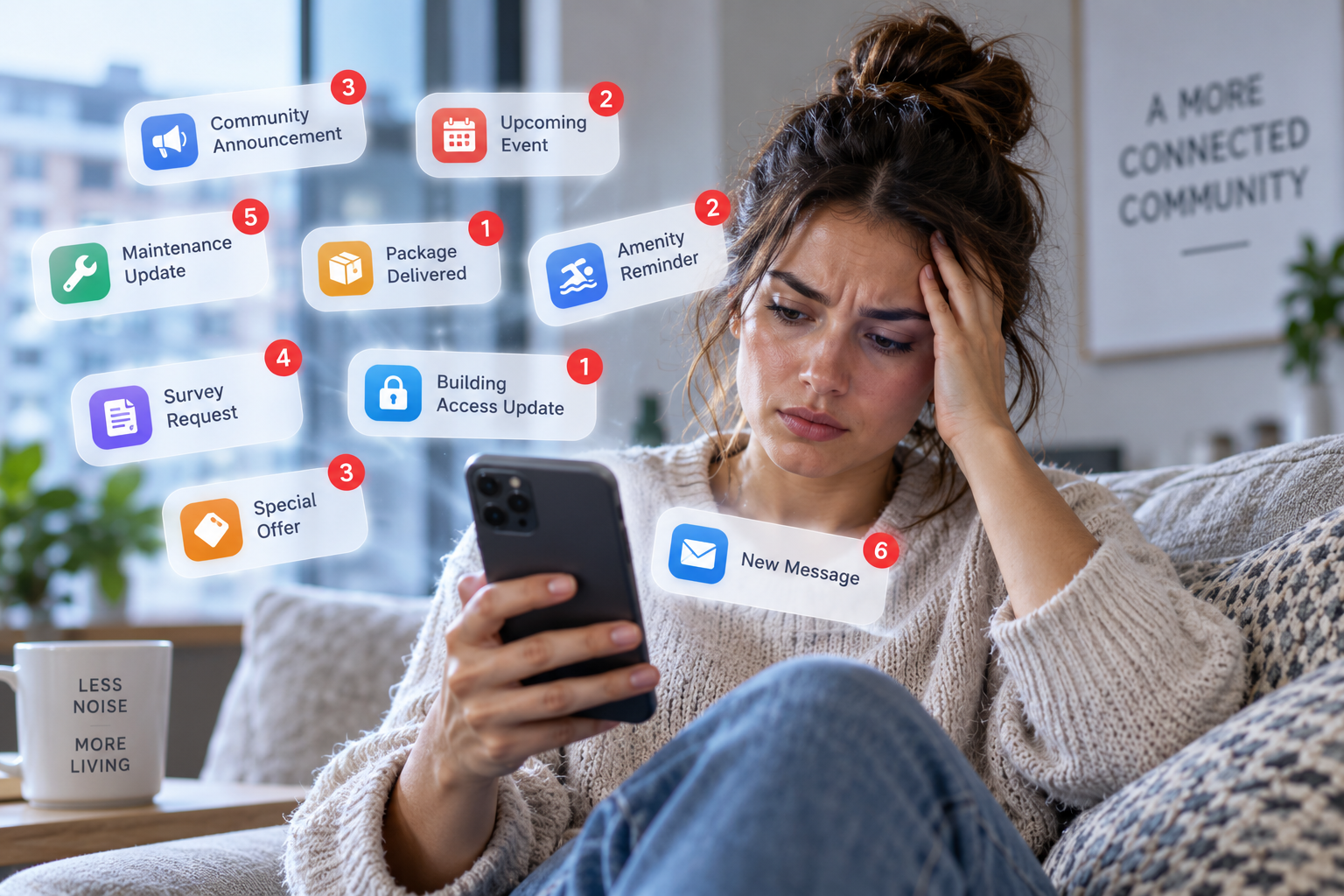
When every resident receives every announcement, event promotion, service offer, amenity update, reminder, and community message, important information begins competing with information that may not matter to that individual.
The result can be resident disengagement.
Preference management gives operators another option: make resident experiences more relevant rather than simply increasing message volume.
Consider two residents in the same building.
Resident A may care about:
- Fitness classes
- Package notifications
- Pet services
- Community events
- Guest access
Resident B may care about:
- Coworking availability
- Maintenance updates
- Parking information
- Dry cleaning
- Building announcements
Sending both residents exactly the same experience ignores meaningful differences in how they use the property.
Resident preference management helps operators recognize those differences at scale.
Create a More Relevant Resident Experience
ElevateOS helps multifamily communities connect resident communication, amenities, services, engagement, requests, and everyday property interactions through one branded digital experience.
What Types of Resident Preferences Can Apartment Communities Manage?
Resident preference management is broader than simply allowing residents to turn notifications on or off.
Preferences can span nearly every part of the resident experience.
1. Communication Preferences
Residents may have preferences related to:
- Push notifications
- Email communication
- Text messaging
- Community announcements
- Event reminders
- Service updates
- Package notifications
- Non-urgent promotional messages
2. Amenity Preferences
Residents may show interest in:
- Fitness centers
- Pools
- Coworking spaces
- Rooftop areas
- Lounges
- Golf simulators
- Pet amenities
- Entertainment spaces
3. Event Preferences
Community interests may include:
- Fitness and wellness
- Food and beverage
- Networking
- Family activities
- Pet-friendly events
- Classes and workshops
- Social events
- Local experiences
4. Resident Service Preferences
Residents may be interested in services such as:
- Housekeeping
- Dog walking
- Pet care
- Personal training
- Dry cleaning
- Moving assistance
- Wellness services
- Local recommendations
5. Interaction Preferences
Some residents prefer:
- Digital self-service
- Mobile-first interactions
- Direct assistance from staff
- Concierge support
- Automated status updates
- Minimal communication unless action is required
These differences matter because resident experience is not simply about which features a property offers. It is also about how easily residents can discover and use the features most relevant to them.
How Does Multifamily Resident Preference Management Work?
A preference-management strategy generally follows four steps:
- Capture preferences. Learn what residents care about and how they want to interact with the property.
- Organize preferences. Associate preferences with the appropriate resident profile or segment.
- Apply preferences. Use the information to improve communication, services, events, amenities, and resident workflows.
- Update preferences. Allow preferences to evolve as resident behavior and interests change.
The last step is especially important.
Resident preferences should not be treated as permanent characteristics.
Someone who regularly used a coworking space last year may work from an office today. A new pet may suddenly make pet-related services relevant. A resident who initially ignored events may begin attending fitness classes.
Good preference management recognizes that resident interests change throughout the resident lifecycle.
Resident Data vs. Resident Preferences: What's the Difference?
| Category | Example | Primary Purpose |
|---|---|---|
| Resident Data | Unit, move-in date, contact information | Identify and manage the resident relationship |
| Resident Preference | Interested in fitness events | Make the experience more relevant |
| Resident Behavior | Frequently reserves the fitness center | Understand how residents actually interact with the property |
The most useful resident experiences can combine these categories without confusing them. What residents explicitly prefer and what they actually use can both provide useful context for improving the experience.
How Resident Preferences Enable Personalization
Personalization does not need to mean creating a unique experience manually for every resident.
In multifamily operations, personalization can be much simpler.
It means making the information and opportunities presented to a resident more relevant to their needs.
Personalized Communication
A resident interested in community fitness programming may receive reminders about yoga classes or personal training opportunities.
Someone who has no interest in those programs does not necessarily need the same promotional message.
Personalized Amenity Discovery
Residents can be encouraged to discover amenities that match their interests rather than receiving generic reminders about every amenity at the property.
Personalized Event Promotion
Instead of promoting every event equally to every resident, communities can make relevant programming easier for interested residents to discover.
Personalized Resident Services
A resident with a dog may find pet-related services valuable. A frequent traveler may be more interested in housekeeping or concierge services. A remote worker may value coworking resources.
Personalized Onboarding
New residents can be introduced to the parts of the property that matter most to them instead of receiving an undifferentiated list of every feature the building offers.
A connected resident experience platform can help property teams bring these interactions into a more unified digital environment.
What Are Resident Communication Preferences?
Resident communication preferences describe how and when a resident prefers to receive different types of property communication.
Not every message serves the same purpose.
Multifamily communication typically includes several categories:
- Urgent property alerts
- Maintenance updates
- Package notifications
- Amenity notices
- Community announcements
- Event invitations
- Event reminders
- Service promotions
- Resident engagement messages
- Move-in communication
- Renewal-related communication
The communication strategy should distinguish between messages residents genuinely need and messages that are optional or interest-based.
That distinction helps reduce unnecessary communication while preserving important operational messaging.
Why Communication Relevance Matters
When residents receive too many irrelevant messages, they may begin ignoring the communication channel entirely.
That becomes an operational issue when a genuinely important message arrives.
Preference management therefore supports both personalization and message clarity.
The goal should not be to communicate less for the sake of communicating less. It should be to make each communication more intentional.
Give Residents One Branded Place to Stay Connected
A connected resident app can bring property communication, services, amenities, requests, events, and community information into one mobile-first destination.
How Can Resident Preferences Improve Amenity Management?
Multifamily communities invest heavily in amenities, but simply building an amenity does not guarantee residents will use it.
Preference information can help operators understand which spaces and experiences different residents value.
For example, preference and engagement patterns may help teams understand demand for:
- Fitness programming
- Coworking spaces
- Pool experiences
- Outdoor programming
- Pet amenities
- Wellness offerings
- Private amenity reservations
- Social spaces
Operators can then make amenity communication more targeted and programming more responsive to resident interest.
Properties looking to connect reservations, amenity access, communication, and utilization can also explore amenity management software.
How Can Resident Preferences Improve Community Engagement?
One of the biggest challenges in resident engagement is relevance.
A community may host excellent events and programs but still see limited participation if residents do not perceive those experiences as personally relevant.
Preference management allows teams to think in terms of resident interests rather than only building-wide promotion.
Example: Community Event Segmentation
A property may host:
- A rooftop networking event
- A Saturday yoga class
- A dog-owner social
- A children's activity
- A cooking workshop
Those events appeal to different groups.
Preference-based engagement helps property teams promote the right opportunities to residents most likely to find them valuable.
This does not mean hiding events from everyone else. It means improving discovery for the people most likely to participate.
A resident engagement platform can help communities connect events, services, communication, and resident participation within the broader resident experience.
Resident Preferences and the Apartment Concierge Experience
Preference management becomes especially useful in communities offering hospitality-style resident services.
A traditional concierge may develop an understanding of individual residents over time.
Staff may learn who frequently travels, who owns pets, who regularly books fitness services, who prefers local restaurant recommendations, or who typically requests housekeeping assistance.
Digital preference management can help preserve some of that context at scale.
Rather than requiring one employee to personally remember every preference, the resident experience can make relevant services easier to discover.
This is one way apartment concierge software and resident experience technology can complement onsite hospitality.
What Are the Operational Benefits of Resident Preference Management?
Preference management is not only a resident-facing strategy.
It can improve how property teams make operational decisions.
1. More Relevant Communication
Staff can reduce unnecessary mass communication and focus certain messages on relevant audiences.
2. Better Event Planning
Resident interests can help teams understand which types of programming may deserve additional attention.
3. Better Amenity Programming
Preference information and actual amenity usage can help operators understand what residents value.
4. More Useful Resident Services
Teams can prioritize services and partnerships that match the needs of the community.
5. Reduced Communication Noise
Relevant communication can reduce the temptation to solve every awareness problem by simply sending another building-wide message.
6. Improved Staff Context
When appropriate preference information is connected to resident workflows, employees have more context about the resident they are helping.
7. Stronger Portfolio Insights
Portfolio teams can identify broader patterns across communities while still allowing individual properties to maintain their own resident experience.
Resident Preference Management vs. Resident Segmentation
These terms are related but not identical.
Resident preferences describe the interests or communication choices associated with an individual resident.
Resident segmentation groups residents who share useful characteristics, interests, behaviors, or needs.
For example:
- A resident indicates an interest in fitness.
- That becomes a preference.
- The property creates an audience of residents interested in fitness.
- That becomes a segment.
- The fitness segment receives a reminder about a new wellness class.
Preference management provides context. Segmentation helps operators use that context efficiently.
Examples of Multifamily Resident Preference Segments
| Resident Interest | Possible Experience |
|---|---|
| Fitness & Wellness | Fitness class announcements, wellness events, amenity updates |
| Pet Owners | Pet events, dog walking services, pet amenity updates |
| Remote Workers | Coworking information, workspace events, availability updates |
| Social & Community | Resident events, groups, local experiences |
| Resident Services | Housekeeping, concierge, fitness, pet, and convenience services |
How Does Resident Preference Management Support Resident Retention?
Resident preferences alone do not determine whether someone renews a lease.
They can, however, help properties make the everyday experience more relevant.
Retention is influenced by many repeated interactions:
- How easy it is to get help
- Whether communication is clear
- Whether residents use community amenities
- Whether services feel valuable
- Whether the community feels engaging
- Whether residents experience unnecessary friction
Personalization can strengthen several of these touchpoints by helping residents discover more value in the community.
Properties focused specifically on retention can also explore how a resident retention platform connects everyday resident experience with longer-term resident relationships.
How Does a Resident App Support Preference Management?
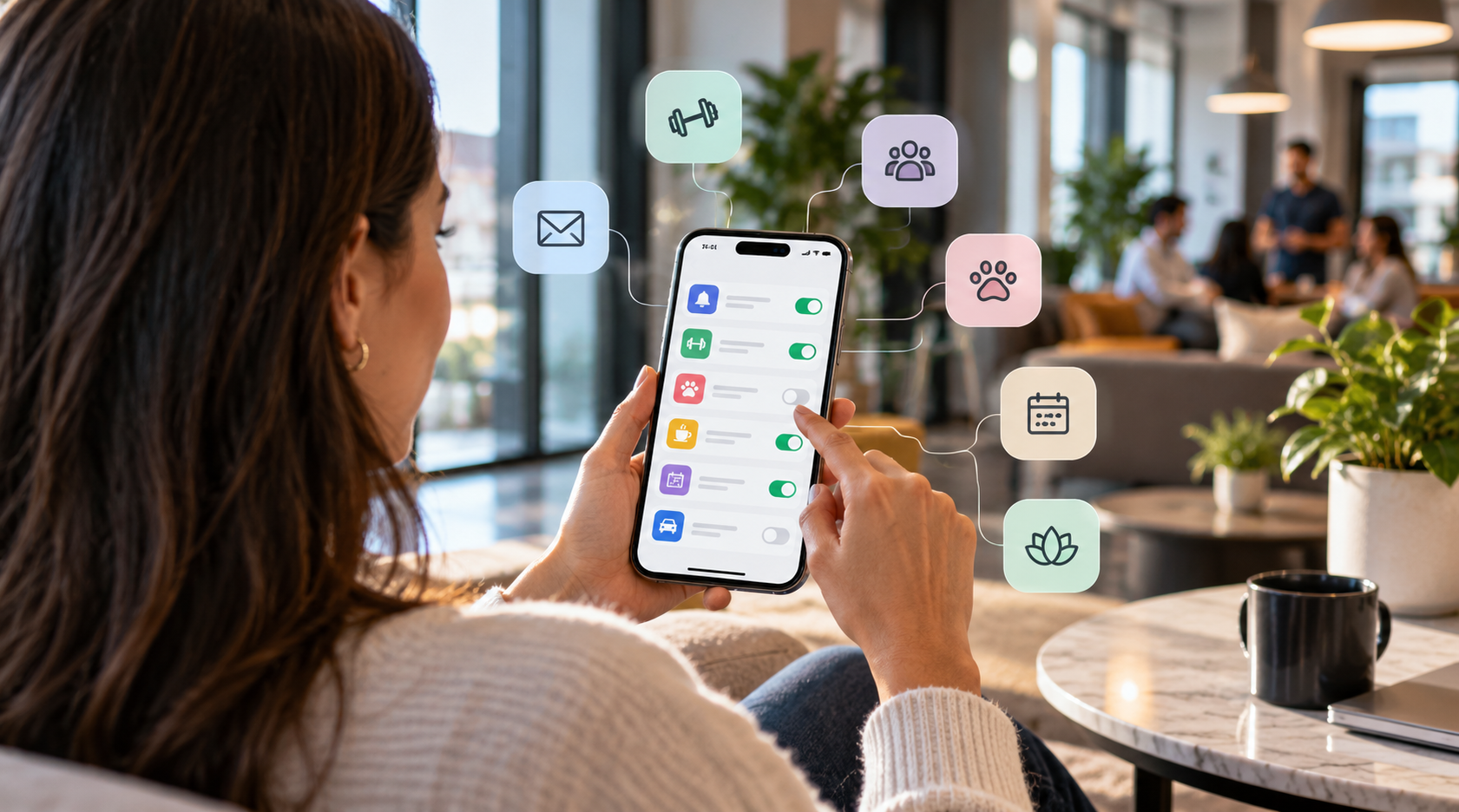
A resident app gives communities a logical place for residents to manage and express preferences.
It also creates a consistent digital destination through which relevant services, amenities, events, communication, and property resources can be delivered.
A well-connected resident app can bring together:
- Resident communication
- Events
- Amenity reservations
- Resident services
- Community information
- Requests
- Packages
- Access
- Engagement
This matters because preference management becomes far harder when resident activity is split across multiple unrelated apps and portals.
A resident may express one preference in an events platform, another in an amenity tool, and another through email communication.
Fragmentation makes it harder to create a consistent resident experience.
A more connected approach gives residents one recognizable place to interact with the community.
How to Implement Resident Preference Management in Multifamily
Step 1: Start With Useful Preferences
Do not collect information simply because it is possible to collect it.
Start with preferences that can actually improve the resident experience.
Examples include:
- Communication choices
- Amenity interests
- Event interests
- Resident service interests
- Community programming interests
Step 2: Make Preference Selection Easy
Residents should not need to complete a lengthy survey just to personalize their experience.
Preference collection should be simple and understandable.
Step 3: Explain the Resident Benefit
Residents are more likely to provide useful preference information when they understand why it matters.
The value proposition is simple:
Tell us what matters to you so we can make your community experience more relevant.
Step 4: Connect Preferences to Actual Experiences
Asking about interests without using the information provides little value.
If residents indicate interest in wellness programming, that preference should help make relevant wellness experiences easier to discover.
Step 5: Allow Preferences to Change
Resident needs evolve.
Residents should have an easy way to update appropriate preferences over time.
Step 6: Avoid Over-Personalization
Personalization should make apartment living easier, not make every interaction feel overly engineered.
Focus on practical relevance.
Step 7: Measure What Residents Actually Use
Explicit preferences provide one signal.
Actual engagement provides another.
Operators can compare expressed interests with participation to understand which experiences genuinely provide value.
What Metrics Can Multifamily Teams Use to Measure Preference-Based Personalization?
The goal is not to maximize the number of preferences stored.
The goal is to make resident interactions more useful.
Useful metrics may include:
- Resident app adoption: How many residents actively use the digital resident experience?
- Message engagement: Are relevant communications receiving more interaction?
- Event registration: Are targeted residents discovering relevant programming?
- Amenity utilization: Are residents engaging with amenities matching their interests?
- Service adoption: Are residents discovering useful resident services?
- Notification opt-outs: Are residents becoming overwhelmed by communication?
- Resident feedback: Do residents find communication and programming relevant?
- Feature usage: Which parts of the resident experience generate repeat engagement?
These metrics should be evaluated together rather than used in isolation.
How Resident Preferences Can Improve Portfolio-Level Decision Making
Preference information becomes especially useful when operators manage multiple apartment communities.
Portfolio leaders can look for patterns while still maintaining property-level flexibility.
For example, operators might identify:
- Strong interest in fitness programming across urban properties
- Higher coworking demand in certain communities
- Greater pet-service engagement at particular properties
- Different event preferences across resident populations
- Communication channels that perform better for certain types of messages
These patterns can help operators make more informed decisions about programming, amenities, services, communication, and resident experience investment.
A connected property management software environment can help teams coordinate resident-facing operations across multiple communities without forcing every property into exactly the same experience.
Resident Preference Management and AI
Preference data may become increasingly useful as multifamily platforms incorporate more intelligent search, recommendations, automation, and conversational experiences.
The value of AI in resident experience will depend heavily on context.
Generic automation can send messages.
Context-aware systems can potentially help determine which information, services, or experiences are most relevant to a resident at a particular moment.
For example, a future resident experience might help surface:
- Events that align with stated interests
- Amenities a resident frequently uses
- Relevant resident services
- Important updates connected to resident activity
- Community resources appropriate to a resident's request
The interface may become more intelligent, but the foundation remains the same: organized resident context, connected workflows, and a clear understanding of what residents actually need.
Resident Preference Management Checklist
A strong preference-management strategy should answer the following questions:
- Can residents choose appropriate communication preferences?
- Can residents indicate which amenities interest them?
- Can residents express event and community interests?
- Can residents discover services relevant to their needs?
- Can preferences be updated easily?
- Can staff use preference information without creating manual work?
- Are communications segmented when appropriate?
- Can operators compare stated preferences with actual engagement?
- Can the experience scale across multiple properties?
- Are preferences connected to a larger resident experience rather than stored in isolation?
From One-Size-Fits-All to Resident-Relevant Experiences
Multifamily personalization does not require creating hundreds of completely different resident experiences.
Small improvements in relevance can make a meaningful difference.
Promote the right event to residents who care about it.
Make relevant services easier to discover.
Avoid unnecessary notifications.
Help residents find amenities they will actually use.
Give staff useful context when serving residents.
These small improvements turn preference management into something much more practical than a personalization feature.
It becomes part of how a community delivers a more intentional resident experience.
Build a More Connected Resident Experience With ElevateOS
ElevateOS helps multifamily operators bring resident communication, amenities, services, engagement, events, access, requests, and property interactions into one connected resident experience.
Give residents one branded destination for apartment living while giving onsite and portfolio teams a more unified way to manage the experiences behind it.
Explore the Resident Experience Platform Explore the Resident App
Frequently Asked Questions About Multifamily Resident Preference Management
What is resident preference management?
Resident preference management is the process of collecting, organizing, updating, and using resident preferences to make apartment communication, services, amenities, events, and resident interactions more relevant.
What types of resident preferences can apartment communities track?
Useful preference categories can include communication choices, amenity interests, event interests, resident service interests, community programming interests, and preferred ways of interacting with the property.
How is resident preference management different from resident data management?
Resident data management organizes information such as resident profiles, units, requests, documents, and communication history. Preference management focuses specifically on what residents are interested in and how they prefer to interact with their community.
How do resident preferences improve apartment communication?
Preferences can help property teams distinguish between universal operational communication and interest-based communication. This allows communities to make optional messages more relevant while preserving important building-wide information.
Can resident preferences improve event attendance?
Preference information can help communities make relevant events easier for interested residents to discover. A resident interested in fitness, for example, may be more likely to engage with wellness programming than an unrelated event.
Can resident preferences improve amenity utilization?
Preference information can help operators understand which amenities different residents value and make relevant spaces, reservations, programs, and updates easier to discover.
What is the difference between resident preferences and resident segmentation?
Preferences describe interests or choices associated with individual residents. Segmentation groups residents with similar characteristics, interests, behaviors, or needs so property teams can manage relevant experiences efficiently.
Should residents be able to update their preferences?
Yes. Resident interests and needs can change over time, so appropriate preferences should be easy to update throughout the resident lifecycle.
How does a resident app support preference management?
A resident app provides a central digital destination where residents can interact with communication, amenities, events, services, requests, and community resources. This makes it easier to connect preferences with the experiences residents actually use.
How can multifamily operators measure whether personalization is working?
Operators can monitor app engagement, event registrations, amenity utilization, service adoption, message engagement, notification opt-outs, resident feedback, and feature usage to understand whether experiences are becoming more relevant.
Final Takeaway
Multifamily resident preference management gives apartment operators a practical way to move beyond one-size-fits-all resident experiences.
The goal is not to personalize every interaction individually.
The goal is to understand what residents care about and use that context to make communication, amenities, services, events, and digital interactions more relevant.
For residents, that can mean less noise and easier discovery of the things that matter to them.
For property teams, it can mean more focused communication, better-informed programming, and stronger visibility into what residents value.
And for multifamily operators, preference management creates another layer of intelligence that can connect the resident app, resident engagement, amenity management, and the broader resident experience platform.