
Resident experience · October 25, 2026 · 6 min read
What Is a Resident Experience Platform?
The one app that runs a resident's daily life in a building: how it differs from a PMS portal, the eight jobs it should cover, and how to judge one in 2026.
Konrad Koczwara, Founder and CEO · ElevateOS
The definition
A resident experience platform, in one paragraph
A resident experience platform is the software that runs a resident's day-to-day life in a building from one branded app: getting in the door, picking up packages, booking amenities, joining events, ordering services, reporting maintenance and paying, all synced with the property management system (PMS) and the building's hardware. Staff run the same building from a matching staff tool and web portal. The owner gets one vendor, one data set and, on some platforms, a share of the new income the app creates.
The category goes by several names. CB Insights notes these products are also called resident portals, resident apps or resident engagement platforms. What separates a platform from a portal is scope: a portal handles rent and work orders, while a platform covers the whole building.
Where it sits
The four layers of a building's software stack
| Layer | Its job | Who uses it, and how often |
|---|---|---|
| PMS (system of record) | Leases, the rent ledger, accounting, renewals | Leasing and accounting teams, daily |
| PMS resident portal | Pay rent, submit work orders, sign documents | Residents, a few times a month |
| Point solutions | One job each: door access, lockers, amenity booking, intercom, surveys | Residents and staff, each in a separate app |
| Resident experience platform | One app and one set of staff tools over all of the above, synced to the PMS and the hardware | Residents daily, staff every shift, owners monthly |
The platform does not replace the PMS. Leases, the rent ledger and accounting stay where they are, and residents and leases sync into the app so nobody re-enters a record. What the platform replaces is the pile of separate apps that sit next to the PMS.
What it covers
The eight jobs a full platform handles
Access: residents open the front door, the garage and their unit from the app, and guests get passes that expire on their own. A strong platform connects to the locks, readers and intercoms already on the building instead of replacing them.
Packages: carriers drop, staff scan, and the resident gets a notice and a pickup code, whether the building uses a package room, lockers or the front desk.
Amenities: residents book the gym, pool, party room or guest suite, pay a fee where one applies, and sign the waiver in the same flow.
Events and community: a calendar, RSVPs, groups and announcements, so neighbors meet each other and the building feels like a community rather than an address.
Services: housekeeping, dog walking, handyman work and similar services booked inside the app from vetted providers.
Operations: work orders with photos, inspections, move-in checklists, visitor logs and parking, run from staff tools that write back to the PMS where the PMS allows it.
Communication: messages targeted by building, floor or unit, plus surveys and review requests that reach residents where they already are.
Revenue: paid amenities, services, parking passes and event tickets create income lines the owner shares in, reported every month.
Why now
Renters expect one app, and most buildings still hand them several
The gap between what renters want and what they get is measurable. In AppFolio's 2026 Renter Preferences Report, a survey of 3,002 US renters, 84% said they prioritize an online portal but only 59% had one. Renters with portal access rated maintenance satisfaction at 85%, against 78% for those without.
Features matter as much as access. The SatisFacts 2025 Online Renter Study found 85.2% of renters value online rent payment, 70.3% value package notifications and lockers, and 60.1% value keyless entry. In many buildings those are three different vendors with three different logins.
Owners feel the same sprawl. Parks Associates reported in October 2024 that owners and operators use an average of three smart building platforms. ElevateOS's own map of the 29 software categories shows a Class A community often paying 8 to 12 vendors at $10 to $20 per unit every month, and Class B and C communities carrying 4 to 6.
Retention raises the stakes. RealPage reported that just over 54% of market-rate renters renewed in the year ending October 2024, against a 2010 to 2019 average of 50.7%. AppFolio found 39% of renters planning to move within 12 months, so every renewal a better daily experience helps keep is worth chasing.
What it is not
Three things a resident experience platform is not
Not a PMS: a platform that asks a property to move its leases or accounting is a PMS migration under another name. The right platform keeps the PMS as the system of record and syncs from it.
Not just a portal: every major PMS now ships its own resident app, and for rent and work orders those apps do the job. The question is whether the same app also opens the door, tracks the package, books the amenity and sells the service.
Not a hardware purchase: good platforms connect to the access control, locks, intercoms and lockers a building already owns. New hardware should be optional, never the price of entry.
Buying options
Three ways operators buy one today
PMS-native apps: the resident app that comes with the property management system. It is the easiest to switch on and it handles rent and work orders well, but access, packages, events and services usually sit outside it or in add-ons, and every building on the same PMS looks the same.
Independent platforms: a separate company's app that syncs with the PMS and connects the hardware. Scope varies widely, from community-first apps to full platforms that cover all eight jobs, so the evaluation questions below matter most here.
Point-solution bundles: an intercom app, a locker app, a smart home app and an amenity tool, each bought for one problem. Each one can be excellent at its job, but residents juggle logins and staff juggle dashboards. A longer comparison of the two models is in platform vs point solutions.
Adoption
What good adoption looks like
Adoption decides whether a platform pays off, and daily habits drive it. Door access and package notices bring residents into the app every day; events, services and amenity booking give them reasons to stay once they are there. An app that only collects rent gets opened once a month.
The launch matters as much as the feature list. Invitations should follow the lease, keys should appear on phones on day one, and the old app should overlap long enough that nobody gets locked out. At VERVE West Lafayette, 9 in 10 residents were active and turn week finished in 4 days; at Magnolia Square, resident engagement rose 7x and group activity 300%.
Track three numbers in the first 90 days: the share of units with an active resident, the share of package pickups and door openings that run through the app, and the income from amenities, services and events. If the first two climb, the third follows.
Owner economics
How a platform pays for itself
A resident experience platform earns its keep in two ways. First, it replaces separate subscriptions: one platform instead of a door app, a locker app, an amenity tool, an events tool, a survey tool and a messaging tool. Second, it creates income lines that did not exist before, such as paid amenity reservations, service bookings, parking passes, event tickets and shop orders.
The second lever is often the bigger one. ElevateOS communities have generated more than $100M in ancillary income. Alluvion Las Olas grew amenity income from $1,500 to $15,000+ a month, residents at Wolf Point East book $30,000+ a month in services, and at Apartments at City Center the revenue share covered the platform within one quarter.
When those income lines run, the net cost of the platform can reach zero. That is why ElevateOS pricing can start at $0: a per-unit platform fee for the modules a building uses, offset by a revenue share on the income the app creates.
How to judge one
Ten questions that separate a platform from an app
| Ask the vendor | Why it matters | What a strong answer sounds like |
|---|---|---|
| Which PMS do you sync with, and how? | A one-way nightly feed leaves stale records | Two-way sync of residents and leases, with logs your IT team can read |
| Does it open the building's doors with the hardware on site? | Replacing locks costs more than the software | Named integrations for the brands on site, no reprogramming |
| How many apps does a resident still need? | Every extra login cuts adoption | One app for access, packages, amenities, events, services and maintenance |
| What do onsite staff use? | Staff run the building every shift | Staff tools for packages, visitors, work orders and inspections |
| What new income does it create? | Revenue offsets the platform fee | Several income lines with monthly owner reporting |
| Who runs events and services? | Software alone does not fill a calendar | A programming and services team behind the software |
| How long until launch? | Long launches stall leasing and renewals | Weeks, with a dated plan at kickoff |
| How is resident data protected? | Owners answer to residents and auditors | SOC 2 Type II, encryption, stated backup and deletion windows |
| Who owns the company? | Acquisitions change roadmaps | A clear ownership history and a long-term plan |
| Which current invoices does it remove? | Consolidation is where the savings come from | A line-by-line quote against current vendor invoices |
A vendor that answers all ten clearly is selling a platform. A vendor that answers three or four is selling an app, which may still be the right buy for a smaller job.
ElevateOS
How ElevateOS approaches the category
ElevateOS is rental management software for every rental type; the same platform runs condo, HOA and strata communities and live-work-play campuses. It is built on four pillars: Engage for communication, events and community, Operate for packages, maintenance, amenities and visitors, Connect for the integrations that tie the PMS and the hardware together, and Concierge for services and the income they create.
Scale: 1,500+ communities and 800,000+ residents use ElevateOS, with 660,000+ amenity reservations, 510,000+ event sign-ups and 2.8M+ maintenance requests handled in the app.
PMS: ElevateOS syncs with 7 property management systems: Yardi, Entrata, RealPage, ResMan, AppFolio and Rent Manager, with MRI available on request. Communities with no PMS run on ElevateOS CRM.
Hardware: 50+ integrations connect 385 certified devices from 16 manufacturers, and new hardware is optional.
Services and events: a network of 10,000+ service providers, plus Resivents, the events arm of ElevateOS, which plans and runs programming for buildings.
Security: SOC 2 Type II, data hosted on AWS in the United States, AES-256 encryption, 35-day backups and deletion within 90 days of a request. Details are on the security page.
By PMS
The best resident apps for each property management system
The right app depends partly on the PMS underneath it. Seven guides compare the options for each system, checked in October 2026: Yardi, Entrata, RealPage, ResMan, AppFolio, Rent Manager and MRI.
For the cost side, ElevateOS pricing explained shows how a quote is built, and the implementation timeline walks through each of the four weeks to launch.
Keep reading
More on Resident experience

· 6 min read
Multifamily Resident App Adoption: How to Get Residents to Actually Use Your App
Learn how multifamily teams can increase resident app adoption with onboarding, communication, amenities, access, service requests, and one-app resident workflows.
· 9 min read
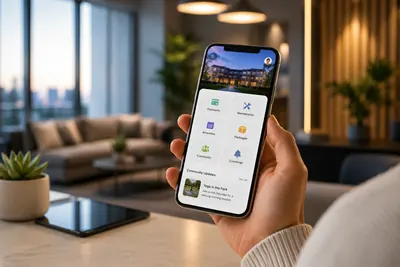
Multifamily Resident Journey Orchestration Software: How to Connect the Entire Resident Lifecycle
Learn how multifamily resident journey orchestration software connects move-in, communication, service, amenities, engagement, and renewal into one coordinated resident experience.
· 12 min read
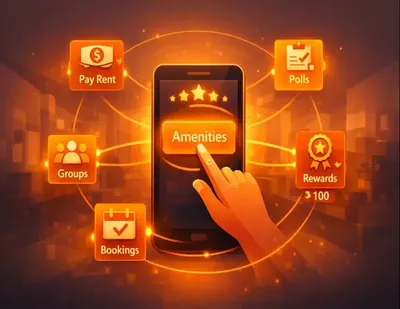
From 'Bored' to Engaged: Creating a Gamified Resident Experience
Gamification turns rent payments, amenity bookings, and polls into engagement by deploying 5 tactics through one unified resident app, eliminating friction.
Written by
Konrad Koczwara, Founder and CEO · ElevateOS
Related: All blog posts · Integration catalog · Revenue and revenue share · ElevateOS for owners
FAQ
Questions operators ask.
What is a resident experience platform?
It is the software that runs a resident's daily life in a building from one app, covering access, packages, amenities, events, services, maintenance and payments. It syncs with the property management system and the building's hardware, and staff run the same building from matching tools.
Is a resident experience platform the same as a resident portal?
No. A portal handles rent and work orders, while a platform also opens doors, tracks packages, books amenities, runs events and sells services in the same app.
Does a resident experience platform replace the PMS?
No. The PMS stays the system of record for leases, the rent ledger and accounting, and residents and leases sync into the platform.
Does a building need new hardware?
Not with ElevateOS. It connects 385 certified devices from 16 manufacturers, so most buildings keep the locks, readers, intercoms and lockers they already own.
How much does a resident experience platform cost?
Most vendors quote per unit and many publish no rate card. ElevateOS combines a per-unit platform fee with a revenue share on the income the app creates, so pricing can start at $0.
How long does it take to launch one?
Most ElevateOS properties launch in about four weeks. A software-only launch is faster than one that adds new access hardware.
Which property management systems does ElevateOS work with?
ElevateOS syncs with Yardi, Entrata, RealPage, ResMan, AppFolio and Rent Manager, with MRI available on request. Communities with no PMS run on ElevateOS CRM.
Who uses a resident experience platform?
Residents use it daily, onsite teams use it every shift, and owners use its reporting to track adoption and income. It fits rentals of every class, plus student housing, build-to-rent, condo, HOA and strata communities.
Book a demo
See your building run on one app.
Thirty minutes. Your PMS, your hardware, your branding on the screen. See what gets consolidated, what gets connected and what starts paying you back.